Oct 12, 2026 · 1 hr 2 min · 18 segments
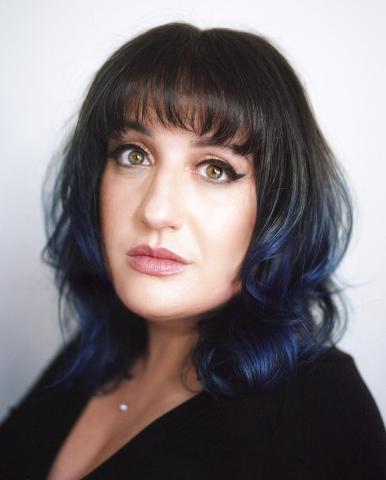
My guest is Kate Stayman-London, political strategist and author known for *One To Watch* and *Fang Fiction*. She shared how working for politicians like John Kerry and Hillary Clinton inspired her…
Kate Stayman-LondonGuest
Ella DawsonHost
Okay, that's perfect, because I really wanted to ask you about the world building that you did and the way that you used your professional experience while also creating something entirely new.

Like something that I saw in my experience doing volunteer comms was like the way that these narrative strategies and attacks that Anya and Gabe are wrangling constantly, like, they're very real.

And one that's very of the moment of the last few years is the electability question that only seems aimed at women and minority candidates.

There's also the timeless power struggle between the well-paid consultants and then the organizers actually doing the work on the ground who know voters in a different way.

And so this book is such a beautiful mix of grounded and real while also being purely fictional.

And I appreciate that there's no obvious stand-in of Kamala Harris or Joe Biden.

You created your own candidates while still, in my opinion, you had this mirror that reflected what we're going through, but creating something completely different.

And I'm really curious, how did you approach that? Were there certain political...

narratives or issues you knew you wanted to take from our world and then play with? Like, what was your approach when it came to creating your own political landscape?

Yeah, I mean, part of it is just, you know, there are a ton of Easter eggs in the book paying tribute to people I've worked with over the years and places I've worked all over the years.

You know, I had a dear friend work for Harry Reid and spent a lot of time with her in Las Vegas.

Like, I wanted to write and sort of capture the places that I really knew and understood in the book.

And that was so much fun for me that it's kind of like it's not literally a road trip, but it is this sort of survey of Americana of all these different kinds of places and the different ways it feels to work on campaigns there.

I did not want anyone to be an obvious allegory for any kind of candidate.

There was actually a time in the drafting process when my editor wanted me to put years in the different chapters to help us track the passage of time, like 2006, 2008, whatever.

Because I don't want people thinking, oh, this is the Barack Obama Hillary Clinton election.

Okay, that's perfect, because I really wanted to ask you about the world building that you did and the way that you used your professional experience while also creating something entirely new.

Like something that I saw in my experience doing volunteer comms was like the way that these narrative strategies and attacks that Anya and Gabe are wrangling constantly, like, they're very real.

And one that's very of the moment of the last few years is the electability question that only seems aimed at women and minority candidates.

There's also the timeless power struggle between the well-paid consultants and then the organizers actually doing the work on the ground who know voters in a different way.

And so this book is such a beautiful mix of grounded and real while also being purely fictional.

And I appreciate that there's no obvious stand-in of Kamala Harris or Joe Biden.

You created your own candidates while still, in my opinion, you had this mirror that reflected what we're going through, but creating something completely different.

And I'm really curious, how did you approach that? Were there certain political...

narratives or issues you knew you wanted to take from our world and then play with? Like, what was your approach when it came to creating your own political landscape?

Yeah, I mean, part of it is just, you know, there are a ton of Easter eggs in the book paying tribute to people I've worked with over the years and places I've worked all over the years.

You know, I had a dear friend work for Harry Reid and spent a lot of time with her in Las Vegas.

Like, I wanted to write and sort of capture the places that I really knew and understood in the book.

And that was so much fun for me that it's kind of like it's not literally a road trip, but it is this sort of survey of Americana of all these different kinds of places and the different ways it feels to work on campaigns there.

I did not want anyone to be an obvious allegory for any kind of candidate.

There was actually a time in the drafting process when my editor wanted me to put years in the different chapters to help us track the passage of time, like 2006, 2008, whatever.

Because I don't want people thinking, oh, this is the Barack Obama Hillary Clinton election.
The rest of this transcript — segmented and speaker-labeled, so you land on the exact moment something was said
Search every transcript — by keyword, by phrase, or by meaning, across every show Radar indexes
Trends — what is surging across podcasts, measured against its own baseline
Alerts — when a name you follow appears in a newly indexed episode
No account is needed to search Radar.