The Forgotten 1920s Fight for Federal Public Hunting Lands
Aug 18, 2026 · 25 min · 10 segments
*This article was originally published in the* summer 2026 issue *of* Project Upland Magazine. In this article…
Aug 18, 2026 · 25 min · 10 segments
*This article was originally published in the* summer 2026 issue *of* Project Upland Magazine. In this article…
Each year, approximately 5 million public land hunters put their leather boots in eastern forests and on western sands, or don rubber boots to trudge through Gulf Coast gumbo mud.
They have this opportunity because it is guaranteed by America's Bill of Rights.
It was not a simple or easy journey.
Public land has always been subject to the cross currents of competing interests.
Its acquisition and access tried, poked, and prodded since our country was founded.
Our land and wildlife could have easily been the privilege initially of only royalty.
Instead, these resources belong to the people.
Early in America's history, guardianship of shared resources included navigable waters, forest resources, and public recreation.
Called public trust property, these shared natural resources were part of the 10th Amendment to the Bill of Rights, which, for rights not specifically delegated to the federal government, gave oversight powers to individual states in their role as trustees for the people.
The U.S. Supreme Court, in a series of 19th century decisions, expanded the scope of public trust property, ruling that wildlife was also the property of the state and held in trust for the benefit of its citizens.
Our Constitution and Bill of Rights set the stage for who owned America's public land.
The federal government held title to property, such as territories, until some or all ownership was transferred to a state after it was admitted to the Union.
The government could, however, retain title for obligations that included public recreation and conservation.
In theory, it is a simple model.
In practice, not so much.
Yet our imperfect public land model has endured for 235 years.
Early Public Hunting Land Acquisition The first federal land set aside to protect natural resources for the public was Hot Springs in the Arkansas Territory.
Signed into law by President Andrew Jackson in 1832, the purchase provided access to the perceived benefits of the therapeutic spring water.
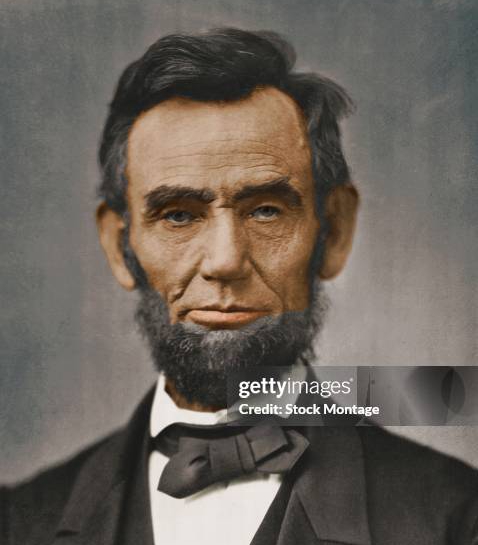
Yosemite Park Reservation was next in 1864 when President Abraham Lincoln transferred, at the state's request, land in the Yosemite Valley to California.
Yellowstone National Park, created in 1872, was America's first federally owned and administered park.
There was no mention of preserving an individual's right to hunt and fish in the Hot Springs, Yosemite, or Yellowstone acquisitions.
Vermont's General Assembly in 1777 was the first state to pass a bill guaranteeing an individual's right to hunt and fish on state property.
When the New York State Park Commission created the 1,303-square-mile Adirondack Park in 1873, however, it did not just protect hunting and fishing, it promoted them.
at Irondack Park was perceived by the New York State Park Commission, a seven-member committee headed by former New York Governor and 1868 presidential candidate Horatio Seymour.
Each year, approximately 5 million public land hunters put their leather boots in eastern forests and on western sands, or don rubber boots to trudge through Gulf Coast gumbo mud.
They have this opportunity because it is guaranteed by America's Bill of Rights.
It was not a simple or easy journey.
Public land has always been subject to the cross currents of competing interests.
Its acquisition and access tried, poked, and prodded since our country was founded.
Our land and wildlife could have easily been the privilege initially of only royalty.
Instead, these resources belong to the people.
Early in America's history, guardianship of shared resources included navigable waters, forest resources, and public recreation.
Called public trust property, these shared natural resources were part of the 10th Amendment to the Bill of Rights, which, for rights not specifically delegated to the federal government, gave oversight powers to individual states in their role as trustees for the people.
The U.S. Supreme Court, in a series of 19th century decisions, expanded the scope of public trust property, ruling that wildlife was also the property of the state and held in trust for the benefit of its citizens.
Our Constitution and Bill of Rights set the stage for who owned America's public land.
The federal government held title to property, such as territories, until some or all ownership was transferred to a state after it was admitted to the Union.
The government could, however, retain title for obligations that included public recreation and conservation.
In theory, it is a simple model.
In practice, not so much.
Yet our imperfect public land model has endured for 235 years.
Early Public Hunting Land Acquisition The first federal land set aside to protect natural resources for the public was Hot Springs in the Arkansas Territory.
Signed into law by President Andrew Jackson in 1832, the purchase provided access to the perceived benefits of the therapeutic spring water.
Yosemite Park Reservation was next in 1864 when President Abraham Lincoln transferred, at the state's request, land in the Yosemite Valley to California.
Yellowstone National Park, created in 1872, was America's first federally owned and administered park.
There was no mention of preserving an individual's right to hunt and fish in the Hot Springs, Yosemite, or Yellowstone acquisitions.
Vermont's General Assembly in 1777 was the first state to pass a bill guaranteeing an individual's right to hunt and fish on state property.
When the New York State Park Commission created the 1,303-square-mile Adirondack Park in 1873, however, it did not just protect hunting and fishing, it promoted them.
at Irondack Park was perceived by the New York State Park Commission, a seven-member committee headed by former New York Governor and 1868 presidential candidate Horatio Seymour.
The rest of this transcript — segmented and speaker-labeled, so you land on the exact moment something was said
Search every transcript — by keyword, by phrase, or by meaning, across every show Radar indexes
Trends — what is surging across podcasts, measured against its own baseline
Alerts — when a name you follow appears in a newly indexed episode
No account is needed to search Radar.