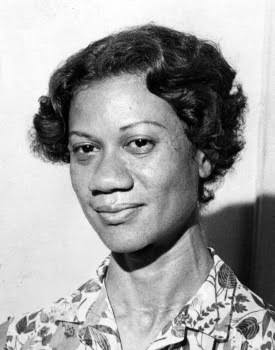
Marcia ChatelainGuest
Kishauna SoljourHost
I mean, the stories you tell have, I think, moments of profound struggle, disappointment and loss.

Also, I think I was blown away because we have these very sanitized, let's say, linear stories about women like Rosa Parks and Josephine Baker and even Daisy Bates and sort of the retelling and rewriting.

And what I'm interested is you could share with our listeners how How do we tell a story where we recognize that these women were shaped by their lived experiences that had these struggles and disappointments and loss? But in the moment or over time, most of that messiness gets erased to tell a story where they're these super women who show up in the stage.

And even in that moment, they're relegated to either saying nothing or, you know, stand up, sit down.

Well, I don't know who it serves because, you know, I feel like my job is not to create more heroes.

There have been some recent publications about her that have really just been like, you know, she was a very polarizing figure for some of the reasons we would assume because of her advocacy for school integration.

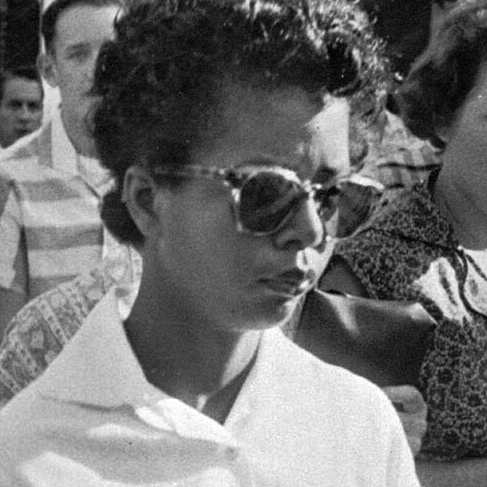
But also for some of the ways that she moved, you know? And I remember reading a book, it might even be like 15 years now, called Elizabeth and Hazel, Two Women of Little Rock, that was about that very famous picture where Elizabeth Eckford is trying to integrate Little Rock Central High School, and there's that horrible white mob behind her, right? And she was the only one of the nine who went by herself.

And I remember reading this incredible book about how they tried to reconnect as adults and they tried to heal and it didn't work.

And I thought, this is the book about the civil rights movement I want my students to read.

Because after we are fed, and I think an understandable dose of these are heroes, these people stood for something, we need to find out what happens next.

You know, some people are able to metabolize the trauma and metabolize the experiences.

You know, some people become like the late John Lewis, who are able to carry forward a message of love and grace and forgiveness.

And it's the people who don't that I'm always fascinated by, not because I think they should make a different choice.
The rest of this transcript — segmented and speaker-labeled, so you land on the exact moment something was said
Search every transcript — by keyword, by phrase, or by meaning, across every show Radar indexes
Trends — what is surging across podcasts, measured against its own baseline
Alerts — when a name you follow appears in a newly indexed episode
No account is needed to search Radar.