New Books in Science, Technology, and Society
Oct 16, 2026 · 46 min · 15 segments
How AI is rewiring our social fabric—and how we can better shape our future. The age of AI is not what you think. Rather than ushering in a fourth Industrial Revolution, AI has become a crucial…
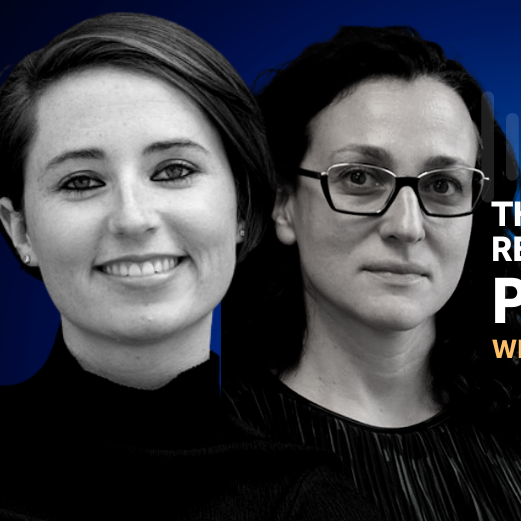
Mona SloaneGuestPete KunzeHostNow, obviously, we're both at universities, which in many ways are kind of centers for AI discourse, right? Whether it's a, a boosterism or it's jeremiads, or it's the colleagues in the middle who are just shrugging their shoulders and scratching their heads.
So one of the things I appreciated in reading your book is, you know, y- you're deliberately, as a sociologist, as someone who's interested in data science, as someone who has an investment in media studies, kind of taking up these myths or this lore around AI, um, and I'm wondering if you could kind of identify and walk us through some of the, um, premises or, um, notions about AI that you see yourself kind of taking up and writing against with this project.

Um, one of the things I write against in the book, and I'm really not the only one who is doing this or has been doing this, there are, you know, many terrific scholars who've done this before me, um, but is the notion, is the sort of polarized, um, narrative structure that we fall back onto when a new technology rolls around, right? Which is utopia, dystopia.

Either we'll all, um, live terrific lives, we'll be so wealthy, society will be so prosperous that we will have u... we will need UBI because we won't, people won't have jobs, and it's going to be a wonderful thing, right? Uto- utopia, the, the, the liberation of humankind just through technology.

And then on the other end, we have your odd robot takeover, general artificial intelligence, um, we will all die, this is the end of humanity story.

And this is old, right? This goes back to sort of Greek myths and, um, and, and other narrative places.

A ton of really wonderful research has been done on this in places like the Cambridge Librium Institute and, you know, these are...

So I'm right against that because what, what is happening here is, A, we're really only focused on technology and real lab technologists take on the role of social scientists or society writ large, and let them decide for us.

Um, and, um, the other thing I sort of, um, write against and that's kind of related is the idea of AI as magic, right? As this sort of magical thing that just happens to us that is, um, free from social and political contexts and decisions and questions around power and agency and, um, institutions, discretionary decision-making, the professions, and, and all these kind of things.

So those are really the two things I write against, and I, um, really tried my best to write a sober book [chuckles] that is Um, sticking with the mission of describing and analyzing what's going on rather than just say, "Oh, the polarizing discourse is just bad, and obviously AI isn't magic," because of this polarizing discourse has material and political effects that already reshuffle and reorganize society.

If we look at the whole data center infrastructure build out that we're looking at in the United States at the moment, the hyper-capitalization of the AI industry and the cloud industry and so forth, so we can't just dismiss this, right? So I was trying to really write to the middle with my social science hat on.
I, I read quite a bit of sociology doing my work in media studies and, and sometimes I get in the weeds with it, but I, I really appreciated the way that you break this down and, and walk us through it.
And I, I think you'll find readership outside the academy with this book because it, it seems to be intended to bring those folks into the conversation as well.

So the idea, um, of the oracle or the opening of the book with the oracle, you know, I say we now live in a world of oracles, I think that's the first sentence.

That flows from my observation that what really is going on, which again was sort of the question I was asking, was a sort of pivot towards prediction as a sort of supra, um, logic for social organization, right? Versus, um, managerialism or hyperconnectivity or just capitalism, right? So I was interested in forecasting, prediction, and sort of the cultural power that has historically been associated with that.

in, in Ancient Greece in the Oracle of Delphi and the, um, notion that predictions centers power and authority, um, and not just economic power, um, but also political and cultural power, right? A cultural embrace of prediction.

And so if you'll look at the geopolitical discourse around artificial intelligence, which for about a decade has been described as the, quote-unquote, "AI arms race," that is a s- We're, we're in a similar moment, I think, where, where the underpinning idea is that prediction ought to mediate society, ought to mediate global political, economic, uh, military relations, and whoever...
Now, obviously, we're both at universities, which in many ways are kind of centers for AI discourse, right? Whether it's a, a boosterism or it's jeremiads, or it's the colleagues in the middle who are just shrugging their shoulders and scratching their heads.
So one of the things I appreciated in reading your book is, you know, y- you're deliberately, as a sociologist, as someone who's interested in data science, as someone who has an investment in media studies, kind of taking up these myths or this lore around AI, um, and I'm wondering if you could kind of identify and walk us through some of the, um, premises or, um, notions about AI that you see yourself kind of taking up and writing against with this project.

Um, one of the things I write against in the book, and I'm really not the only one who is doing this or has been doing this, there are, you know, many terrific scholars who've done this before me, um, but is the notion, is the sort of polarized, um, narrative structure that we fall back onto when a new technology rolls around, right? Which is utopia, dystopia.

Either we'll all, um, live terrific lives, we'll be so wealthy, society will be so prosperous that we will have u... we will need UBI because we won't, people won't have jobs, and it's going to be a wonderful thing, right? Uto- utopia, the, the, the liberation of humankind just through technology.

And then on the other end, we have your odd robot takeover, general artificial intelligence, um, we will all die, this is the end of humanity story.

And this is old, right? This goes back to sort of Greek myths and, um, and, and other narrative places.

A ton of really wonderful research has been done on this in places like the Cambridge Librium Institute and, you know, these are...

So I'm right against that because what, what is happening here is, A, we're really only focused on technology and real lab technologists take on the role of social scientists or society writ large, and let them decide for us.

Um, and, um, the other thing I sort of, um, write against and that's kind of related is the idea of AI as magic, right? As this sort of magical thing that just happens to us that is, um, free from social and political contexts and decisions and questions around power and agency and, um, institutions, discretionary decision-making, the professions, and, and all these kind of things.

So those are really the two things I write against, and I, um, really tried my best to write a sober book [chuckles] that is Um, sticking with the mission of describing and analyzing what's going on rather than just say, "Oh, the polarizing discourse is just bad, and obviously AI isn't magic," because of this polarizing discourse has material and political effects that already reshuffle and reorganize society.

If we look at the whole data center infrastructure build out that we're looking at in the United States at the moment, the hyper-capitalization of the AI industry and the cloud industry and so forth, so we can't just dismiss this, right? So I was trying to really write to the middle with my social science hat on.
I, I read quite a bit of sociology doing my work in media studies and, and sometimes I get in the weeds with it, but I, I really appreciated the way that you break this down and, and walk us through it.
And I, I think you'll find readership outside the academy with this book because it, it seems to be intended to bring those folks into the conversation as well.

So the idea, um, of the oracle or the opening of the book with the oracle, you know, I say we now live in a world of oracles, I think that's the first sentence.

That flows from my observation that what really is going on, which again was sort of the question I was asking, was a sort of pivot towards prediction as a sort of supra, um, logic for social organization, right? Versus, um, managerialism or hyperconnectivity or just capitalism, right? So I was interested in forecasting, prediction, and sort of the cultural power that has historically been associated with that.

in, in Ancient Greece in the Oracle of Delphi and the, um, notion that predictions centers power and authority, um, and not just economic power, um, but also political and cultural power, right? A cultural embrace of prediction.

And so if you'll look at the geopolitical discourse around artificial intelligence, which for about a decade has been described as the, quote-unquote, "AI arms race," that is a s- We're, we're in a similar moment, I think, where, where the underpinning idea is that prediction ought to mediate society, ought to mediate global political, economic, uh, military relations, and whoever...
The rest of this transcript — segmented and speaker-labeled, so you land on the exact moment something was said
Search every transcript — by keyword, by phrase, or by meaning, across every show Radar indexes
Trends — what is surging across podcasts, measured against its own baseline
Alerts — when a name you follow appears in a newly indexed episode
No account is needed to search Radar.