Oct 1, 2026 · 1 hr 13 min · 14 segments
Today we talk about leadership and advocacy with Dr. Antonio Puente. Show notes are available at www.NavNeuro.com/200 \_\_\_\_\_\_\_\_\_\_\_\_\_\_\_\__ If you'd like…
I do wanna comment in general on this idea that there's a standardized or linear path to becoming a neuropsychologist.
You know, to be a neuropsychologist, the thinking goes you should be born and educated at least a neuropsychologist in the United States.
You get into grad school and clinical psych, neuropsych concentration, internship, post-doc in neuropsychology.
You know, it can feel like there's this well-worn and very specific path, and that is what we must do.
Uh, many people come to our specialty through other pathways, and we wanna encourage that.
I'm wondering how you feel like we're doing in supporting people from varying backgrounds to pursue neuropsychology in the US and what we could improve on.
Yeah, well, maybe we'll talk about the Minnesota conference, but I'll, I'll start with, uh, with my, my first line in that conference.
I was the lead speaker, and I start, [chuckles] I started with, "I, Antonio Puente- Had made history in clinical neuropsychology.
[laughs] It was like, God, when, when Eric and SOP has said, "I am the first person to take the ABPP exam in neuropsychology and flunk."
I wrote a, a chapter many years ago, about in the early '90s, uh, that, that I, I think that sometimes not following the, the, the standard paths, in fact, I wrote a chapter called "Unconventional Path in, uh, Becoming a Neuropsychologist," and, uh, sometimes it's really good because it, it allows you to be outside of the, the standard approaches, and, uh, sometimes it's easy to, you know, if you're really successful, to add a rung in a ladder, but sometimes when you come out of nowhere like I did, uh, you, you end up maybe, uh, not by design, uh, maybe by luck and, and more like by pressure, you, you build ladders.
That I'm more than happy to explain that as we go through some of the other issues, especially with advocacy.
I was one of the first Westerners to get to his lab back in the early '90s, again, by luck and serendipity, among other things, and that really just shaped my thinking in neuropsychology.
I do wanna comment in general on this idea that there's a standardized or linear path to becoming a neuropsychologist.
You know, to be a neuropsychologist, the thinking goes you should be born and educated at least a neuropsychologist in the United States.
You get into grad school and clinical psych, neuropsych concentration, internship, post-doc in neuropsychology.
You know, it can feel like there's this well-worn and very specific path, and that is what we must do.
Uh, many people come to our specialty through other pathways, and we wanna encourage that.
I'm wondering how you feel like we're doing in supporting people from varying backgrounds to pursue neuropsychology in the US and what we could improve on.
Yeah, well, maybe we'll talk about the Minnesota conference, but I'll, I'll start with, uh, with my, my first line in that conference.
I was the lead speaker, and I start, [chuckles] I started with, "I, Antonio Puente- Had made history in clinical neuropsychology.
[laughs] It was like, God, when, when Eric and SOP has said, "I am the first person to take the ABPP exam in neuropsychology and flunk."
I wrote a, a chapter many years ago, about in the early '90s, uh, that, that I, I think that sometimes not following the, the, the standard paths, in fact, I wrote a chapter called "Unconventional Path in, uh, Becoming a Neuropsychologist," and, uh, sometimes it's really good because it, it allows you to be outside of the, the standard approaches, and, uh, sometimes it's easy to, you know, if you're really successful, to add a rung in a ladder, but sometimes when you come out of nowhere like I did, uh, you, you end up maybe, uh, not by design, uh, maybe by luck and, and more like by pressure, you, you build ladders.
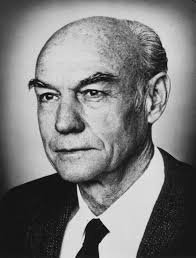
That I'm more than happy to explain that as we go through some of the other issues, especially with advocacy.
I was one of the first Westerners to get to his lab back in the early '90s, again, by luck and serendipity, among other things, and that really just shaped my thinking in neuropsychology.
The rest of this transcript — segmented and speaker-labeled, so you land on the exact moment something was said
Search every transcript — by keyword, by phrase, or by meaning, across every show Radar indexes
Trends — what is surging across podcasts, measured against its own baseline
Alerts — when a name you follow appears in a newly indexed episode
No account is needed to search Radar.