Oct 13, 2026 · 9 hr 47 min · 48 segments
"Foxe's Book of Martyrs Vol 2" delves into the lives and deaths of early Christian and Protestant martyrs, chronicling their unwavering faith and the sacrifices they made for their beliefs. This…
Like as there was no place, either of Germany, Italy, or France, wherein there were not some branches sprung out of that most fruitful root of Luther, so likewise was not this isle of Britain without his fruit and branches.
Amongst whom was Patrick Hamilton, a Scotchman born of high and noble stock and of the king's blood, of excellent towardness, twenty-three years of age, called Abbot of Fern.
Coming out of his country with three companions to seek godly learning, he went to the University of Marburg in Germany, which university was then newly erected by Philip, Landgrave of Hesse.
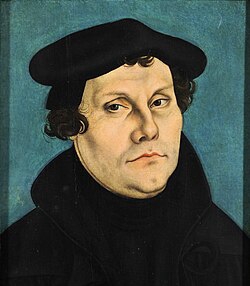
During his residence here, he became intimately acquainted with those eminent lights of the gospel, Martin Luther and Philip Melanchthon, from whose writings and doctrines he strongly attached himself to the Protestant religion.
The Archbishop of St. Andrews, who was a rigid papist, learning of Mr. Hamilton's proceedings, caused him to be seized, and being brought before him, after a short examination relative to his religious principles, he committed him a prisoner to the castle, at the same time ordering him to be confined in the most loathsome part of the prison.
The next morning, Mr. Hamilton was brought before the bishop and several others for examination, when the principal articles exhibited against him were his publicly disapproving of pilgrimages, purgatory, prayers to saints for the dead, etc.
These articles Mr. Hamilton acknowledged to be true, in consequence of which he was immediately condemned to be burned, and that his condemnation might have the greater authority, they caused it to be subscribed by all those of any note who were present, and to make the number as considerable as possible, even admitted the subscription of boys who were sons of the nobility.
So anxious was this bigoted and persecuting prelate for the destruction of Mr. Hamilton that he ordered his sentence to be put in execution on the afternoon of the very day it was pronounced.
He was accordingly led to the place appointed for the horrid tragedy, and was attended by a prodigious number of spectators.
The greatest part of the multitude would not believe it was intended that he should be put to death, but it was only done to frighten him, and thereby bring him over to embrace the principles of the Romish religion.
When he arrived at the stake, he kneeled down, and for some time prayed with great fervency.
After this he was fastened to the stake, and the faggots placed round him.
A quantity of gunpowder, having been placed under his arms, was first set on fire which scorched his left hand, and one side of his face, but did no material injury, neither did it communicate with the faggots.
In consequence of this, more powder and combustible matter were brought, which being set on fire took effect, and the faggots being kindled he called out, with an audible voice, quote, Lord Jesus, receive my spirit.
How long shall darkness overwhelm this realm? And how long wilt thou suffer the tyranny of these men? End quote.
The fire burning slow put him to great torment, but he bore it with Christian magnanimity.
What gave him the greatest pain was, the clamor of some wicked men set on by the friars, who frequently cried, Turn thou heretic, call upon our lady, say Salve Regina, etc.
To whom he replied, Depart from me, and trouble me not, ye messengers of Satan.
One Campbell, a friar, who was the ringleader, still continuing to interrupt him by opprobrious language, he said to him, Wicked man, God forgive thee.
After which, being prevented from further speech by the violence of the smoke and the rapidity of the flames, he resigned up his soul into the hands of him who gave it.
This steadfast believer in Christ suffered martyrdom in the year 1527.
One Henry Forrest, a young inoffensive Benedictine, being charged with speaking respectfully of the above Patrick Hamilton, was thrown into prison, and in confessing himself to a friar, owned that he thought Hamilton a good man, and that the articles for which he was sentenced to die might be defended.
This being revealed by the friar, it was received as evidence, and the poor Benedictine was sentenced to be burnt.
Whilst consultation was held with regard to the manner of his execution, John Lindsay, one of the Archbishop's gentlemen, offered his advice to burn Friar Forrest in some cellar, for, said he, quote, The smoke of Patrick Hamilton hath infected all those on whom it blew, end quote.
This advice was taken, and the poor victim was rather suffocated than burnt.
The rest of this transcript — segmented and speaker-labeled, so you land on the exact moment something was said
Search every transcript — by keyword, by phrase, or by meaning, across every show Radar indexes
Trends — what is surging across podcasts, measured against its own baseline
Alerts — when a name you follow appears in a newly indexed episode
No account is needed to search Radar.