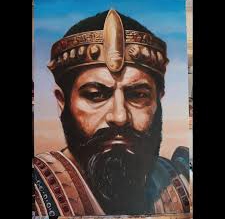
The Carthaginians inherited from their Phoenician ancestors a tradition of long-distance sailing and exploration.
By 500 BC, they controlled Mediterranean trade routes and were eager to find both new resources and new markets.
A chief motivation for Hanno's expedition was likely to secure West African gold and other wealth.
Gold from Trans-Saharan trade had become vital to Carthage's economy in this era, and a sea-based trade route could cut out some of the intermediaries.
The city's leadership also saw an opportunity to found new settlements along the African coast, both to expand Carthaginian influence and to relieve population pressures at home.
Thus, Hanno set sail with a fleet of about 60 ships and a sizable contingent of men and women.
His logbook claims he brought an improbable 30,000 colonists and sailors along with him.
Modern historians dispute this number and suggest the true amount was likely closer to 5,000, which still amounts to an absolutely massive expedition.
Notably, most of these individuals would be dropped off in what is now Morocco, with only Hano's elite crew venturing into sub-Saharan Africa.
Equipped with food and trade goods, this fleet passed through the Pillars of Hercules, now known as the Strait of Gibraltar, and into the vast Atlantic beyond.
Hano's voyage down the West African coast began with the establishment of colonies in what is now Morocco.
Two days sailing beyond the Pillars of Hercules, Hanno founded the first city called Thymeitarian, located in present-day Morocco.
Notably, the logbook is somewhat vague about the location of all settlements, a fact that historians believe paradoxically lends credibility to Hanno's account.
The reason for this is because Hanno, writing a contemporary account, didn't want the location of the colonies he founded to fall into enemy hands, if they should find the logbook themselves.
But let's get back to this incredible voyage.
The fleet then proceeded along the coast until they arrived at a destination called Cape Solis, also located in present-day Morocco, where they built a temple to the sea god.
Sailing eastward a half day from that cape, Hanno's crew encountered a coastal lagoon teeming with wildlife.
Notably, he commented that elephants and other wild creatures grazed among the reeds.
This could have been one of the marshy inlets along today's Moroccan coast, a vivid reminder of North Africa's rich fauna in antiquity, now lost to time and human expansion.
Continuing on, Hanno reports founding five more settlements, Karikon Tychos, Gita, Acra, Melita, and Arambes.
These sites were likely small trading posts or colonies, and archaeologists have indeed found traces of Carthaginian presence in this region, providing verification for Hanno's voyage.
By establishing these outposts along the Moroccan Atlantic coast, Carthage extended its reach and paved the way for safer staging points before pushing farther south.
The logbook recounts that after the string of Moroccan settlements, the fleet reached a great river called Lyksos, where they encountered the Lyksites, a people herding cattle on the riverside.
The rest of this transcript — segmented and speaker-labeled, so you land on the exact moment something was said
Search every transcript — by keyword, by phrase, or by meaning, across every show Radar indexes
Trends — what is surging across podcasts, measured against its own baseline
Alerts — when a name you follow appears in a newly indexed episode
No account is needed to search Radar.