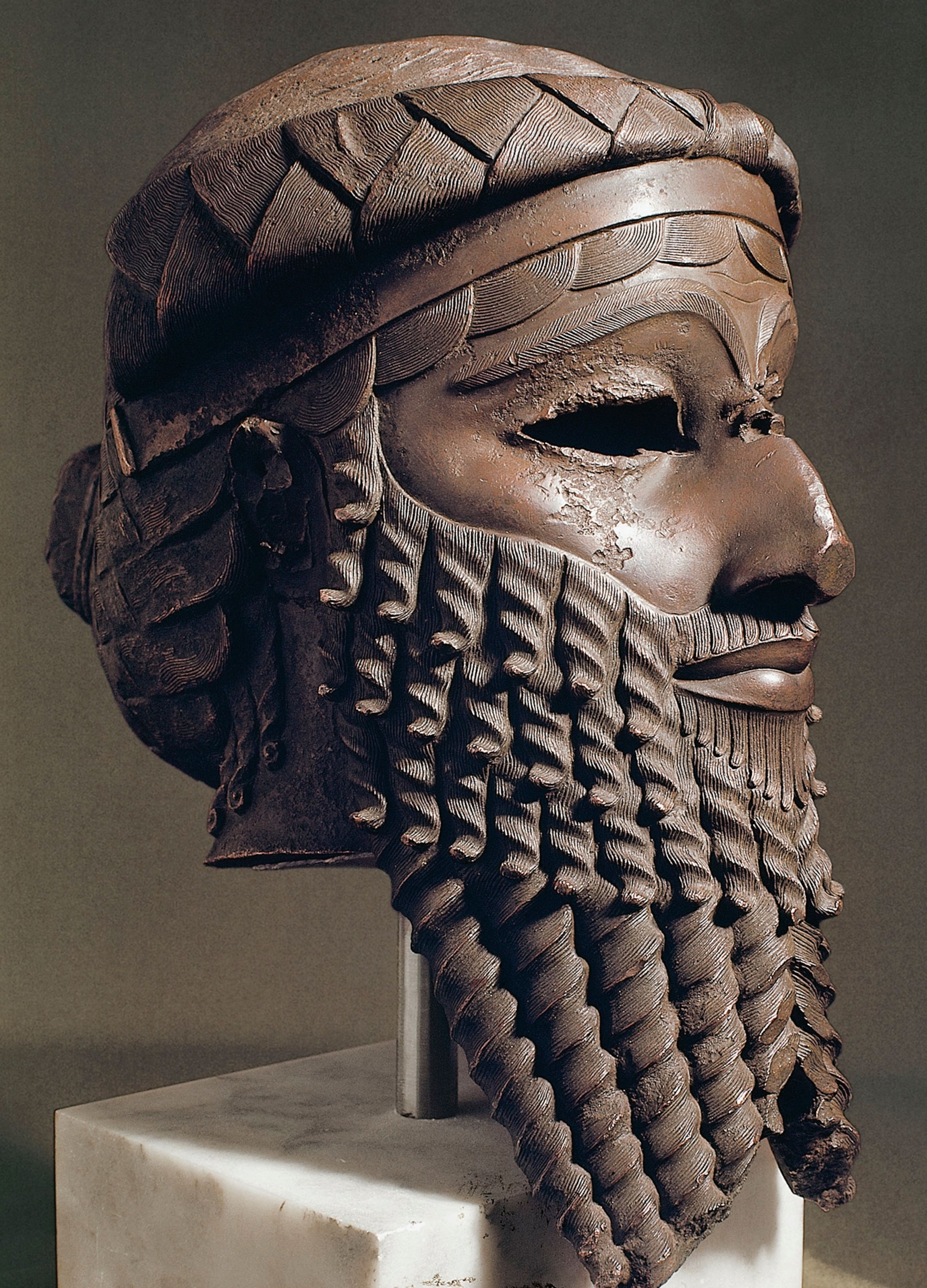
Sargon of Akkad
RulerWikipedia
172
MENTIONS
33
EPISODES
28
PODCASTS
Search complete. 172 mentions across 33 episodes found for "Sargon of Akkad".
Oct 7, 2026

Joe RoganHOST
And then you've highlighted this very much in some of your videos.
Joe RoganHOST
There's a lot of weirdness when you compare some of these stories, like the story of Moses and Sargon of Akkad.
Joe RoganHOST
They, they seem incredibly similar.
Dan McClellanGUEST
Yeah.
Joe RoganHOST
That's drinkag1.com/joerogan.
Dan McClellanGUEST
Yeah, I think, I think there's der- definitely some kind of genetic relationship between the two, and specifically it's the story of him as a baby being placed into, uh, a container and set adrift in, in a river.
Dan McClellanGUEST
That is Sargon the Great, who dates to long before, uh, a historical Moses.
Dan McClellanGUEST
But that tradition, I think the earliest version of it we've found in the, uh, Akkadian literature dates to maybe ninth or eighth century BCE, which is around the time that people think that, uh, or the scholars think that, uh, the tradition of Moses and the narrative of the Exodus was beginning to come together.

HollyGUEST
And then the Book of Proverbs, parts of it closely mirrors an ancient Egyptian document called Amenemope.
HollyGUEST
And then when we look at Moses as a baby put into a basket, that same story shows up earlier in another ancient writing called Sargon of Akkad.
HollyGUEST
I hope I'm pronouncing this shit right.
HollyGUEST
I only ever read about it.

Heather M. ByeNARRATOR
There are two points which it seemed to me of sufficient importance to justify my expression of dissent from his views.
Heather M. ByeNARRATOR
These are the geographical situation of the land of Magan and the historical character of the annals of Sargon of Akkad.
Heather M. ByeNARRATOR
The evidence about Magan is very clear.
Heather M. ByeNARRATOR
Magan is usually associated with the country of Melukhak, the salt desert, and in every text in which its geographical position is indicated, it is placed in the immediate vicinity of Egypt.
Heather M. ByeNARRATOR
It was this list which originally led Opert, Lenormant, and myself independently to the conviction that Magan was to be looked for in the Sinaitic peninsula.
Heather M. ByeNARRATOR
Magan included, however, the Midian of Scripture, and the city of Magan, called Makan in Semitic Assyrian, is probably the Makhna of classical geography, now represented by the ruins of Mukna.
Heather M. ByeNARRATOR
As I have always maintained the historical character of the annals of Sargon of Akkad, long before recent discoveries led Professor Hilprecht and others to adopt the same view, it is as well to state why I consider them worthy of credit.
Heather M. ByeNARRATOR
In themselves the annals contain nothing improbable.

Heather MbyeNARRATOR
There are two points which it seemed to me of sufficient importance to justify my expression of dissent from his views.
Heather MbyeNARRATOR
These are the geographical situation of the land of Magan and the historical character of the annals of Sargon of Akkad.
Heather MbyeNARRATOR
The evidence about Magan is very clear.
Heather MbyeNARRATOR
Magan is usually associated with the country of Melukhakh, the salt desert, and in every text in which its geographical position is indicated, it is placed in the immediate vicinity of Egypt.
Heather MbyeNARRATOR
It was this list which originally led Opert, Lenormant and myself independently to the conviction that Magan was to be looked for in the Sinaitic peninsula.
Heather MbyeNARRATOR
Magan included, however, the Midian of Scripture and the city of Magan, called Makan in Semitic Assyrian, is probably the Makhna of classical geography, now represented by the ruins of Mukna.
Heather MbyeNARRATOR
As I have always maintained the historical character of the annals of Sargon of Akkad, long before recent discoveries led Professor Hilprecht and others to adopt the same view, it is as well to state why I consider them worthy of credit.
Heather MbyeNARRATOR
In themselves the annals contain nothing improbable.

Alex LeffHOST
His name was Sargon, born to a humble gardener who worked his way up to be cupbearer to the king.
Alex LeffHOST
But Sargon of Akkad had ambition that would lead him far beyond gardens and cups.
Alex LeffHOST
Up until now, it was the Sumerian Leviathan who conquered.
Alex LeffHOST
Much of the land around it had fallen under its sway.
Alex LeffHOST
But for the first time, Sumer would soon be conquered itself.
Alex LeffHOST
And it would be Sargon of Akkad who would do it.
Alex LeffHOST
One by one, cities fell.
Alex LeffHOST
First Simeram, then Aram, then Mari.

Steven SeitelNARRATOR
The Babylonians were a nation of agriculturalists and merchants.
Steven SeitelNARRATOR
Sargon of Akkad, who founded the first Semitic empire in Asia, three thousand eight hundred BC, was brought up by an irrigator and was himself a gardener.
Steven SeitelNARRATOR
Belshazzar, son of the last Babylonian king, dealt in wool on a considerable scale.
Steven SeitelNARRATOR
Excavations in the land watered by the Tigris and Euphrates tells the tale of the moneylenders, importers, dyers, fullers, tanners, saddlers, smiths, carpenters, shoemakers, stonecutters, ivory cutters, brickmakers, porcelain makers, potters, vintners, sailors, butchers, engineers, architects, painters, sculptors, musicians, dealers in rugs, clothing, and fabrics, who contributed to the culture of this great historic people.

KeeganHOST
I had them recited in order before Shamash.
KeeganHOST
The royal image, a statue of Akkad, brought up visions before me and cried out, 'What pernicious portent have you tolerated in the royal image?' Again it spoke, 'Say to the gardener,' and here the cuneiform becomes unreadable, but then goes on, 'It made inquiry concerning Ningaladina, Shamash Ibni, and Naid Marduk.
KeeganHOST
Concerning the rebellion in the land, it said, 'Take the walled cities one after the other, that a cursed one will not be able to stand before the gardener.'" End quote.
KeeganHOST
So, like, in this royal letter, right, uh, he's reciting portents before the idol, the royal image.
KeeganHOST
The image is responding back to him and asking him questions, and it's telling him what to do, and it's making inquiries concerning all of these other people, and it's, it's strategizing regarding how he should deal with a rebellion.
KeeganHOST
Uh, the references to the gardener, uh, you know, in Mesopotamia, gardeners were, like, a highly respected profession.
KeeganHOST
I believe it was Sargon of Akkad who, who was, uh, raised by a gardener.
KeeganHOST
He, he, like, proudly recounted this fact and, uh, often referred to himself as such, which, you know, I guess that's very different from the way, uh, rulers tend to conceive of themselves today.

Gary WayneGUEST
Yeah, and as you move into the end time, what we're talking about is the ancient Babylon religion rising again in the end time, which rose again after the flood at babel but actually is rooted in enochian mysticism before the flood it is the same religion they would prefer to take any time other than the end time to introduce the antichrist they have been produced they've been trying to present the antichrist in the antediluvian world and with even very early into the post-diluvian world with nimrod you can look at people like Nebuchadnezzar.
Gary WayneGUEST
You can look at people like Sargon.
Gary WayneGUEST
You can look at people like Alexander, Napoleon, Adolf Hitler.
Gary WayneGUEST
The spirit of the Antichrist has always been there, will always be there, and is trying to raise an Antichrist figure to the throne of power.

speaker_0NARRATOR
Akkad was the centre of what many historians call the world's first empire.
speaker_0NARRATOR
Around the 24th century BCE, Sargon of Akkad transformed southern Mesopotamia through conquest, alliance, administration, and raw military force.
speaker_0NARRATOR
He united city-states that had spent centuries competing with one another.
speaker_0NARRATOR
Then he pushed outward, into Syria, Elam, Anatolia, and lands beyond the familiar river valleys.
speaker_0NARRATOR
Tribute, grain, livestock, timber, stone, metals and labour moved through networks on a scale earlier city-states had never achieved.
speaker_0NARRATOR
The empire did not erase local identities, but it placed them beneath a new structure of power, and that structure looked unstoppable.
speaker_0NARRATOR
Sargon's grandson, Naram-Sin, took the project even further.
speaker_0NARRATOR
He called himself King of the Four Quarters, meaning ruler of the entire world as Mesopotamians understood it.
23 more episodes mention Sargon of Akkad.
Create an account to see the whole feed, search across every transcript, and follow the entities you care about.