Mesopotamia
Region in IraqWikipedia
2.8k
MENTIONS
1.3k
EPISODES
864
PODCASTS
Search complete. 2787 mentions across 1279 episodes found for "Mesopotamia".
Sep 17, 2026

Jon D. LevensonGUEST
Uh, very hard questions to answer because we're not sure when the book is written and how much actual history the readership would have had, how much knowledge of the history of Assyrian, Israelite-Assyrian relations the readership of Jonah would have, uh, expected to know.
Jon D. LevensonGUEST
Uh, Assyria was a major empire in Mesopotamia, the major empire, uh, of Mesopotamia bearing down on the West, bearing down on the Aramean states, and on Israel and Judah in the eighth century BCE.
Jon D. LevensonGUEST
As I mentioned, they eventually destroyed the northern kingdom, the kingdom of Israel, that is to say they were Samaria, whatever you wanna call it, in 722 BCE.
Jon D. LevensonGUEST
So they're thought of as a, uh, as an enemy, and a violent enemy.
14 MINS LATER
Jonathan SilverHOST
And that is what terrifies them, that whereas the pagan imagination understands that particular gods are connected to particular territory, this God is, uh, not encompassed by the borders of any particular territory.
Jon D. LevensonGUEST
That may be playing a role here, at least in the m- mind of the Israelite community, the Israelite Jewish author of this text, who may have that view of the pagans, let's say the non-Israelites.
Jon D. LevensonGUEST
But the truth is, if you study Mesopotamian religion, they have gods who have power outside their own communities, outside their own territories, who are cosmic creators in one way or another.
Jon D. LevensonGUEST
So I, I wouldn't wanna push that too far.

Indigo AngelGUEST
...
Indigo AngelGUEST
Uruk.
Indigo AngelGUEST
Like, basically the whole Mesopotamian, um, area.
Tyler KiwalaHOST
Is that where the Tigris and Euphrates is?
Indigo AngelGUEST
Yes, exactly.
Micah DankGUEST
You have the Chinese in the Neolithic dynasty, the Egyptians dynasties 4, 5, and 6.
Micah DankGUEST
You have the Mesopotamians, the early dynastic period, the Sumerians, the early dynastics 3A and 3B, the Peruvians, Norte Chico civilization, and more.
Micah DankGUEST
We find a continuous line of culture, construction, art, and historical records that run through the time of Noah's flood was supposed to happen.
Micah DankGUEST
So we'll get into more art soon.

Linda Moulton HoweNARRATOR
They were used by archeoloids to manage and control the human creations.
Linda Moulton HoweNARRATOR
and workers specifically placed in Mesopotamia.
Linda Moulton HoweNARRATOR
If the March 1981 President Reagan briefing is an accurate transcript, then the very advanced Ebens turned Earth into a social experiment very long ago.
Linda Moulton HoweNARRATOR
But evolving primates were deliberately kept ignorant of the true bigger picture.
Linda Moulton HoweNARRATOR
Government insiders who caught on to what is really happening, they might be running scared.
Linda Moulton HoweNARRATOR
Perhaps they have come to understand that the Mesopotamian overlords were actually Archeloids, that humans worshipped as Sumerian or Anunnaki gods.
Linda Moulton HoweNARRATOR
Those rapid-cycle clone biological entities were made by Ebens according to the Reagan briefing.
Linda Moulton HoweNARRATOR
And how ironic that the Ebens made the Archeloids and then made Homo sapiens sapiens, who worshipped the Archeloids.

Joshua Van AlstineGUEST
Some of them went to the Indus River Valley.
Joshua Van AlstineGUEST
Some of them went to Mesopotamia.
Joshua Van AlstineGUEST
Some of them went to Egypt.
Joshua Van AlstineGUEST
Some of them made it all the way to Algeria.
Joshua Van AlstineGUEST
So they didn't want to end up working on somebody's farm as a peasant.
Joshua Van AlstineGUEST
They said, I'm not going to go there and be a laborer for plants or for a master.
Joshua Van AlstineGUEST
I'd rather be the master of animals in the desert than end up as being mastered and being a part of the domesticated husbandry on a plantation in lower Egypt or in Mesopotamia.
Joshua Van AlstineGUEST
Why would I leave? And that noble pursuit of kind of...

Ryan GableHOST
While Cronin may not have singled out any specific inspiration for his fictional mummy, one detail from the film stands out.
Ryan GableHOST
Nas Moranian's presence is accompanied by a growing presence of coyotes and wild dogs around the family's house, which might make the demon a reference to the Mesopotamian demon Lamashtu.
Ryan GableHOST
In historical depictions such as amulets, sculptures, and plaques, the demon most frequently associated with miscarriages, the Hebrew Lilith, is often flanked by dogs, which are also, you could say, the black hellhounds.
Ryan GableHOST
However, beyond these visual similarities, no clear connection can be established.
Ryan GableHOST
And conservatives especially have been very upset about the Hanuman statue, calling it, you guessed it, demonic.
Ryan GableHOST
which if you know anything about Hanuman, I highly doubt people making those claims do, but if you knew anything about Hanuman, you would know that Hanuman is the very opposite of like a Catholic-style demon, like the absolute total opposite of a Catholic-style demon.
Ryan GableHOST
Or a Mesopotamian demon or an African demon.
Ryan GableHOST
Hanuman is the exact opposite of all of those things.

SimeonHOST
And as we saw from this morning's lesson, Ur of the Chaldees was renowned for its idolatry.
SimeonHOST
It was a hotbed and a center of pagan worship, as was much of the civilization in the Fertile Crescent, the Mesopotamia area at that time.
SimeonHOST
Then we have his brothers, Nahor and Haran, and both of these brothers would play key roles, or their descendants would play some key roles as it related to Abraham's seed.
SimeonHOST
It's very interesting to see the family connections in the Bible.
SimeonHOST
And it's very interesting, right here early in the piece, in verse 30, it tells us, but Sarai was barren, she had no child.
SimeonHOST
So the Holy Spirit highlights that right up front because this is going to be a major part of Abraham and Sarah's journey of faith together, isn't it? so it highlights that right up the front here at the start of the account that you might remember that because this is where their faith was perhaps most sorely tested as they went through so we see something about Abraham's family then we also notice something about Abraham's country as well there are two words that would help us summarize Ur of the Chaldees it was a city firstly of prosperity We have reference there to Ur of the Chaldees in the text.
SimeonHOST
And Ur of the Chaldees was located in that Mesopotamia area.
SimeonHOST
at the Fertile Crescent next to the Euphrates River.

speaker_0HOST
I read thousands of papers.
speaker_0HOST
I physically, in the case of finding Manuland, walk the road between, say, Van and Mesopotamia and back, all before the machines can do anything useful.
speaker_0HOST
The model amplifies a prepared mind.
speaker_0HOST
It could not have prepared one.
speaker_0HOST
The lonely figure in the attic, pram in the hallway, alone with the page, can now reach past the edge of what any single lifetime could grasp at in an afternoon, not by handing over her mind, but by keeping it and pointing the instrument at what she alone can see.
speaker_0HOST
The cure for granting ourselves too little mind is to go and use the mind we have with better tools than any writer before us has owned.
speaker_0HOST
4,300 years ago, Enaduanna, the first named author of human culture, Sargon the Great's daughter, who was a priestess to the moon god Nana in Mesopotamia, 2400 BCE.
speaker_0HOST
Enaduanna heaped the coals in the censer, prepared the offering, and in her own phrase conceived the word.
SimeonHOST
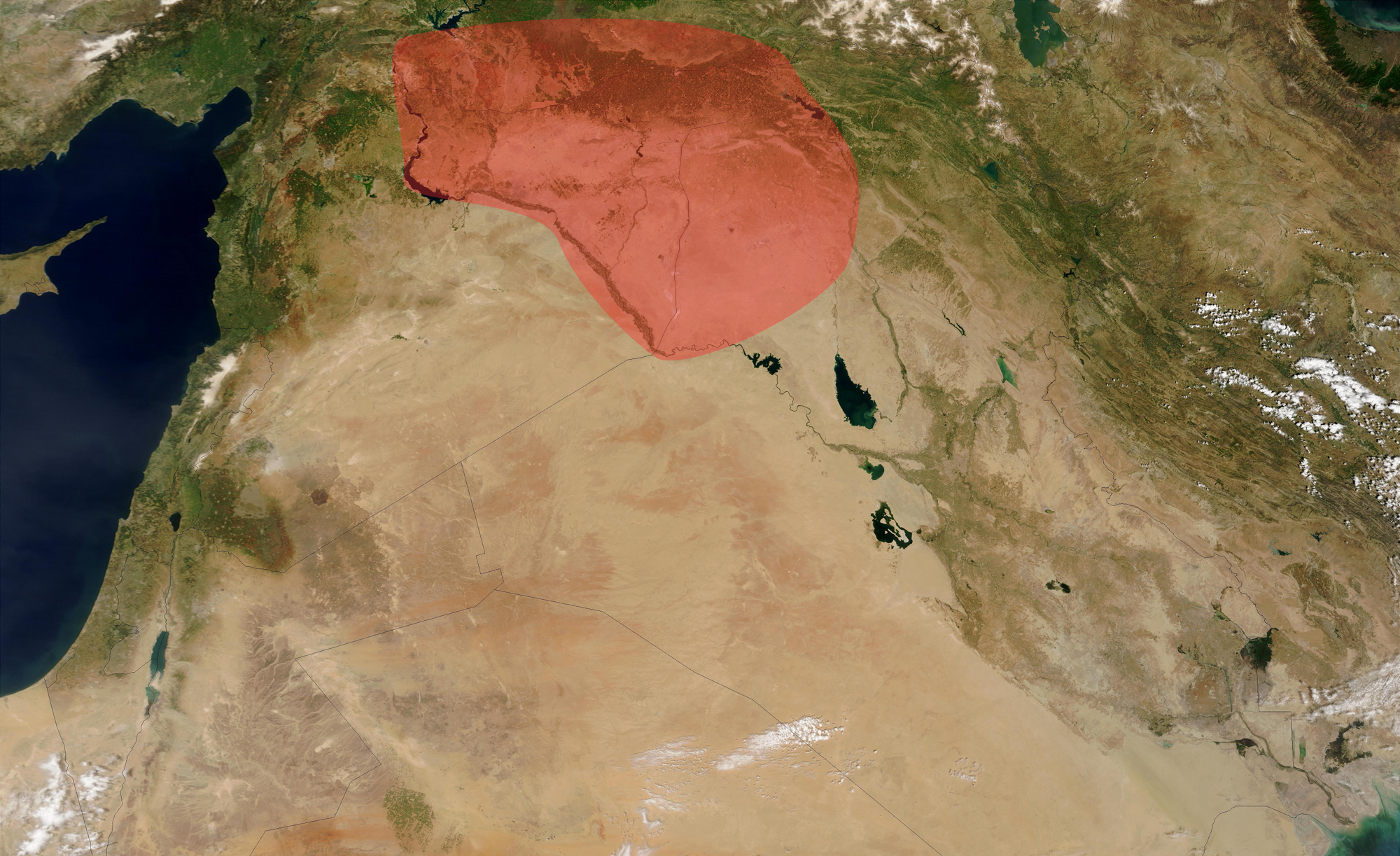
And I've mentioned just briefly the location, but here's a little map showing this fertile crescent, the area of Mesopotamia with the two great river systems here, Euphrates, Tigris and Babylon was somewhere down towards the bottom there.
SimeonHOST
This location is described in the passage here as east of Ararat.
SimeonHOST
They journeyed east, we assume that's coming east from Ararat and that certainly is an accurate description because the land of Shinar, the Mesopotamian plain is located southeast of the mountain range of Ararat and the location of this region is now controlled by modern Iraq so that helps you to just pinpoint in your mind the area we're talking about but this area is a very lush region known as the Fertile Crescent and no doubt because of its water system and the great rivers there and you find that that is something that is a feature of particularly ancient history but even to a certain degree modern history that water plays a very important role in the success of an area now it's interesting isn't it that they chose this location to put down roots as they journeyed Now, was there anything sinful about the prosperity of this region in and of itself? No.
SimeonHOST
Was there anything wrong with the fact that this was a well-watered plain? No.
SimeonHOST
But isn't it interesting when you look at examples like this and examples like Sodom and Gomorrah, that sometimes an environment of prosperity becomes a conducive environment to rebellion against God.

Aidan ThomasHOST
Ancient people did not fight odor, they buried it.
Aidan ThomasHOST
By 3000 BC, Egyptians and Mesopotamians were already making perfume.
Aidan ThomasHOST
Priests used aromatic resins to sweeten temples and bodies alike.
Aidan ThomasHOST
Egyptians rubbed scented oils into skin, into wigs, into linen.
1,269 more episodes mention Mesopotamia.
Create an account to see the whole feed, search across every transcript, and follow the entities you care about.