Hunger & Heart with Kaila Colbin
Sep 1, 2026 · 1 hr 10 min · 14 segments
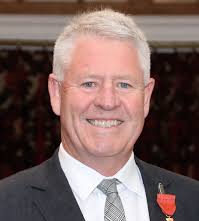
Steve Tew was chief executive of New Zealand Rugby from 2008 to 2019, and ran the Crusaders and the Canterbury Rugby Union from 1996 to 2001. He is now Director of High Performance at High Performance…
Steve TewGuest
Kaila ColbinHost

Where were you at that time? When were you born? You would have been a year a little older than I am.

1981 was the last year of my university study, so I was finishing that master's degree.

I eventually landed on a subject, which was to do a political sociological analysis of sporting contacts between New Zealand and South Africa from 1960 to 1981 because obviously we'd been biding by the wishes of the apartheid regime for a very long time and sent New Zealand teams to South Africa and hosted them and we didn't pick Maori and Polynesian players for a very long time, for example.

I didn't – because I was playing rugby, I wasn't out there on Saturdays because we were busy playing.

But during the week, I would join the protest marches, and my parents found that very difficult because my brother was very pro-tour and – So it was a bit of an untidy period for our family, as it was for many New Zealanders, right? And I think we grew up a lot that year as a country.

It was the first time in my lifetime we'd had that kind of political divide, and seeing the civil unrest and the police response to that was pretty horrifying for New Zealanders who didn't believe that that kind of activity or behaviour happened, but it did, and it does all over the world all the time.

I think for me, the more you are exposed to different things and the more people you meet and the more you listen, the more you learn.

But I think ultimately I benefited – I've had a couple of jobs that have taken me all around the world.

Do you think that – are you two just really different? Do you think you just hung out with different people, like had exposure to different perspectives on it?

Well, at the time I was at university and he wasn't – I mean, my mum was probably neutral.
The rest of this transcript — segmented and speaker-labeled, so you land on the exact moment something was said
Search every transcript — by keyword, by phrase, or by meaning, across every show Radar indexes
Trends — what is surging across podcasts, measured against its own baseline
Alerts — when a name you follow appears in a newly indexed episode
No account is needed to search Radar.