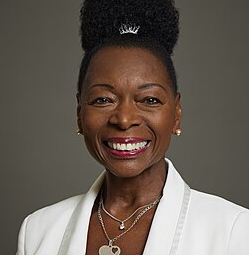
Sharon TaylorGuestLauraHostSo what inspired you, then, to pursue that career, then, in, in politics and local government? You referenced the things that you did-
... before that, but...

My parents came there in the 1950s when they got married, and, um, so the New Town is absolutely fundamental to my life and my politics and my view on community.

Uh, um, you know, the way that, uh, my values and principles have developed over the years.

That principle that we achieve far more working together than we do if we're all, uh, in our little individual units, comes from that background in New Towns.

And the New Towns, um, my New Town, as with all of the first generation New Towns, were part of a very visionary post-war Labour government.

And so, you know, my politics and, uh, my values are all very much bound up with that New Town ethos.
Mm.

And the kind of sense of hope and opportunity and achieving of aspirations that, that, um, that post-war, um, drive, which brought about the New Towns and the NHS and the Education Act and all those things, um, came along, along with.
Mm.

Um, and I can remember, you know, going out with my dad when I was very, very young, probably six or seven.

He, he was delivering leaflets for one of our Labour counselors, who was still on the council when I went on there, by the way.
Wow.
Yeah.
And so perhaps if you could just share a little bit about how those roots then shaped the work that you're doing today before we dive into the, the Lords.
But-
... do you find that you revisit your upbringing and the work that you did in the community to, to help influence what you're doing in government?

Um, I'm very lucky to have, uh, what would, would have been, if you'd asked me...
Mm.
So what inspired you, then, to pursue that career, then, in, in politics and local government? You referenced the things that you did-
... before that, but...

My parents came there in the 1950s when they got married, and, um, so the New Town is absolutely fundamental to my life and my politics and my view on community.

Uh, um, you know, the way that, uh, my values and principles have developed over the years.

That principle that we achieve far more working together than we do if we're all, uh, in our little individual units, comes from that background in New Towns.

And the New Towns, um, my New Town, as with all of the first generation New Towns, were part of a very visionary post-war Labour government.

And so, you know, my politics and, uh, my values are all very much bound up with that New Town ethos.
Mm.

And the kind of sense of hope and opportunity and achieving of aspirations that, that, um, that post-war, um, drive, which brought about the New Towns and the NHS and the Education Act and all those things, um, came along, along with.
Mm.

Um, and I can remember, you know, going out with my dad when I was very, very young, probably six or seven.

He, he was delivering leaflets for one of our Labour counselors, who was still on the council when I went on there, by the way.
Wow.
Yeah.
And so perhaps if you could just share a little bit about how those roots then shaped the work that you're doing today before we dive into the, the Lords.
But-
... do you find that you revisit your upbringing and the work that you did in the community to, to help influence what you're doing in government?

Um, I'm very lucky to have, uh, what would, would have been, if you'd asked me...
Mm.
The rest of this transcript — segmented and speaker-labeled, so you land on the exact moment something was said
Search every transcript — by keyword, by phrase, or by meaning, across every show Radar indexes
Trends — what is surging across podcasts, measured against its own baseline
Alerts — when a name you follow appears in a newly indexed episode
No account is needed to search Radar.