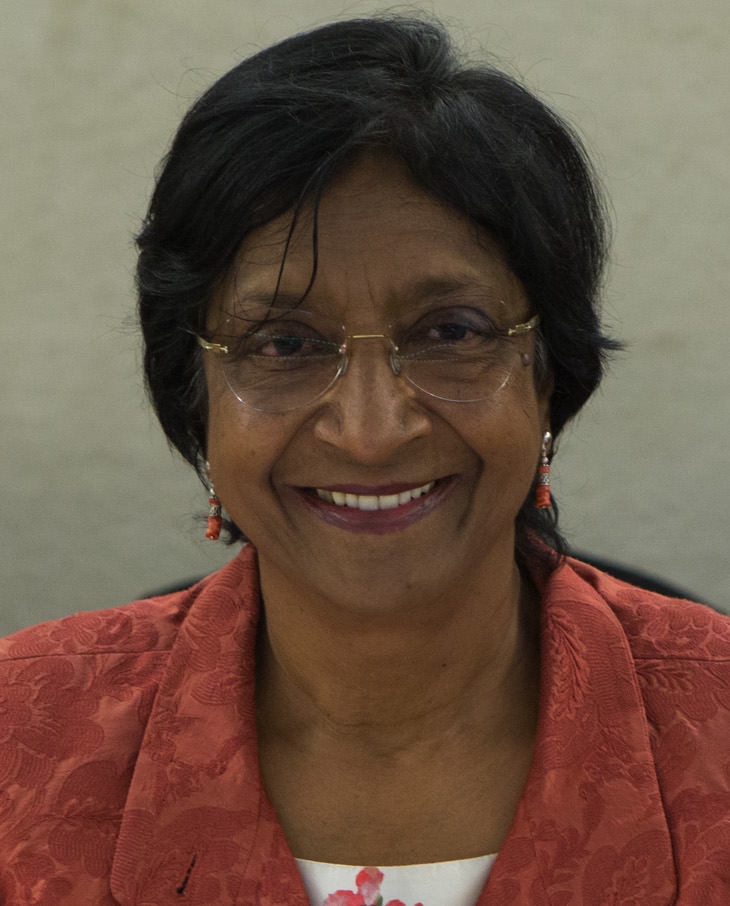
She's this 85-year-old South African jurist, someone who defended Nelson Mandela and spent years serving on the International Criminal Court, the ICC.
But what you actually see on the front pages depends entirely on what continent you are standing on.
Yeah, it's a completely split reality.
If you are reading European or Asian papers like Germany's FAZ or the Japan Times, the coverage is, well, it's deeply reverent.
Right.
They focus heavily on the Nobel Committee's explicit statement that this award is a defense of international law against, quote, "power politics."
Mm-hmm.
They frame Pillay as this ultimate guardian of the global rule of law, someone who attempts to hold nation states accountable to a shared legal standard, you know, regardless of their military or economic size.
But the narrative shifts violently when you look at The New York Times, Spain's El País, or Italy's Corriere della Sera.
Right, and the context you need here is that Pillay recently led a UN commission that concluded Israel committed genocide in Gaza.
Which Israel obviously rejects outright.
Completely.
But the shockwave today is that in direct retaliation to her winning the Nobel, the Trump administration instantly announced severe financial sanctions against the ICC itself.
Which is just a profound escalation.
It is.
And we need to look at the mechanics of what sanctioning an international court actually means.
Right.
They are actively restricting financial transactions with the ICC to severely cripple its ability to function.
Because the US dollar is the bedrock of the global financial system.
Exactly.
The threat of secondary US sanctions means that international banks, um, even those in Europe, might refuse to process the ICC's payroll or pay its vendors, just out of fear of being frozen out of the US financial system.
Which creates this incredible paradox that Corriere della Sera points out today.
The rest of this transcript — segmented and speaker-labeled, so you land on the exact moment something was said
Search every transcript — by keyword, by phrase, or by meaning, across every show Radar indexes
Trends — what is surging across podcasts, measured against its own baseline
Alerts — when a name you follow appears in a newly indexed episode
No account is needed to search Radar.