Feb 6, 2026 · 59 min · 18 segments
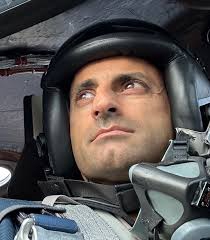
What does it take to go from strapping into fighters to leaving Earth's atmosphere? This week, Jameel “Chocolate” Janjua — Virgin Galactic astronaut and former U.S. and Canadian fighter test pilot…
Jameel JanjuaGuestTucker HamiltonHostAs test pilots, I feel like we give our lives into the hands of these 22-year-old control room personnel.
But it's very similar to the way fighter pilots and pilots in general kind of give over that same type of responsibility of their lives to maintenance and to other people that kind of really make a mission happen, because we all know that it's much more than just the person or a couple people in the cockpit, right? It is an entire team that kind of empowers us and Yeah.
I also think it always surprised me and our listeners may not appreciate because we would do supersonic split S's at times for test points.
And there's been a lot of tragedy, actually, because of how fast that happens.
And I don't think people appreciate the vertical, you know, the speed that you're rushing to the ground with when you point your nose downhill going, you know, over the speed of sound.

And I think that's a great example, like this context of the vertical down at starting at high speeds and or Mach numbers is a great example.

And your point about The team, you know, that massive team behind the one person or two people in the cockpit is absolutely always central in my mind.

I mean, it's and to be fair, it's easy to forget, but we harp on it so much as a result.

I think is we really try and highlight to young fighter pilots and young test pilots.

how large these teams are in there, they end up being the de facto quarterback.

And a lot of that is leadership, right? Like we don't get to see that in the movies because it doesn't make good, exciting TV, but it's the hard yards and the time invested in fostering those teams that'll pay dividends in these situations like the one I just discussed.
And it's interesting too, it makes me just think about how we push the envelope with these platforms.
And there's always a balance because there's a tension which creates a need for this balance.
It's basically like when you're at the edge of the envelope, how do you know when to push and when to stop? Because there are times where you need to push through, like that is your job as a test pilot, but there's times where you need to recognize, nope, I actually need to pull back right now and either pivot or stop completely.

Yeah, and I think the listeners might be surprised to hear that I think that balance much more often requires you, and this is what we end up doing, is pulling back.

I mean, and it really, it doesn't make good TV perhaps, right? Or good movies.
As test pilots, I feel like we give our lives into the hands of these 22-year-old control room personnel.
But it's very similar to the way fighter pilots and pilots in general kind of give over that same type of responsibility of their lives to maintenance and to other people that kind of really make a mission happen, because we all know that it's much more than just the person or a couple people in the cockpit, right? It is an entire team that kind of empowers us and Yeah.
I also think it always surprised me and our listeners may not appreciate because we would do supersonic split S's at times for test points.
And there's been a lot of tragedy, actually, because of how fast that happens.
And I don't think people appreciate the vertical, you know, the speed that you're rushing to the ground with when you point your nose downhill going, you know, over the speed of sound.

And I think that's a great example, like this context of the vertical down at starting at high speeds and or Mach numbers is a great example.

And your point about The team, you know, that massive team behind the one person or two people in the cockpit is absolutely always central in my mind.

I mean, it's and to be fair, it's easy to forget, but we harp on it so much as a result.

I think is we really try and highlight to young fighter pilots and young test pilots.

how large these teams are in there, they end up being the de facto quarterback.

And a lot of that is leadership, right? Like we don't get to see that in the movies because it doesn't make good, exciting TV, but it's the hard yards and the time invested in fostering those teams that'll pay dividends in these situations like the one I just discussed.
And it's interesting too, it makes me just think about how we push the envelope with these platforms.
And there's always a balance because there's a tension which creates a need for this balance.
It's basically like when you're at the edge of the envelope, how do you know when to push and when to stop? Because there are times where you need to push through, like that is your job as a test pilot, but there's times where you need to recognize, nope, I actually need to pull back right now and either pivot or stop completely.

Yeah, and I think the listeners might be surprised to hear that I think that balance much more often requires you, and this is what we end up doing, is pulling back.

I mean, and it really, it doesn't make good TV perhaps, right? Or good movies.
The rest of this transcript — segmented and speaker-labeled, so you land on the exact moment something was said
Search every transcript — by keyword, by phrase, or by meaning, across every show Radar indexes
Trends — what is surging across podcasts, measured against its own baseline
Alerts — when a name you follow appears in a newly indexed episode
No account is needed to search Radar.