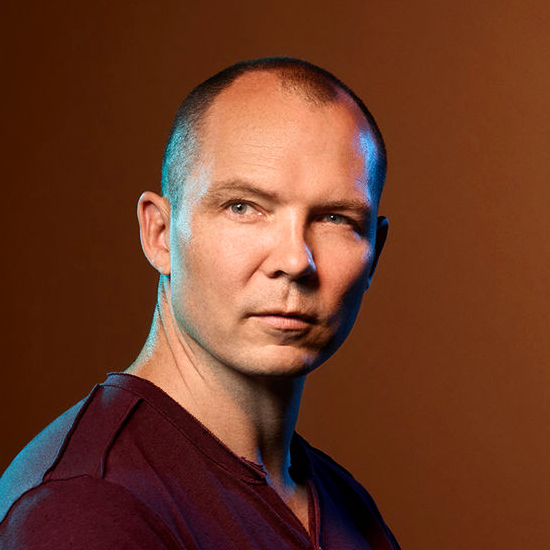
Dev Dream Pod with Blake Gocey
Jul 21, 2026 · 1 hr 14 min · 12 segments
Join the Discord: https://discord.gg/a2hceZhcfJIn this episode, Lasse shares his journey from professional gaming to indie game development, discussing lessons learned, game design insights, and…
Blake GoceyHost
Do you remember those earliest days whenever you switch to become a game dev? Was it was it really difficult for you to become a game dev? Was it quite easy? Did were there times you wanted to give up? What was it like in those early stages whenever you were making this jump?
I think what really helped for me is being able to just have some tutorials where I can just see exactly what other people are doing.
So I very quickly got stuck on stuff.
And then I would ask people and say at Discord on forum, hey, I'm stuck on this.
What do I do? And they would say something like, oh, you know, this function, you need to, I don't know, make this loop.
And I would be, what is a loop? They would just laugh at me and be like, you need to study basic programming.
I cannot help you.
And I just, okay, I'm stuck now.
So being able, as the state remember, and I've recommended that so much, it's a brick breaker Unity tutorial, I think from Code Academy or something like that.
And that was just amazing.
Just being able to just see exactly how someone who knows what they're doing just do it and then I can just copy it and that's just, that works.
So that's a really good way for me to learn stuff.

And something else you said that I found interesting was just that you really believe that developers in those early stages, they shouldn't think about making money at all.
Basically, I tried to make my goal just be for a first game, just release it.
Just release it.
And I actually ended up failing in that goal because my first game, Kalturin and clone, I wanted that to be multiplayer and at that point I was either it's multiplayer or I don't want to make a game.
That was my attitude.
So, and especially at that point with Unity, multiplayer was just very, very difficult.
And of course, I had read people say, don't make an MMO.

Do you remember those earliest days whenever you switch to become a game dev? Was it was it really difficult for you to become a game dev? Was it quite easy? Did were there times you wanted to give up? What was it like in those early stages whenever you were making this jump?
I think what really helped for me is being able to just have some tutorials where I can just see exactly what other people are doing.
So I very quickly got stuck on stuff.
And then I would ask people and say at Discord on forum, hey, I'm stuck on this.
What do I do? And they would say something like, oh, you know, this function, you need to, I don't know, make this loop.
And I would be, what is a loop? They would just laugh at me and be like, you need to study basic programming.
I cannot help you.
And I just, okay, I'm stuck now.
So being able, as the state remember, and I've recommended that so much, it's a brick breaker Unity tutorial, I think from Code Academy or something like that.
And that was just amazing.
Just being able to just see exactly how someone who knows what they're doing just do it and then I can just copy it and that's just, that works.
So that's a really good way for me to learn stuff.

And something else you said that I found interesting was just that you really believe that developers in those early stages, they shouldn't think about making money at all.
Basically, I tried to make my goal just be for a first game, just release it.
Just release it.
And I actually ended up failing in that goal because my first game, Kalturin and clone, I wanted that to be multiplayer and at that point I was either it's multiplayer or I don't want to make a game.
That was my attitude.
So, and especially at that point with Unity, multiplayer was just very, very difficult.
And of course, I had read people say, don't make an MMO.
The rest of this transcript — segmented and speaker-labeled, so you land on the exact moment something was said
Search every transcript — by keyword, by phrase, or by meaning, across every show Radar indexes
Trends — what is surging across podcasts, measured against its own baseline
Alerts — when a name you follow appears in a newly indexed episode
No account is needed to search Radar.