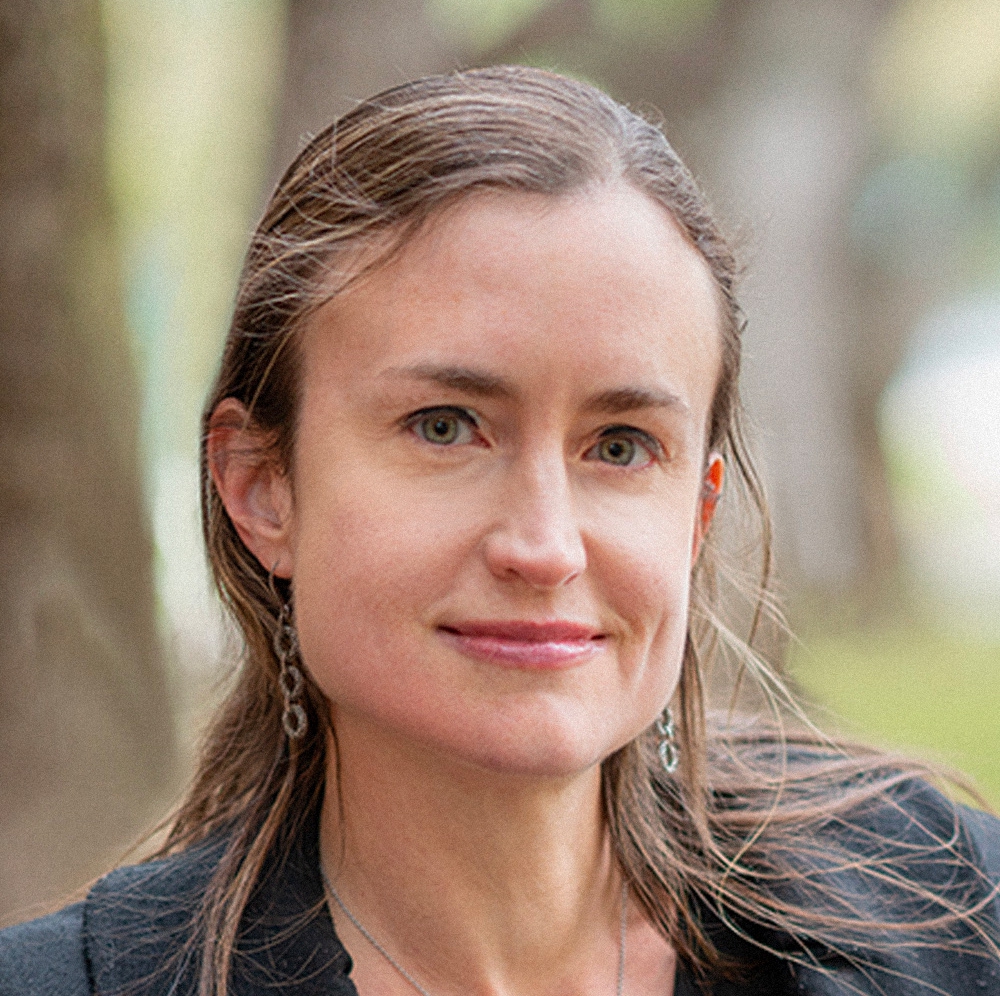
Confronting Christianity with Rebecca McLaughlin
Jun 23, 2026 · 32 min · 12 segments
What do you do when getting out of bed feels impossible? Rebecca McLaughlin talks with Dr. Alan Noble about depression, anxiety, suffering, and the surprising hope Christianity offers—not by removing…
Rebecca McLaughlinHostAnd if it isn't, then there's probably, you know, it's no fault of yours.
It's only something that maybe has come outside that people have pressed onto you.
And there's a sort of continual self-referential move that I think is taught even in in school I mean I know it like my kids are in now actually for the first time my kids are respectively in high school middle school and elementary school so I've sort of got one in each oh that's fun one in each lane um and that focus on the self that I think is is prevalent in our In our culture today, ironically, in some ways, the last thing that people need if they're struggling with their identity and with their mental health and with, you know, we need something to revolve around that's much bigger than ourselves.
For your reflections as someone who's been a Christian for a long time and as someone who's struggled in this particular way for a long time, what have you found to be the most and least helpful ways in which fellow Christians have related to you or related to others who are struggling with their mental health?
Yeah, so the least helpful ways would be, you know, have you just prayed about it? Or suggesting that this is just a spiritual deficiency in myself.
Or the flip side, suggesting that this is just a biological thing, suggesting that it's just biological, that it has no spiritual element to it, right? Mm-hmm.
Either reductive move, saying that there's no spiritual dimension to this, that my spiritual life has nothing to say, or that the biological has no relevance.
The most helpful things are people who... who will tell me truths that I need to hear.
Tell me objective truths that I need to hear about the world that I no longer believe because I start to believe the lies in my head.
This happens with lots of mental illnesses and not just formally diagnosed mental illnesses, lots of kinds of mental afflictions.
Just when you feel down about yourself, you start to believe certain lies about the world and about yourself.
And sometimes you need, oftentimes, we need external voices to remind us of objective truths, that God created the world good, that he loves us, that he is caring for us, that he is providing for us.
that he is the one preserving us, that he is the one guiding us, that he is the one making all things new, not us.
And if it isn't, then there's probably, you know, it's no fault of yours.
It's only something that maybe has come outside that people have pressed onto you.
And there's a sort of continual self-referential move that I think is taught even in in school I mean I know it like my kids are in now actually for the first time my kids are respectively in high school middle school and elementary school so I've sort of got one in each oh that's fun one in each lane um and that focus on the self that I think is is prevalent in our In our culture today, ironically, in some ways, the last thing that people need if they're struggling with their identity and with their mental health and with, you know, we need something to revolve around that's much bigger than ourselves.
For your reflections as someone who's been a Christian for a long time and as someone who's struggled in this particular way for a long time, what have you found to be the most and least helpful ways in which fellow Christians have related to you or related to others who are struggling with their mental health?
Yeah, so the least helpful ways would be, you know, have you just prayed about it? Or suggesting that this is just a spiritual deficiency in myself.
Or the flip side, suggesting that this is just a biological thing, suggesting that it's just biological, that it has no spiritual element to it, right? Mm-hmm.
Either reductive move, saying that there's no spiritual dimension to this, that my spiritual life has nothing to say, or that the biological has no relevance.
The most helpful things are people who... who will tell me truths that I need to hear.
Tell me objective truths that I need to hear about the world that I no longer believe because I start to believe the lies in my head.
This happens with lots of mental illnesses and not just formally diagnosed mental illnesses, lots of kinds of mental afflictions.
Just when you feel down about yourself, you start to believe certain lies about the world and about yourself.
And sometimes you need, oftentimes, we need external voices to remind us of objective truths, that God created the world good, that he loves us, that he is caring for us, that he is providing for us.
that he is the one preserving us, that he is the one guiding us, that he is the one making all things new, not us.
The rest of this transcript — segmented and speaker-labeled, so you land on the exact moment something was said
Search every transcript — by keyword, by phrase, or by meaning, across every show Radar indexes
Trends — what is surging across podcasts, measured against its own baseline
Alerts — when a name you follow appears in a newly indexed episode
No account is needed to search Radar.