Jun 10, 2026 · 47 min · 12 segments
Audio 32 Lauren Oyler talks with anthropologist Biao Xiang, director of the Max Planck Institute for Social Anthropology. His concepts of “suspension,” “involution,” and “the disappearance of the…
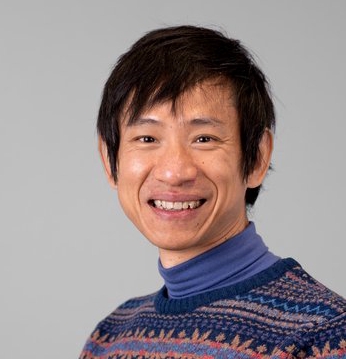
Biao XiangGuest
Tobias HaberkornHost
But the one thing I would like to emphasize is that we witness that some groups whom we normally thought are not so lonely, like young people, like laboring class or working class people, now also experience loneliness, because before we thought the loneliness is somehow for people very educated, artists and philosophers, but now it is become widespread, and then you have people who should have many friends, uh, teenagers and, uh, young adults, and also people working in factories, working in farms, because it's-- we thought it's collective form of work.

So you may have many other type of problems or hardship, but probably loneliness is not in the list.
You know, what, what about society is making the middle class more isolated, making-

Let's start with what happened, uh, most recent, which of course has to do with information technology and especially now AI.

And the trick of AI is to make you feel connected superficially while you don't have genuine communication and relationship with any persons, right? So therefore, you are constantly always feel your emotion, em-emotional need is satisfied.

So therefore, you don't have the desire, you don't see the need to go out, to make effort, to invest time and energy to make friends.

And this is, I think, the most important reason why young adults and teenager students feel isolated and can live in isolation for a long time without noticing there's anything wrong.

So as a result, they end up in quite a deep and profound sense of loneliness, which manifests itself as depression or sometimes, uh, identification with some quite extreme fanatic ideas and et cetera.

But the one thing I would like to emphasize is that we witness that some groups whom we normally thought are not so lonely, like young people, like laboring class or working class people, now also experience loneliness, because before we thought the loneliness is somehow for people very educated, artists and philosophers, but now it is become widespread, and then you have people who should have many friends, uh, teenagers and, uh, young adults, and also people working in factories, working in farms, because it's-- we thought it's collective form of work.

So you may have many other type of problems or hardship, but probably loneliness is not in the list.
You know, what, what about society is making the middle class more isolated, making-

Let's start with what happened, uh, most recent, which of course has to do with information technology and especially now AI.

And the trick of AI is to make you feel connected superficially while you don't have genuine communication and relationship with any persons, right? So therefore, you are constantly always feel your emotion, em-emotional need is satisfied.

So therefore, you don't have the desire, you don't see the need to go out, to make effort, to invest time and energy to make friends.

And this is, I think, the most important reason why young adults and teenager students feel isolated and can live in isolation for a long time without noticing there's anything wrong.

So as a result, they end up in quite a deep and profound sense of loneliness, which manifests itself as depression or sometimes, uh, identification with some quite extreme fanatic ideas and et cetera.
The rest of this transcript — segmented and speaker-labeled, so you land on the exact moment something was said
Search every transcript — by keyword, by phrase, or by meaning, across every show Radar indexes
Trends — what is surging across podcasts, measured against its own baseline
Alerts — when a name you follow appears in a newly indexed episode
No account is needed to search Radar.