Warriors In Their Own Words | First Person War Stories
Sep 24, 2026 · 1 hr 10 min · 22 segments
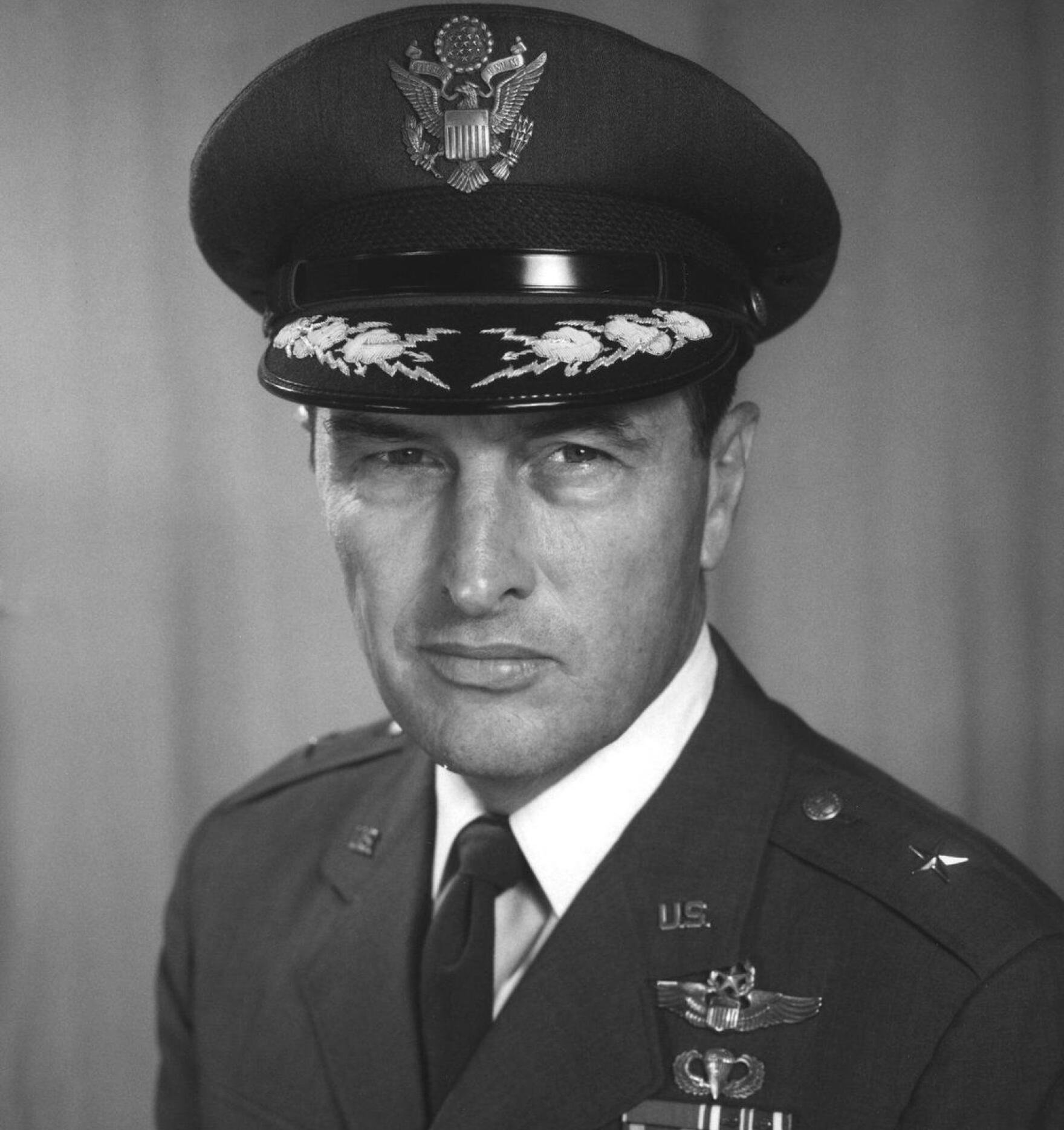
General Frank “Pete” Everest was a record-setting US Air Force Test pilot. As a fighter pilot in World War II he flew over 150 combat missions. He then went on to lead the Air Force flight test…
What was the early community of, of test pilots? This was still the Army Air Corps at the time, right?
Yeah.
I mean, was there a formal training program test pilots went through?
Yes.
They had become US Air Forces, but it wasn't separated from the Army yet.
But they had formed a test pilot school.
But you went to two courses.
They have one that's called a performance course, and that's how you learn how to check out a, a new airplane on performance characteristics.
That will be speed, altitude, and cruise control, and how f- far it goes, in other words, and it's very tenacious.
You try to fly your tests within one mile an hour, uh, on air speed, and you try to fly it within, uh, well, 50 feet on assigned altitude.
So you learn its range, you learn its speed, and you learn its maneuvering characteristics.
But that mostly is covered later in what they call stability course, and, uh, that's when you learn how it maneuvers, learn its dynamic stability in both directional, lateral, pitch, and roll.
And it's probably the best course because it really determines the good aspects of an airplane, particularly in fighters, on maneuver- maneuverability.
Uh, of course, the bombers and the cargos and the helicopters, uh, have different test programs.
They're mostly on, uh, bombers with, uh, range and, uh, the stability on dropping weapons, and on the cargo on range and the, and the load carrying capability, and on helicopters on stability and how well they perform.
And you do other things, too, in the, in the cockpit.
Uh, the instrumentation layout, the controls.
However, during the, uh, initial years that we were at Wright Field, I was at Wright Field, we developed what we call a HIAD, which is a handbook instruction for aircraft developers, and it more or less standardized the layout of a cockpit.
The, the hand controls, the throttle controls, the flap controls, where you put the instrumentation on the, uh, attitude indicator, air speed indicator, altitude indicator, engine instruments, oil pressure instruments.
So that was more or less became standard, and it became easier, uh, later on to go from one airplane to another because you knew if it was a fighter that you had a stick here, throttles here, landing gear here, flaps here, and so you could transition fairly easy.
The most important part was handling characteristics, stability, and performance.
In fighters, you gotta have a pretty stable airplane because you're tracking to try to shoot down an enemy airplane, another airplane.
Also, you're...
If it's an air-to-ground bird, you have to be stable on dropping bomb or shooting rockets.
The rest of this transcript — segmented and speaker-labeled, so you land on the exact moment something was said
Search every transcript — by keyword, by phrase, or by meaning, across every show Radar indexes
Trends — what is surging across podcasts, measured against its own baseline
Alerts — when a name you follow appears in a newly indexed episode
No account is needed to search Radar.