Jun 30, 2026 · 23 min · 11 segments
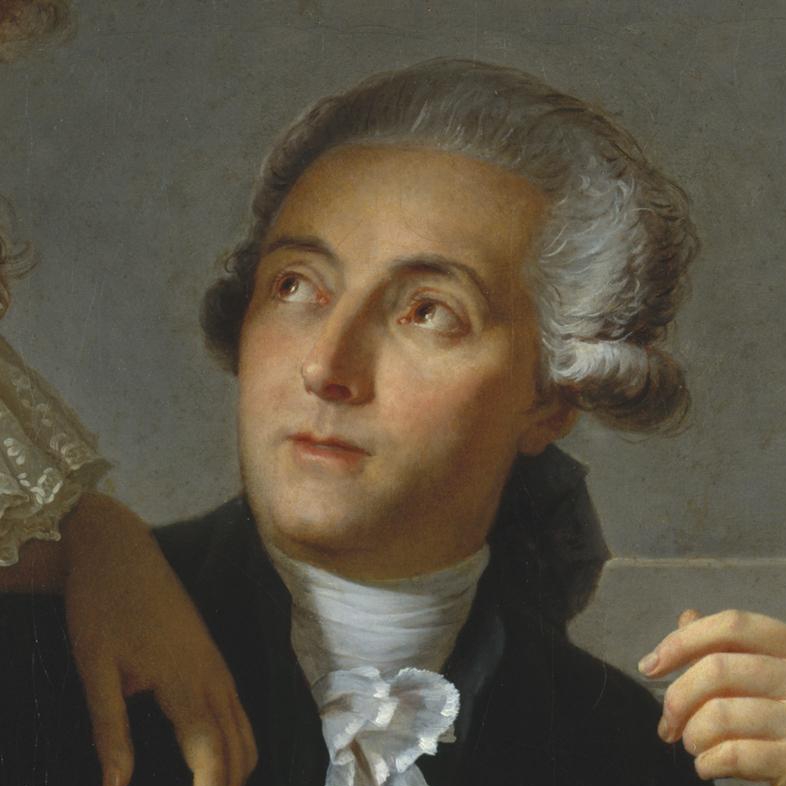
Jacques-Louis David painted Antoine and Marie Anne Lavoisier in 1788, in one of the most famous portraits of the 18th century. Six years later, Lavoisier was guillotined during the French Revolution's…
[classical music] Before the dawn of the Revolution, Jacques-Louis David was already one of the most notable artists in France, as much for his personality as for his work.
A naturally passionate and excitable man, he was known to be mercurial, volatile, ardently enthusiastic, and fiercely independent.
A good example is when, as a young artist denied the Prix de Rome, he became so despondent he tried to starve himself to death until a friend talked him out of it.
In 1775, he finally made the life-changing trip to Italy, which would have an enormous effect on both his art and his ideals.
When he returned to France in 1780, David quickly became the star of what we now call the Neoclassical Movement.
As the name suggests, the movement wanted to revive the ideals, themes, and aesthetics of ancient Greece and Rome, filtered through the Age of Enlightenment that prized logic and science and order.
His early works, paintings like The Oath of the Horatii and The Death of Socrates, carried those threads.
But in late 18th century France, they spoke to something else as well: self-sacrifice on behalf of one's country, on behalf of the greater good.
In The Oath of the Horatii, a father sends his three sons off to fight for Rome, all of them willing to die for the fate of their country.
And within David was a kind of tension that made him, on the one hand, ripe to become one of the leaders of the French Revolution and, on the other, asks us to question his participation in it.
Some have seen his love of all things classical as extending past art and into his life.
He wanted a republican government like ancient Rome's Others thought his impassioned personality made him a natural fit for revolutionary ideals.
But whatever the reason, and it was probably a bit of both, there was a part of him that understood reason, a part of him that understood passion, and a part of him that wanted everything old to be discarded.
The rest of this transcript — segmented and speaker-labeled, so you land on the exact moment something was said
Search every transcript — by keyword, by phrase, or by meaning, across every show Radar indexes
Trends — what is surging across podcasts, measured against its own baseline
Alerts — when a name you follow appears in a newly indexed episode
No account is needed to search Radar.