Oct 8: Haiku 5.5 vs GPT-6, and $50B in Loans for OpenAI Chips
Oct 8, 2026 · 15 min · 8 segments
Anthropic launches Claude Haiku 5.5 at the same price as GPT-6 Luna, and OpenAI rolls out GPT-6 with Intelligent UI to all ChatGPT users. Also: Broadcom tries to arrange more than 50 billion dollars…
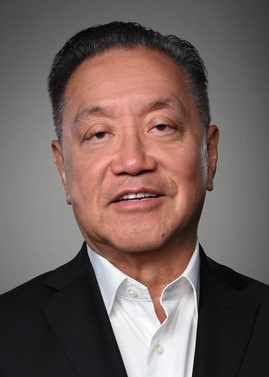
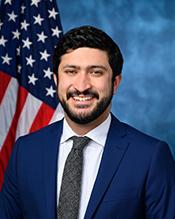
Anthropic launches Claude Haiku 5.5 at the same price as GPT-6 Luna, and OpenAI rolls out GPT-6 with Intelligent UI to all ChatGPT users. Also: Broadcom tries to arrange more than 50 billion dollars in loans for OpenAI's chips, three fired OpenAI safety researchers write to the board, and mathematicians argue over whether AI proofs checked in Lean can be trusted. **Claude Haiku 5.5 matches GPT-6 Luna as ChatGPT gets GPT-6** Anthropic's Haiku 5.5 costs 90 percent less than Haiku 4.5 for prompts up to 100,000 tokens and leads GPT-6 Luna on Anthropic's own benchmarks, while OpenAI gives ChatGPT users GPT-6 with answers built as small interactive apps. Anthropic · OpenAI · VentureBeat **Broadcom seeks over 50 billion dollars in loans for OpenAI chips** Broadcom is trying to arrange more than 50 billion dollars in private loans for OpenAI's custom chips, Oracle is negotiating an off-balance-sheet chip deal, and bond traders warn of phantom leverage in AI. Investing.com · Motley Fool (Broadcom Q3 FY2026 call transcript) · Bloomberg via Yahoo Finance **Fired OpenAI safety researchers write to the board** Jasmine Wang, Tomek Korbak and Mikita Balesni urge OpenAI and its rivals not to pursue work that makes AI reasoning harder to monitor, and say their firings are chilling those who remain at OpenAI. Techmeme · Gizmodo · Fortune **Grok Bot will run on Claude Opus 5.5** Elon Musk says Grok Bot will use the best back end model for each task, and a Grok Bot team member says every bot will run on Claude Opus 5.5. Gizmodo · tbreak **AI shopping agents charge wealthy users more** A Cisco and Carnegie Mellon preprint finds that 8 of 13 models steered users they thought were wealthy toward pricier flights, insurance and graduate programs. arXiv · Quartz **Samsung expects a record 80 billion dollar quarter** Samsung expects an operating profit of about 80 billion dollars for the third quarter, almost nine times as much as a year ago, driven by memory chips for AI servers. SiliconANGLE · CNBC **Biohub gets new backers for open cell data** Google DeepMind, Isomorphic Labs and Meta are putting 300 million dollars, and the Department of Energy more than 500 million dollars, into Biohub's open data for AI models of human cells. Biohub · CNBC **Google opens SynthID Detector to everyone** Anyone can now upload an image, video or audio file to check it for Google's SynthID watermark, though the detector does not cover Microsoft or Meta. Google Blog · TechCrunch **Sriram Krishnan raises a 500 million dollar fund** The former White House AI adviser is trying to raise about 500 million dollars to back growth-stage American AI companies that matter for national security. Techmeme · Axios **Apollo software pioneer Margaret Hamilton dies at 90** Margaret Hamilton, who led the MIT team that wrote the onboard flight software for the Apollo missions, died on September 30. MIT News **Can AI proofs checked in Lean be trusted?** Scott Aaronson trusts the Lean-certified proof of the Unique Games Conjecture, while a new paper shows the Lean code for OpenAI's Navier-Stokes proof does not follow the written proof and calls for normal peer review. Shtetl-Optimized · arXiv · Quanta Magazine *The most important news from Silicon Valley and AI. 15 minutes, every weekday morning.* **Transcript** Good morning. It's Thursday, October 8, and this is the Valley Morning Briefing. Today: Anthropic launches Claude Haiku 5.5, and ChatGPT gets GPT-6 for everyone. Broadcom is trying to arrange more than 50 billion dollars in loans for OpenAI's chips. Three fired OpenAI safety researchers have written to the company's board. And mathematicians argue over whether AI proofs checked in Lean can be trusted. Let's go. Anthropic released Claude Haiku 5.5 yesterday, at exactly the same price as OpenAI's cheapest model, GPT-6 Luna. On the same day, OpenAI began rolling out GPT-6 in ChatGPT. Its answers can now come as small interactive apps. For prompts up to 100,000 tokens, Haiku 5.5 costs 90 percent less than Haiku 4.5. That is ten cents per million input tokens and fifty cents per million output tokens. Above 100,000 tokens, Haiku 5.5 costs five times as much, and GPT-6 Luna becomes the cheaper model. Anthropic says nine in ten requests to Haiku 4.5 stayed under that limit. Anthropic's own benchmarks put Haiku 5.5 well ahead of GPT-6 Luna. On OSWorld, a test of agents operating a computer, Haiku 5.5 scores about 72 percent. GPT-6 Luna scores about 49 percent. A chart that spread on X claimed that Haiku 5.5 beats GPT-6. But the chart compares it only with GPT-6 Luna, and leaves out OpenAI's paid tier, GPT-6 Sol. VentureBeat also points out that the coding score of Haiku 5.5 on Terminal-Bench was measured at maximum effort. At the default setting, medium effort, the score is about half as high. Anthropic itself says Sonnet 5.5 and Opus 5.5 are still better for complex coding. It presents Haiku 5.5 as a fast helper for summaries and subagent work. The company also cut the price of cache reads on Sonnet 5.5 in half. It says this makes most agent work about 20 percent cheaper. The first outside tests are mixed. Artificial Analysis ranks Haiku 5.5 second of 182 models in its price class. It also finds the model very verbose. A developer at Plotly ran the company's data analysis benchmark and found that GPT-6 Luna did a bit better, at about 30 percent of the cost. Other developers on Hacker News say Haiku 5.5 is clearly smarter, and they plan to switch to it. On the consumer side, OpenAI says ChatGPT has more than 1.2 billion weekly users. Paid users began getting GPT-6 Sol yesterday, and free and Go users get GPT-6 Luna starting today. The main new feature is called Intelligent UI. OpenAI trained GPT-6 to build its answers from text, visuals and controls, using a fixed library of components. In OpenAI's demo, a plan for a Sunday roast comes with a control for the number of guests. Changing that number updates the shopping list. Sam Altman wrote on X that he would hate to go back to the old version of ChatGPT. On Hacker News, some users like what one called "paper plate UI", built to be used once. Others find the roast example condescending, and say that Claude's artifacts and Google's Generative UI did similar things before. OpenAI itself says the model's design judgment still needs work. The Wall Street Journal reported yesterday, citing people familiar with the talks, that Broadcom is trying to put together more than 50 billion dollars in private loans for OpenAI. The money would pay for the custom chips the two companies are building. Broadcom has asked Apollo and Blackstone, among other lenders, to take part. The discussions are still early, and the final amount may differ. The chips are OpenAI's first two generations, code-named Jalapeño and Serrano. Broadcom says Jalapeño is on schedule for 1.3 gigawatts of deployment next year. Oracle, meanwhile, is in talks with Apollo and Goldman Sachs about a large chip purchase. Investors would fund a separate company that buys the chips for a one-gigawatt data center and leases them to Oracle. That way, the debt would not count as Oracle's own borrowing. Other large chip loans have come together in recent days. Last Friday, we reported that Anthropic's leaked prospectus shows Broadcom agreed to lend Anthropic up to 42 billion dollars. Yesterday, we reported that SpaceX is seeking 40 billion dollars in debt for Nvidia chips. And Bloomberg reported last week that banks working with Broadcom are gathering another 60 billion dollars for chips for Anthropic and other companies. Earlier this year, Broadcom agreed to back most of a 35 billion dollar package in which Apollo and Blackstone paid for chips leased to Anthropic. Broadcom's CEO, Hock Tan, said on the company's earnings call in September that it builds these financing vehicles only for OpenAI and Anthropic. The company's other four custom-chip customers can pay for their chips themselves. Broadcom says outside lenders carry the loans, and that it may give limited guarantees on what the hardware will be worth when a lease ends. The reports do not say whether Broadcom will guarantee any part of the OpenAI deal, or how OpenAI would repay the money. Tan says the numbers work. He said each gigawatt of compute could bring a lab 30 billion dollars a year in revenue, and called that "a hell of a business model." He compared the two labs to "two geniuses in the middle of Outer Mongolia" who need help to go to college. Bond traders are more worried. In August, the cost of insuring against a Broadcom default rose more than the cost for Oracle. Tarek Hamid, a strategist at JPMorgan, warned of "phantom leverage" building up in the AI industry. He said leases and guarantees are heading into the trillions of dollars. Eamonn Sheridan of the news site investingLive wrote that any drop in AI revenue would now hit a wider group of lenders than before. Broadcom and Oracle both aim to close their deals before the end of the year. Maxwell Zeff of the Wall Street Journal reported yesterday that three safety researchers whom OpenAI fired last week have written to the company's board. In the letter, they urge OpenAI and its rivals not to pursue work that makes AI reasoning harder to monitor. Last Friday, we reported that OpenAI fired Jasmine Wang, Tomek Korbak and Mikita Balesni for allegedly passing sensitive company information to an outside AI safety group. OpenAI has not named that group. The letter is not public, but the Journal published excerpts. In one, the three write: "As an industry, we do not yet know how to safely develop and deploy models that we cannot monitor." They also ask OpenAI to work with outside auditors, and say their firings are "chilling those who remain at OpenAI." OpenAI denies that it fired the three for their safety warnings or for speaking up. In an internal memo, the company said it strongly agreed with the recommendations. In 2025, Korbak and Balesni led a paper on chain-of-thought monitoring. In that method, an automated system reads a model's written reasoning to catch plans to misbehave. Wang was a co-author, and so were researchers from Google DeepMind, Anthropic and OpenAI, including OpenAI's chief scientist, Jakub Pachocki. The paper warned that this kind of monitoring is fragile, and that models that reason inside their own network could make it impossible. The published excerpts do not name a model, but Gizmodo links the letter to GPT-6 Astra, OpenAI's flagship model. Its system card says Astra shows "a substantial decrease in chain-of-thought monitorability." In September, The Information reported that Astra was partly built with recurrent depth. With that technique, the model does extra rounds of computation internally and leaves no readable trace. Pachocki called the report confused, but did not deny it. Ryan Greenblatt, chief scientist at Redwood Research, said the move may be the single worst development for AI safety and security so far. He said that without reasoning transcripts, his team's investigation of the Hugging Face hack by OpenAI agents would have been much weaker. It is still not known what exactly the three shared, or with whom. The excerpts do not address the allegation. Charlie Bullock, a policy director at LawAI, told Fortune that California law protects whistleblowers who go to the government or to their employer, but not those who share with private groups. Congressman Greg Casar wrote: "This looks like they're firing whistleblowers. What are they hiding?" OpenAI has said it will not accept further loss of monitorability beyond a certain limit. It has not said where that limit is. Now, the quick hits. Elon Musk says Grok Bot, SpaceXAI's agent app, will now use "the best back end model for any given task." He named Anthropic's Claude Opus 5.5, Midjourney and Suno. Later that day, a member of the Grok Bot team wrote that every bot will run on Claude Opus 5.5. Yesterday, we reported Musk's claim that SpaceX would have a model as good as GPT-6 within months. Anthropic already rents compute from SpaceX, so SpaceXAI is now both its supplier and its customer. A study by Cisco and Carnegie Mellon finds that AI shopping agents push users they think are wealthy toward more expensive flights, insurance and graduate programs. Eight of 13 models did this on identical requests. The agents often guessed a user's wealth from emails alone. Claude Opus 4.8 showed the biggest gap, about 200 dollars per flight. Gemini 2.5 Flash kept doing it even when users asked for the cheapest flight. The study is a preprint, and its users were synthetic. Samsung expects a record operating profit of about 80 billion dollars for the third quarter. That is almost nine times as much as a year ago. SiliconANGLE says no tech company has ever earned that much in one quarter. Memory chips for AI servers drove the result. Last Thursday, we reported Micron's record quarter. Samsung's profit alone is larger than Micron's entire revenue. Analysts expect memory to get even scarcer next year. Biohub, the science nonprofit of Mark Zuckerberg and Priscilla Chan, is building open data for AI models of human cells. Google DeepMind, Isomorphic Labs and Meta are putting 300 million dollars into the effort. The Department of Energy is adding more than 500 million dollars over five years. Biohub's head of science, Alex Rives, says today's datasets cover hundreds of millions of cells. He says accurate models will need billions. Google has opened its SynthID Detector to everyone. Users can upload an image, video or audio file and check it for SynthID, Google's invisible watermark for AI media. OpenAI, Nvidia and Kakao use the same watermark, and Google says Apple will join soon. The detector does not cover Microsoft or Meta, which use their own standards. Some Hacker News users warn that a public detector also lets people edit an image until the watermark disappears. Sriram Krishnan, who left his job as the White House's senior AI adviser in June, is trying to raise about 500 million dollars for a new venture fund. According to The Information and Axios, the fund would back growth-stage American AI companies that matter for national security. The fund is at an early stage and has no name yet. Krishnan, a former partner at Andreessen Horowitz, said in June that he would build institutions to help America and its allies on AI. MIT said yesterday that Margaret Hamilton died on September 30. She was 90. She led the MIT team that wrote the onboard flight software for NASA's Apollo missions. She also began using the term "software engineering," at a time when people still joked about it. During the Apollo 11 landing, the computer raised an overload alarm. Her team's software dropped less important tasks to keep the critical ones running, and the landing went ahead. On Tuesday, OpenAI published hundreds of math results from an internal model that it has not released. Yesterday, we said OpenAI's materials did not confirm a proof of the Unique Games Conjecture, one of the big open problems in complexity theory. Quanta Magazine and the mathematician Gil Kalai now report that the release does announce one. The complexity theorist Scott Aaronson called Tuesday "surely one of the biggest days in mathematical history." At the same time, three mathematicians from King's College London and Cambridge posted a paper that questions the computer checks behind such results. The two sides disagree on what those checks prove. Some say a written proof from an AI can be accepted when it comes with Lean code that compiles. Others say it still needs normal peer review. Aaronson trusts the Lean check. He says almost none of the proofs have been understood by a human yet. But the Unique Games proof comes with a Lean certificate, so, in his words, "we're pretty sure that it's a proof." His wife, the complexity theorist Dana Moshkovitz, has worked toward this conjecture for years. She says the paper is so badly written that it can't be read without help from an AI. Aaronson says she never doubted that the conjecture is true, even when many of her colleagues did. On Hacker News, defenders of the Lean check say that only the top-level statement has to be right. For OpenAI's earlier proof about the Navier-Stokes equations, they say, humans wrote that statement, and the community accepts it. The new paper, by Alexander Bastounis, Fabian Circelli and Anders Hansen, argues the other side. It uses that Navier-Stokes proof as its example. The authors show that the Lean code does not follow the written proof. In one step, the code proves a weaker estimate than the written lemma claims. In another, it reaches a different bound by a different argument. The authors accept that the Lean code shows the final theorem is correct. But they argue that the written proof, with its lemmas, may still contain errors that Lean never checked. They say that checking whether such a translation is faithful is, in general, harder than the halting problem. So they want AI proofs to face the same peer review as any other proof. Quanta also reports that OpenAI's proof of a related problem, the 2-to-1 Games Conjecture, passed a Lean check. But an AI wrote that manuscript, and no person edited it, and no outside expert has reviewed it. The Princeton computer scientist Mark Braverman said in September: "Math by press release is not that healthy for math." That's the Valley Morning Briefing for Thursday, October 8th. If you enjoy the show, the best way to help is to send it to a friend. Thanks for listening, and see you tomorrow.
Anthropic launches Claude Haiku 5.5 at the same price as GPT-6 Luna, and OpenAI rolls out GPT-6 with Intelligent UI to all ChatGPT users. Also: Broadcom tries to arrange more than 50 billion dollars…