Oct 13, 2026 · 59 min · 11 segments
**“It’s always been known as the jewel in the crown of Crewe.”** Recorded in June 2026, in this episode we’re joined by Sheila Blackburn from Friends of Queens Park, who takes us on a walk around one…
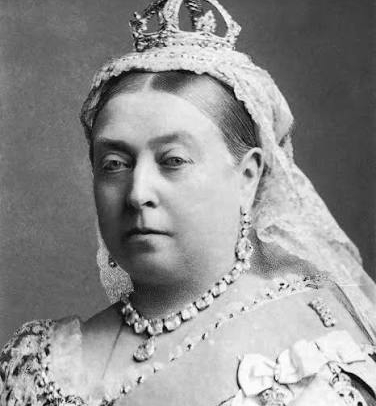
Initially, it was called New Park, and it was, as I said earlier, dedicated in 1887 for Queen Victoria's Golden Jubilee, and the 50th anniversary of the Grand Junction Railway, which then became London and Northwestern.
The site formerly belonged to Coppenhall Hayes Farm, and it was donated by the owner, John Hill, in 1863.
The farm house was approximately on the avenue where Station House now stands.
The map that year shows that there was a determination to use about 11 fields with the River Waldron running through it.
A little local story is that the land was given to prevent the Great Western Railway Company building a station here in the area.
But it's known that LNWR were seeking to construct the Crewe to Chester line alongside the River Waldron, and the land there wasn't firm enough Otherwise the park wouldn't be here now.
The plans for the park were influenced by the arboretum at Derby and Birkenhead Park, where Edward Kemp was superintendent, and his designs feature greatly here.
So as we walk now along the main drive, you'll see that it is beautifully set out, and it's perfectly symmetrical.
The beds of flowers each side are a reflection of each other, as are the trees.
These trees aren't the originals that were put in for the opening in 1888, but they are still planted to show that symmetry, and that is reflecting the symmetry of the two buildings that we approach at the main gates.
So the name Crewe derives from an old Welsh word for crossing, and the town developed from the railway station of 1837 when a driver called James Middleton drove the first steam train here.
And as we approach the clock tower, you'll see that there is a plaque that remembers him being here for the opening.
The park grew on the Monks Coppenhall and Church Coppenhall lands, which once served Crewe Hall Estate.
Prior to the development and arrival of the railway, the parishes, yeah, there was quite a few people lived here.
The two parishes mainly produced cheese and grew trees to provide fuel for the Nantwich salt industry, for example.
The people were doing more than just a little bit of farming, but it was the 1800s that saw the growth.
And a lot of the buildings that have survived in Crewe, sadly a lot of them haven't, but if we look at the dates on them, it's the 1800s.
The rest of this transcript — segmented and speaker-labeled, so you land on the exact moment something was said
Search every transcript — by keyword, by phrase, or by meaning, across every show Radar indexes
Trends — what is surging across podcasts, measured against its own baseline
Alerts — when a name you follow appears in a newly indexed episode
No account is needed to search Radar.