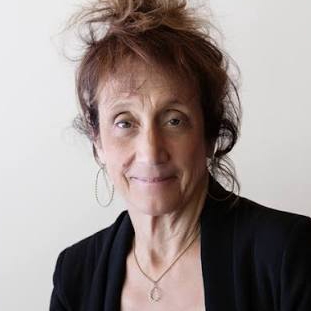
Alexandra BellerGuestBeth McKee ElliottHost
Yeah, I think if you took apart some of the major tenets of the Laban-Barteniev system and you talked about them more colloquially to somebody that had no exposure to it but was an artist and thinker and especially a divergent thinker, they would immediately feel the resonance of you saying something like, well, think about the theme of inner outer, or think about how function expression are codependent and interdependent.

Think about, you know, let's talk about head-tail connectivity, or let's talk about... relationships and, you know, like your relationship to yourself, relationship to space, relationship to weight, right? If we said any of these things immediately, any mover, somatic person or artist would, their brain would be firing on a lot of cylinders.

So although there is quite a bit of training to get the degree and to really understand the breadth, with a D, of the system, I do think anybody would feel how big a container, but also how much specificity is possible by utilizing any part of the system.

But I think that any one of the elements can illuminate for me when I'm talking to an artist, giving feedback, doing more therapeutic work, using touch, writing.

So like a small example is I've been working with a lot of teachers, especially dance and theater teachers, on their pedagogy and the inclusivity of their classroom.

One of them, I just did a presentation on this for NDEO, and I speak about this kind of stuff at conferences, including I did this at the LIMS conference.

And the main portal that I use to talk about inclusivity in the classroom is stability, mobility, which is one of the four themes in the Laban-Barteniev system.

You know, as dance people, movers, we might think about stability, mobility, you know, grounding on one side to be able to mobilize another body part.

or stability of the core, but like mobility of what part of the core is firing at a given moment.

So it could be a purely physical idea, but I start to look at what do we want to hold onto and what do we want to release? What do we want to shift or move? Is it language? Is it the curriculum? Is it the way the classroom is set up? the way I use space, the way I sort of structure power in the classroom, the way the communication works.

Like, what do I want to stabilize? What do I want to mobilize? What kind of values do I want to stabilize? What kind of content might I want to mobilize? There are things when I teach LBMA, Laban Barteneyev Movement System, that I don't teach verbatim from his text anymore because things are outdated.

And we've moved on beyond certain ways of describing the human body or people.

And I teach it differently outside of limbs, which is like, you know, holding a certain kind of traditional canon.

And when I teach it for myself or somebody else, I might mobilize some of the language, even terminology there.

Yeah, I think if you took apart some of the major tenets of the Laban-Barteniev system and you talked about them more colloquially to somebody that had no exposure to it but was an artist and thinker and especially a divergent thinker, they would immediately feel the resonance of you saying something like, well, think about the theme of inner outer, or think about how function expression are codependent and interdependent.

Think about, you know, let's talk about head-tail connectivity, or let's talk about... relationships and, you know, like your relationship to yourself, relationship to space, relationship to weight, right? If we said any of these things immediately, any mover, somatic person or artist would, their brain would be firing on a lot of cylinders.

So although there is quite a bit of training to get the degree and to really understand the breadth, with a D, of the system, I do think anybody would feel how big a container, but also how much specificity is possible by utilizing any part of the system.

But I think that any one of the elements can illuminate for me when I'm talking to an artist, giving feedback, doing more therapeutic work, using touch, writing.

So like a small example is I've been working with a lot of teachers, especially dance and theater teachers, on their pedagogy and the inclusivity of their classroom.

One of them, I just did a presentation on this for NDEO, and I speak about this kind of stuff at conferences, including I did this at the LIMS conference.

And the main portal that I use to talk about inclusivity in the classroom is stability, mobility, which is one of the four themes in the Laban-Barteniev system.

You know, as dance people, movers, we might think about stability, mobility, you know, grounding on one side to be able to mobilize another body part.

or stability of the core, but like mobility of what part of the core is firing at a given moment.

So it could be a purely physical idea, but I start to look at what do we want to hold onto and what do we want to release? What do we want to shift or move? Is it language? Is it the curriculum? Is it the way the classroom is set up? the way I use space, the way I sort of structure power in the classroom, the way the communication works.

Like, what do I want to stabilize? What do I want to mobilize? What kind of values do I want to stabilize? What kind of content might I want to mobilize? There are things when I teach LBMA, Laban Barteneyev Movement System, that I don't teach verbatim from his text anymore because things are outdated.

And we've moved on beyond certain ways of describing the human body or people.

And I teach it differently outside of limbs, which is like, you know, holding a certain kind of traditional canon.

And when I teach it for myself or somebody else, I might mobilize some of the language, even terminology there.
The rest of this transcript — segmented and speaker-labeled, so you land on the exact moment something was said
Search every transcript — by keyword, by phrase, or by meaning, across every show Radar indexes
Trends — what is surging across podcasts, measured against its own baseline
Alerts — when a name you follow appears in a newly indexed episode
No account is needed to search Radar.