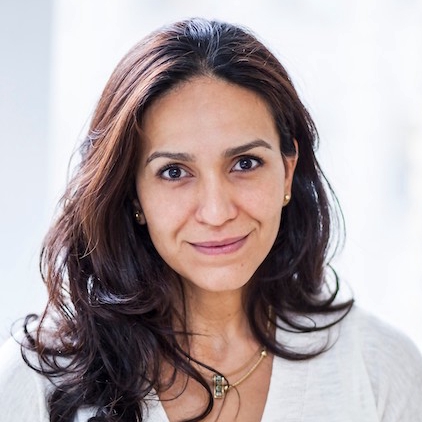
Can communities help refugees where governments fail?
Sep 1, 2026 · 1 hr 16 min · 10 segments
**In the latest episode of the Theory of Change podcast, Nazanin Ash, CEO of Welcome.US, discussed how community-driven sponsorship could revolutionize…
**In the latest episode of the Theory of Change podcast, Nazanin Ash, CEO of Welcome.US, discussed how community-driven sponsorship could revolutionize refugee resettlement, bypass political gridlock, and offer a scalable alternative to overburdened government systems.** **Global forced displacement is at an all-time high, and standard, bureaucratic response models are failing to keep pace. Ash argued that mobilizing local communities rather than relying solely on government aid can unlock massive potential and provide orderly, human-centered pathways for newcomers.** **The problem: Traditional global systems are built for short-term, state-versus-state displacement, but modern conflicts — predominantly civil wars — are protracted, lasting decades on average. As a result, massive, unmanaged crises crowd out long-term development funds.** **“Civil wars burn forever. They’re really tough to resolve. And our international tools for conflict resolution are really bad at solving them,” Ash said.** **By the numbers: By shifting the focus from a government-managed process to direct community sponsorship, Ash said that Welcome.US demonstrated unprecedented scale during recent crises such as the war in Ukraine:** - **800,000 newcomers welcomed by American communities in under three years** - **Four times as many individuals resettled through private sponsorship than through formal U.S. government pathways over the same timeframe** - **$7 billion in time and money leveraged directly by local sponsors to pay for travel, housing, and integration** - **2 million Americans across 26,000 zip codes participated in sponsoring displaced individuals** **“The appetite for doing this is so strong. The capacity to do it is so real,” Ash said.** **Unlike formal government systems that assign refugees to fixed locations based on strict physical requirements, Ash said that private matching platforms allow newcomers to exercise choice and retain dignity.** **“If you know something about humanitarian crises and forced displacement … what you experience most acutely is the loss of choice and the loss of agency. And of course, nothing about our traditional systems lets you have that choice or agency,” she said.** **Meanwhile, community members who sponsored families have become active advocates, filing lawsuits, lobbying Congress, and defeating hundreds of anti-immigrant state bills.** **“Proximity changes what you protect,” Ash said.** **What to watch: Welcome.US currently operates in the United States, and Ash said the organization has plenty of work on its plate. “But we did purchase the rights to Welcome.world,” she added.**
**In the latest episode of the Theory of Change podcast, Nazanin Ash, CEO of Welcome.US, discussed how community-driven sponsorship could revolutionize…