Oct 20, 2026 · 57 min · 13 segments
What happens when the promise of reinvention collides with the ruthless machinery of reality television? Drawing on his own experience as a two-time Survivor contestant, Stephen Fishbach’s sharply…
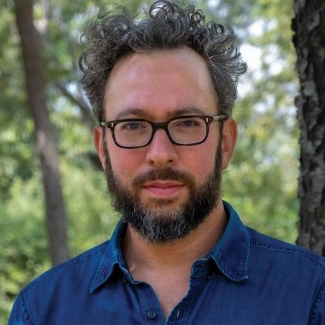
Stephen FishbachGuest
Veronica SullivanHostAnd one of the paradoxes of reality TV is that there is this artificiality.
And actually, there's this section in the book where Beck has agreed to come out and be a producer on Escape.
And before she even gets to location or meets any of the contestants on the beach, she's given the playbook of this is what the story arc's going to be.
But then amazingly, those beats sort of start to get hit, whether through organic means, whether through... producer interference and it's this it's quite confronting to think you can write you can script what real people are going to do in a in an organic situation is that something that you've that you know happens in reality tv they are scripting out what these contestants are going to actually do episode by episode

i mean i've written them like so i used to freelance for reality tv productions and like i wrote story bibles which is where they sort of like say in episode one like these two people are going to get together and then in episode two and of course like they can't 100% guarantee that these things are going to happen.

But the very fact that they're sort of laying out what they want to happen or what the conflicts are going to be is like wild.

You know, to your point, like they're literally scripting like real people's lives.

And what's I think particularly interesting about that is that that creates a standard that they have to achieve, right? Like this is the document that they use, that the production company uses to sell the network.

So they're like scripting all these dramas and like these betrayals and these crazy moments.

And then they're taking that to the network and saying, do you want to buy this show? We are going to make this show.

Will you please give us money to do that? But then that creates a standard that they have to meet.

So that creates pressure for the producers to have the big moments and have the relationships and have these things.

So if there's ever a time when someone puts their hand on the scale, it's because they have to.

They have this sense of, if I don't do this, I'm not delivering the thing I've committed to.
Yeah, and we see that in shows that become more extreme and the premise is escalating, the drama has to escalate.
And I think in Survivor, we have seen more twists, and things keep evolving.
It's not enough to just have them in the jungle, sleeping in the dirt, being miserable and hungry.
How can we just introduce more uncertainty, more chaos? Permanent uncertainty, for
And one of the paradoxes of reality TV is that there is this artificiality.
And actually, there's this section in the book where Beck has agreed to come out and be a producer on Escape.
And before she even gets to location or meets any of the contestants on the beach, she's given the playbook of this is what the story arc's going to be.
But then amazingly, those beats sort of start to get hit, whether through organic means, whether through... producer interference and it's this it's quite confronting to think you can write you can script what real people are going to do in a in an organic situation is that something that you've that you know happens in reality tv they are scripting out what these contestants are going to actually do episode by episode

i mean i've written them like so i used to freelance for reality tv productions and like i wrote story bibles which is where they sort of like say in episode one like these two people are going to get together and then in episode two and of course like they can't 100% guarantee that these things are going to happen.

But the very fact that they're sort of laying out what they want to happen or what the conflicts are going to be is like wild.

You know, to your point, like they're literally scripting like real people's lives.

And what's I think particularly interesting about that is that that creates a standard that they have to achieve, right? Like this is the document that they use, that the production company uses to sell the network.

So they're like scripting all these dramas and like these betrayals and these crazy moments.

And then they're taking that to the network and saying, do you want to buy this show? We are going to make this show.

Will you please give us money to do that? But then that creates a standard that they have to meet.

So that creates pressure for the producers to have the big moments and have the relationships and have these things.

So if there's ever a time when someone puts their hand on the scale, it's because they have to.

They have this sense of, if I don't do this, I'm not delivering the thing I've committed to.
Yeah, and we see that in shows that become more extreme and the premise is escalating, the drama has to escalate.
And I think in Survivor, we have seen more twists, and things keep evolving.
It's not enough to just have them in the jungle, sleeping in the dirt, being miserable and hungry.
How can we just introduce more uncertainty, more chaos? Permanent uncertainty, for
The rest of this transcript — segmented and speaker-labeled, so you land on the exact moment something was said
Search every transcript — by keyword, by phrase, or by meaning, across every show Radar indexes
Trends — what is surging across podcasts, measured against its own baseline
Alerts — when a name you follow appears in a newly indexed episode
No account is needed to search Radar.