The Visible Art of Translation
Aug 26, 2026 · 23 min · 9 segments
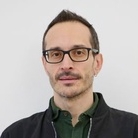
In this episode, Nastja is interviewing Miquel Cabal Guarro holds a degree in Slavic Philology and a PhD inSociolinguistics. His academic and professional work has focused on literary translation…
Miquel Cabal GuarroGuestNastjaHostUh, when you mention this linguistic, uh, language challenges, uh, do you mean that when you translate it to Catalan you also need to, for example, to invent some words or language?

Maybe we can put another example here that m- might be also a challenge for translators into other languages, uh, which is language of prisons or the languages of, uh, the criminals.

Uh, you know, in Russian, uh, it exists like a parallel language which is called Fenya or Blatnoy язык which is, uh...

It, it has the categories of Russian, but it's not understandable for the common Russian speaker at all unless they are prepared for this, meaning that, uh, there are expressions and specific words for everything.

And, uh, it's very challenging to translate this into any other language, and especially into Catalan.

Mm.

the overwhelming majority of, um, of people, uh, in, in prison speak Spanish.

So I have to find ways to put this language, to recreate this language somehow, which is kind of, um, appeared at, in the first place to be impossible.

I, I translated The Zone by Dovlatov, for example, and it's full of that, the language.

Other stories of, by Dovlatov are also full of these, uh, expressions and words.

But in The Zone, it's everywhere, so I had to recreate it somehow, and I think I kind of managed to do so.

But in other ways, Catalan has, uh, resources for everything, and it's a very, uh, fully, uh, literarily, literary developed language from already from the 14th, 15th century.


So I try to avoid that when writing in, in Catalan, and that's also a bit of a work, but I think I managed to do it.
Mm.
Uh, when you mention this linguistic, uh, language challenges, uh, do you mean that when you translate it to Catalan you also need to, for example, to invent some words or language?

Maybe we can put another example here that m- might be also a challenge for translators into other languages, uh, which is language of prisons or the languages of, uh, the criminals.

Uh, you know, in Russian, uh, it exists like a parallel language which is called Fenya or Blatnoy язык which is, uh...

It, it has the categories of Russian, but it's not understandable for the common Russian speaker at all unless they are prepared for this, meaning that, uh, there are expressions and specific words for everything.

And, uh, it's very challenging to translate this into any other language, and especially into Catalan.

Mm.

the overwhelming majority of, um, of people, uh, in, in prison speak Spanish.

So I have to find ways to put this language, to recreate this language somehow, which is kind of, um, appeared at, in the first place to be impossible.

I, I translated The Zone by Dovlatov, for example, and it's full of that, the language.

Other stories of, by Dovlatov are also full of these, uh, expressions and words.

But in The Zone, it's everywhere, so I had to recreate it somehow, and I think I kind of managed to do so.

But in other ways, Catalan has, uh, resources for everything, and it's a very, uh, fully, uh, literarily, literary developed language from already from the 14th, 15th century.


So I try to avoid that when writing in, in Catalan, and that's also a bit of a work, but I think I managed to do it.
Mm.
The rest of this transcript — segmented and speaker-labeled, so you land on the exact moment something was said
Search every transcript — by keyword, by phrase, or by meaning, across every show Radar indexes
Trends — what is surging across podcasts, measured against its own baseline
Alerts — when a name you follow appears in a newly indexed episode
No account is needed to search Radar.