Jul 28, 2026 · 50 min · 14 segments
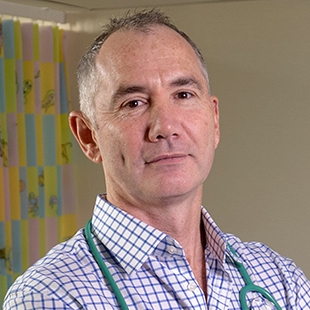
Emma and the team are joined by one of the world's leading experts in paediatric food allergy, Professor George du Toit. The panel discuss the diagnosis of allergies, peanut allergy, the potential…
George du ToitGuest
Emma LimHost
I mean, the gold standard, the thing that we would all love to do, is to prevent peanut allergy, so to not have peanut allergy.

They may have risk factors of a very strong family history, which is not as strong as perhaps we were taught, but it, it does, it does play a role.

Kids born in, in, in Western environments, which is obviously where most people are listening to this podcast will be practicing, are at slightly higher risk.

So a take home tip is if you see eczema, this is a red flag for the potential development of food allergies.

Because as per the dual allergen exposure hypothesis, you actually become allergic usually through your skin and not your mouth.

So if your skin is inflamed and all those dendritic cells and other allergen recognition cells are open to the environment, and Granny is kissing and touching you with peanut, but you're not eating it, you are at greater risk.

And so peanut has gone up in consumption in Western world, largely since Second World War.

So most will not become allergic, but the at-risk babies who are tickled with peanut, where peanut is touched onto their skin in, in micrograms and they've got this inflamed eczema.

Not all, all of them will have eczema, but the majority do have a dry skin and, and mild to moderate eczema.

They will be at risk for the development of peanut allergy if they're not eating it.

So the take home message is introduce it early for, for prevention of peanut allergy.

As, as pediatricians will know, we have a long stream of patients coming into our clinic saying, "Which food is causing my child's eczema?" And whilst for a few children that will be true that the milk formula that they're on may be aggravating the eczema, in the vast majority of them, the question should rather be, "What kind of eczema, and will my child's eczema put them at risk of food allergy?" And the answer to that is an unequivocal yes.

And we used to deny that in decade, decades gone by, and 'cause it was very hard for dermatologists who taught us to have to deal with both the skin and dietary interventions.

But now most dermatologists and pediatricians deal with these hand-in-hand, that where we see eczema, we are very switched on and alert to the need to prevent common food allergies.

So apart from insulting all the dermatologists that they can't do two things at the same time, I think actually you've made a really important point here.

I mean, the gold standard, the thing that we would all love to do, is to prevent peanut allergy, so to not have peanut allergy.

They may have risk factors of a very strong family history, which is not as strong as perhaps we were taught, but it, it does, it does play a role.

Kids born in, in, in Western environments, which is obviously where most people are listening to this podcast will be practicing, are at slightly higher risk.

So a take home tip is if you see eczema, this is a red flag for the potential development of food allergies.

Because as per the dual allergen exposure hypothesis, you actually become allergic usually through your skin and not your mouth.

So if your skin is inflamed and all those dendritic cells and other allergen recognition cells are open to the environment, and Granny is kissing and touching you with peanut, but you're not eating it, you are at greater risk.

And so peanut has gone up in consumption in Western world, largely since Second World War.

So most will not become allergic, but the at-risk babies who are tickled with peanut, where peanut is touched onto their skin in, in micrograms and they've got this inflamed eczema.

Not all, all of them will have eczema, but the majority do have a dry skin and, and mild to moderate eczema.

They will be at risk for the development of peanut allergy if they're not eating it.

So the take home message is introduce it early for, for prevention of peanut allergy.

As, as pediatricians will know, we have a long stream of patients coming into our clinic saying, "Which food is causing my child's eczema?" And whilst for a few children that will be true that the milk formula that they're on may be aggravating the eczema, in the vast majority of them, the question should rather be, "What kind of eczema, and will my child's eczema put them at risk of food allergy?" And the answer to that is an unequivocal yes.

And we used to deny that in decade, decades gone by, and 'cause it was very hard for dermatologists who taught us to have to deal with both the skin and dietary interventions.

But now most dermatologists and pediatricians deal with these hand-in-hand, that where we see eczema, we are very switched on and alert to the need to prevent common food allergies.

So apart from insulting all the dermatologists that they can't do two things at the same time, I think actually you've made a really important point here.
The rest of this transcript — segmented and speaker-labeled, so you land on the exact moment something was said
Search every transcript — by keyword, by phrase, or by meaning, across every show Radar indexes
Trends — what is surging across podcasts, measured against its own baseline
Alerts — when a name you follow appears in a newly indexed episode
No account is needed to search Radar.