Jul 7, 2026 · 0 min · 9 segments
In the wake of Alan Greenspan's recent passing, Bob revisits two contested claims about his legacy: did the Fed under Greenspan fuel the housing bubble, and did that bubble cause the 2008 financial…
Bob MurphyHost
We can a priori go through and show how a central bank or a cartel of banks that, you know, has certain privileges and the power to exclude new entrants can pump in credit, push interest rates down to artificially low levels, and that can cause a boom-bust cycle.

Right? We can kinda go through that and say qualitatively that necessarily must happen given, you know, the assumptions that you're putting in there into the analysis.

But empirically, when we wanna say, "Hey, something crazy happened in September of 2008 that we now call the global financial crisis beginning.

What caused that?" Well, that's definitely an empirical question, right? So for example, you can also use a priori analysis to say that raising the minimum wage, other things equal, particularly if it's binding, is going to cause unemployment to be higher than it otherwise would have been.


raised its minimum wage a few times, you know, leading into that? No, I don't think so, even though I still agree that raising the minimum wage, other things equal, causes unemployment.

Okay? So I'm saying just because you think, agreeing with Ludwig von Mises, that basic economic law needs to be spelled out deductively from axiomatic premises, it doesn't follow that when you're trying to say what was involved in a certain historical event having to do with the economy that you can't use data or evidence, right? So that's what we're gonna be doing in this episode.

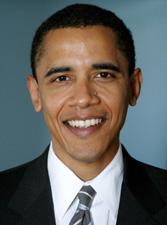
Also, I'll mention th- a lot of this w- I did in real time, that in the wake of the financial crisis and the onset of what we call the Great Recession, if you might remember, that's when Barack Obama is elected.

It has the Obama-- what was called the Obama stimulus package, and here is where I really grappled a lot with Paul Krugman, and he kept putting out stuff, 'cause Krugman was very much against what we could call a, quote, "real or malinvestment theory" of what happened, that Krugman wanted to say, "No, no, the problem with the recession is an insu- it's insufficient aggregate demand.

Don't worry about, did too many resources flow into housing in 2005 and 2006?" He-- Whether or not that's true, Krugman was arguing when Obama was in office, the point now is people aren't spending enough, and so we need the government to run massive budget deficits.

And he kept coming up with evidence that he thought showed the malinvestment story, um, or what Arnold Kling was calling a recalculation story, where, where Kling was saying that the economy needed to recalculate after, um, all the malinvestments in housing.


And then I would come in and I had just had a flurry of articles at mises.org, many of which were, uh, reproduced in the book Contra Krugman that Tom Woods and I put out, the, the book version, not the, not the podcast, um, where I would just pick up the gauntlet that Krugman would throw down and just show him that what are you talking about? So just to give one example, I'm not gonna cover it in this episode here, but I'm just explaining why this episode of the housing boom and bust is so near and dear to my heart because it totally vindicated Austrian business cycle theory.

We can a priori go through and show how a central bank or a cartel of banks that, you know, has certain privileges and the power to exclude new entrants can pump in credit, push interest rates down to artificially low levels, and that can cause a boom-bust cycle.

Right? We can kinda go through that and say qualitatively that necessarily must happen given, you know, the assumptions that you're putting in there into the analysis.

But empirically, when we wanna say, "Hey, something crazy happened in September of 2008 that we now call the global financial crisis beginning.

What caused that?" Well, that's definitely an empirical question, right? So for example, you can also use a priori analysis to say that raising the minimum wage, other things equal, particularly if it's binding, is going to cause unemployment to be higher than it otherwise would have been.


raised its minimum wage a few times, you know, leading into that? No, I don't think so, even though I still agree that raising the minimum wage, other things equal, causes unemployment.

Okay? So I'm saying just because you think, agreeing with Ludwig von Mises, that basic economic law needs to be spelled out deductively from axiomatic premises, it doesn't follow that when you're trying to say what was involved in a certain historical event having to do with the economy that you can't use data or evidence, right? So that's what we're gonna be doing in this episode.

Also, I'll mention th- a lot of this w- I did in real time, that in the wake of the financial crisis and the onset of what we call the Great Recession, if you might remember, that's when Barack Obama is elected.

It has the Obama-- what was called the Obama stimulus package, and here is where I really grappled a lot with Paul Krugman, and he kept putting out stuff, 'cause Krugman was very much against what we could call a, quote, "real or malinvestment theory" of what happened, that Krugman wanted to say, "No, no, the problem with the recession is an insu- it's insufficient aggregate demand.

Don't worry about, did too many resources flow into housing in 2005 and 2006?" He-- Whether or not that's true, Krugman was arguing when Obama was in office, the point now is people aren't spending enough, and so we need the government to run massive budget deficits.

And he kept coming up with evidence that he thought showed the malinvestment story, um, or what Arnold Kling was calling a recalculation story, where, where Kling was saying that the economy needed to recalculate after, um, all the malinvestments in housing.


And then I would come in and I had just had a flurry of articles at mises.org, many of which were, uh, reproduced in the book Contra Krugman that Tom Woods and I put out, the, the book version, not the, not the podcast, um, where I would just pick up the gauntlet that Krugman would throw down and just show him that what are you talking about? So just to give one example, I'm not gonna cover it in this episode here, but I'm just explaining why this episode of the housing boom and bust is so near and dear to my heart because it totally vindicated Austrian business cycle theory.
The rest of this transcript — segmented and speaker-labeled, so you land on the exact moment something was said
Search every transcript — by keyword, by phrase, or by meaning, across every show Radar indexes
Trends — what is surging across podcasts, measured against its own baseline
Alerts — when a name you follow appears in a newly indexed episode
No account is needed to search Radar.