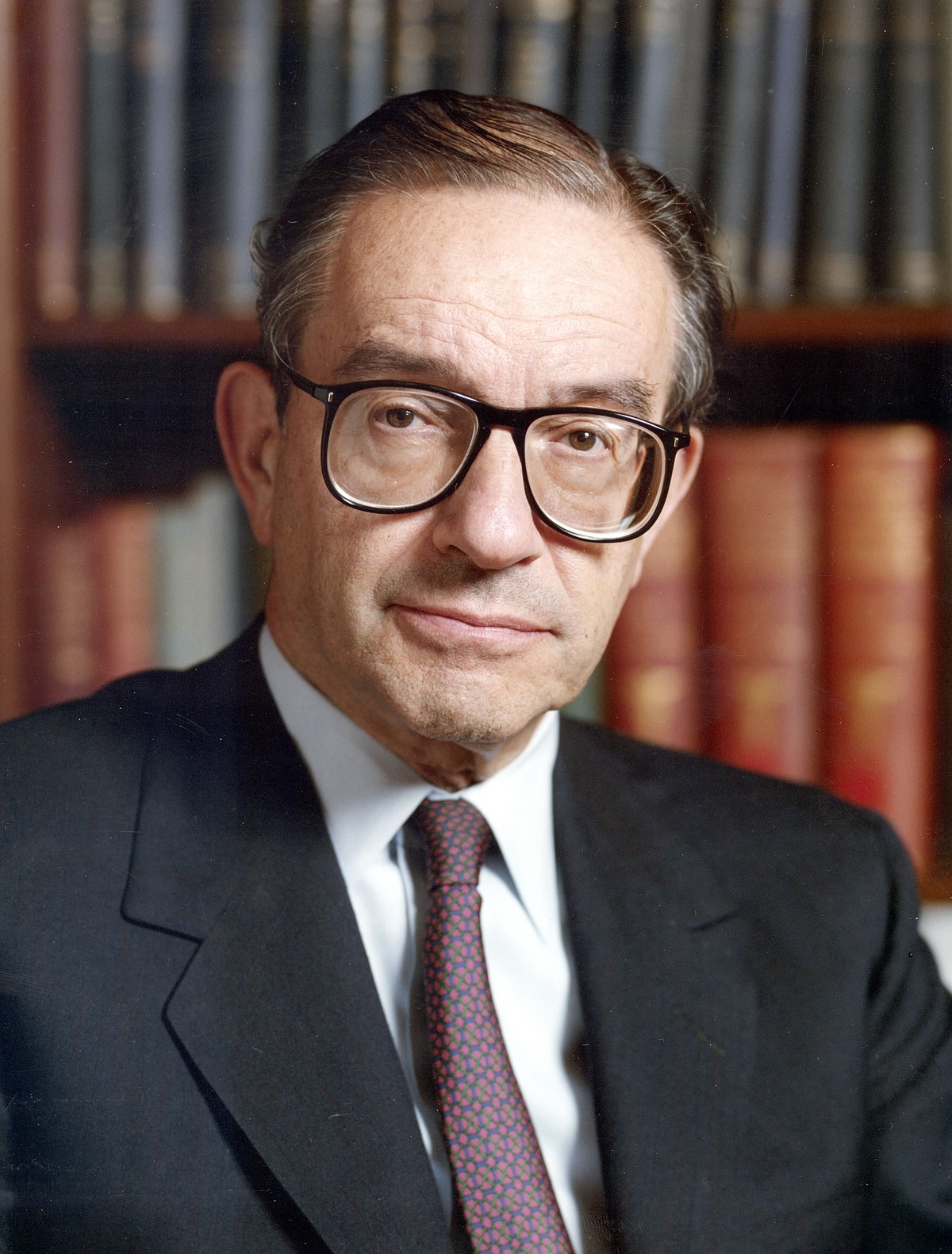
Alan Greenspan
Economist and former Chair of the Federal Reserve of the United StatesWikipedia
334
MENTIONS
219
EPISODES
180
PODCASTS
Search complete. 334 mentions across 219 episodes found for "Alan Greenspan".
Oct 26, 2026

Simon JohnsonHOST
I think it's interesting, Gary, that we often talk about the Fed as the chair.
Simon JohnsonHOST
So people talk about Paul Volcker, they talk about Alan Greenspan, they talk about Ben Bernanke.
Simon JohnsonHOST
And I do agree that actually early on in the terms and office of all three of those gentlemen, they were very influential and their personality and their perspective on economics really mattered.
Simon JohnsonHOST
Bringing down inflation for Volcker, helping the stock market for Greenspan, supporting their broader economy in the face of financial crisis for Bernanke.
Simon JohnsonHOST
What historical parallel episode comes to your mind, Gary, as we ponder what the Fed may do next?
Gary GenslerHOST
I think a lot about what's also on Kevin Warsh's mind about the effect of a new technology on the economy, productivity, and ultimately inflation.
Gary GenslerHOST
So I do think a lot about the 1990s when Alan Greenspan was there at the Federal Reserve and we had a new technology, the internet, or not so new, but newly being developed.
Gary GenslerHOST
built out.

Lance RobertsHOST
And here's a really good example of this, talking about the dot-com bubble.
Lance RobertsHOST
In 1996, Alan Greenspan came out and said, irrational exuberance.
Lance RobertsHOST
Kind of the Ken Griffin, right? AI is a bubble.
Lance RobertsHOST
And the index was trading about $1,300 at the time.

Gregory ZuckermanGUEST
Eventually, Simons and Lenny Baum shifted to sort of traditional macro kind of investing, where they would look at the news, try to anticipate the news, hire a economists.
Gregory ZuckermanGUEST
They had this guy, not a well-known economist at the time named Alan Greenspan, who they had consulted with.
Gregory ZuckermanGUEST
And they tried to trade like most others.
Gregory ZuckermanGUEST
And there were a lot of winning days and there were a lot of losing days.

Dick DonahueHOST
All of these methods attempt to use fundamental macroeconomic values to determine a real rate plus inflation that would keep interest rates in a neutral position, not too tight and not too loose.
Dick DonahueHOST
All these rules show exactly why the policies of the 60s and 70s caused inflation, but the policies of Paul Volcker and Alan Greenspan in the 80s and 90s did not.
Dick DonahueHOST
In the 60s and 70s, interest rates were held well below nominal GDP.
Dick DonahueHOST
The way the Fed was able to hold rates this low is by adding money to the banking system, so low interest rates and excess money growth were the same.

Gregory ZuckermanGUEST
Eventually, Simons and Lenny Baum shifted to sort of traditional macro kind of investing, where they would look at the news, try to anticipate the news, hire a economists.
Gregory ZuckermanGUEST
They had this guy, not a well-known economist at the time named Alan Greenspan, who they had consulted with.
Gregory ZuckermanGUEST
And they tried to trade like most others.
Gregory ZuckermanGUEST
And there were a lot of winning days and there were a lot of losing days.

Paul MussonHOST
The profitability or gross margin of Lennar soars when mortgage rates are driven lower by central banks who do that in an effort to drive housing prices higher.
Paul MussonHOST
So the fake wealth effect of the U.S. Federal Reserve started in earnest in 2001 when Alan Greenspan took interest rates to the emergency level of 1% despite the fact that the economy was still growing.
Paul MussonHOST
It resulted in the housing bubble of the mid-2000s and the subsequent crash.
Paul MussonHOST
The Bank of Canada and other central banks followed suit by driving home prices in their respective countries higher.

Lance RobertsHOST
And here's a really good example of this, talking about the dot-com bubble.
Lance RobertsHOST
In 1996, Alan Greenspan came out and said, irrational exuberance.
Lance RobertsHOST
Kind of the Ken Griffin, right? AI is a bubble.
Lance RobertsHOST
And the index was trading about $1,300 at the time.

Jesse FelderGUEST
I moved to Bend, Oregon.
Jesse FelderGUEST
And it wasn't more than a few years before Alan Greenspan lowered interest rates to 1% and created a housing bubble.
Jesse FelderGUEST
And Bend, Oregon became literally the most, one or two most overvalued real estate market in the nation.
Jesse FelderGUEST
And so I had a front seat to the housing bubble.

Newt GingrichGUEST
We reformed a whole range of things with telecommunications reform, etc.
Newt GingrichGUEST
As I was leaving office, Alan Greenspan, then chairman of the Federal Reserve, was testifying in the Senate that they projected that we would pay off the federal debt by 2009.
David RubensteinHOST
and he was worried that we wouldn't have any treasury bills against which we could measure corporate debt.
David RubensteinHOST
That hasn't turned out to be a big problem,

Newt GingrichGUEST
We reformed a whole range of things with telecommunications reform, etc.
Newt GingrichGUEST
As I was leaving office, Alan Greenspan, then chairman of the Federal Reserve, was testifying in the Senate that they projected that we would pay off the federal debt by 2009.
David RubensteinHOST
and he was worried that we wouldn't have any treasury bills against which we could measure corporate debt.
David RubensteinHOST
That hasn't turned out to be a big problem,
209 more episodes mention Alan Greenspan.
Create an account to see the whole feed, search across every transcript, and follow the entities you care about.