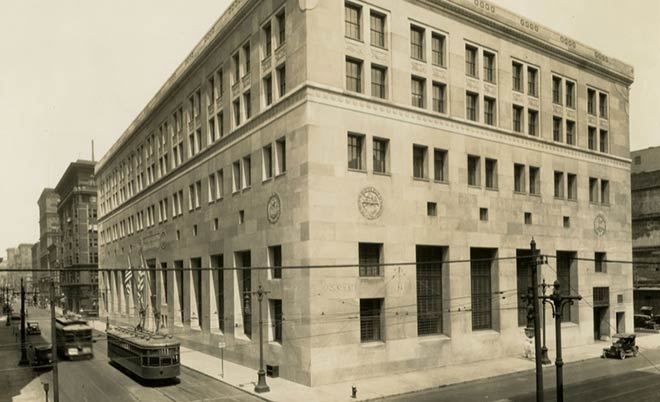
Federal Reserve Bank Of St. Louis
Central bankWikipedia
85
MENTIONS
71
EPISODES
62
PODCASTS
Search complete. 85 mentions across 71 episodes found for "Federal Reserve Bank Of St. Louis".
Nov 5, 2026

Ed WeirHOST
But since the 1980s, that money has been going to the top.
Ed WeirHOST
And St. Louis Federal Reserve right there talks about it.
Ed WeirHOST
It's the income concentration.
Ed WeirHOST
So the dark line up top there is the labor productivity.

Robert DoyleHOST
Fed doesn't set rates on saving accounts and CDs, but it quote unquote sets the tone for them.
Robert DoyleHOST
The credit reporting agency experience says when the central bank started raising rates to combat an outbreak of inflation in March of 2022, The average rate on a one-year CD was stuck at a miserly 0.15%, according to FDIC data published by the Federal Reserve Bank of St. Louis.
Robert DoyleHOST
Now, the rate shot up to 1.88% by September 2024 and has remained above 1.5% ever since.
Robert DoyleHOST
Online banks and others that offer high-yield savings accounts typically compete aggressively for depositors.

Emily JashinskyHOST
But I just want to point out, we've mentioned this here on our show over and over again.
Emily JashinskyHOST
There was a St. Louis Fed analysis of tariff-related inflation.
Emily JashinskyHOST
They did a great chart on this back in August, studying the effects year over year, June 2025 to June 2026.
Emily JashinskyHOST
I am again reading here from the St. Louis Fed, not from some MAGA blogger that said, our estimates show that the effect of tariffs on inflation appears to have leveled off in the last few months or even declined slightly.
Emily JashinskyHOST
Inflation, what do you see on that graph? It goes right up after February 2026, after clearly steadying, after tariff-related inflation going to, I believe it's 0.67 of that total.
Emily JashinskyHOST
So data centers, how about that? Let's go to data centers.

Drew PettitGUEST
I see the difference from what big companies, where they actually are in an adoption cycle of technology.
Drew PettitGUEST
Even the Federal Reserve of St. Louis is now putting out adoption studies, and you can see how early this is.
Drew PettitGUEST
I see...
Drew PettitGUEST
the use case, I see the adoption, I see the scale.

Waylon WangHOST
So arms do have their appeal, but it's not broad.
Waylon WangHOST
Research from the St. Louis Federal Reserve suggests that arms are more popular with people who are younger and have higher incomes.
Adrian MaHOST
These households have the financial cushion to weather their interest rates resetting upwards.
Adrian MaHOST
But that's not usually the case with the clients that Patricia Sanchez works with.

Mario NawfalHOST
This will really messed up the party.
Emily JashinskyGUEST
I think that's well said, because, again, if you look at where the numbers were on February 28th, tariff-related inflation, according to the St. Louis Fed, tariff-related inflation had actually stabilized and was a pretty small part of overall inflation.
Emily JashinskyGUEST
That is the St. Louis Fed's numbers.
Emily JashinskyGUEST
They've looked at it.
Emily JashinskyGUEST
It's not just me.

Logan MohtashamiGUEST
There are other things to look at.
Logan MohtashamiGUEST
So if the AI growth slows down, kind of like what the Federal Reserve, St. Louis, Alberta said, if that slows down and energy prices slow down and the tariff goes, then you can get rates a little bit lower.
Logan MohtashamiGUEST
And that's kind of it, right? It's really...
Logan MohtashamiGUEST
hard to forecast mortgage rates under 5.75% with neutral policy, which was at 3%.
6 MINS LATER
Logan MohtashamiGUEST
And then if the AI thing just slows down a little bit, there you go.
Logan MohtashamiGUEST
So, I mean, the three things that the Federal Reserve harps on, they're in play.
Logan MohtashamiGUEST
And that's even Alberto from the St. Louis Fed says, hey, we're waiting to see what happens.
Logan MohtashamiGUEST
Right.

Kai RyssdalHOST
Good as it always is to have you along, everybody.
Kai RyssdalHOST
Well, it has been a week on the Federal Reserve, GDP, inflation.
Kai RyssdalHOST
And oh, yeah, what is up with the stock market? We will take the first three of those with Greg Ip.
Kai RyssdalHOST
He's at The Wall Street Journal.

Kate DavidsonGUEST
That's true.
Kate DavidsonGUEST
The three of them, the Dallas Fed president, St. Louis Fed, and Richmond Fed all seem to signal some support for moving again soon, some of them said, to raise rates.
Kate DavidsonGUEST
They don't see the interest rates at the level they're at right now is really restraining the economy, is cooling it down, which is what you want to do if you are trying to contain inflation as they are.
Kate DavidsonGUEST
They're still very worried about inflation, but they sort of defended this idea or the move this week to hold interest rates steady.
61 more episodes mention Federal Reserve Bank Of St. Louis.
Create an account to see the whole feed, search across every transcript, and follow the entities you care about.