Sep 26, 2026 · 1 hr 16 min · 13 segments
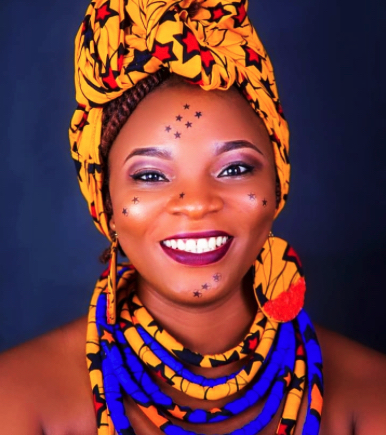
**What disappears when a culture disappears?** **Igbo language educator, cultural curator and author Amarachi Attamah-Ugwu joins Ifeanyi Nwanonaku to examine cultural loss beyond language: the…
Amarachi Attamah-UgwuGuestMikeHost
Ifeanyi NwanonakuHostBeyond language, what else are we losing? Because when I look back to your Wadi Arama days and even Oja days before Wadi Arama, right? It seems like it's not just language that we are trying to preserve.
It's modern language.
So what exactly...
Why are you trying to preserve those programs?
I think one of the biggest misconceptions in the modern time is when people especially reduce indigenous language to just a tool of communication.
far beyond just a tool for communication.
For many people on earth, they have systems through which they've existed for centuries.
And so when you remove all of those systems, it's as though they came from nowhere and they are headed nowhere.
They become a school, they become the bats where they don't live on the earth, they don't live on the land, they are not water animals, they are not air and they are just hanging somewhere.
I call it floating.
Let's talk about, for instance, our cousins, even in the way we relate to our names.
when you lose your language you lose those old grandmama's flavors and that is why you see today that most of us cannot boast of grandmama's flavors anymore because you can't learn it you have how do you learn something you're already disconnected now we are more of trying so hard and there is something about when you try hard is that you'll never completely become When you try to be somebody else, if I want to answer, leave Amarachi and answer Chigoki, I can never really completely be Chigoki, right? So because my identity has been built around Amaraki.
So when a language disappears, what disappears is not just the vocabulary, the words.
Like I always say in my case in Nsukka, there is a way we grieve, where we start to grieve.
It's a chance of remembering, the chance of mourning, where in that, we begin to tell the history of even the person that goes past.
And so how do you translate that in the language that you have learnt as a foreign language? How do you translate it in English? There is no way.
The only thing you might just write is find a word that becomes an invalid, maybe chance, or you write a philanderic and all of that, and that's it.
So in the way that people express their joy, when a child is born, women come to the market, there's a way they dance.
Beyond language, what else are we losing? Because when I look back to your Wadi Arama days and even Oja days before Wadi Arama, right? It seems like it's not just language that we are trying to preserve.
It's modern language.
So what exactly...
Why are you trying to preserve those programs?
I think one of the biggest misconceptions in the modern time is when people especially reduce indigenous language to just a tool of communication.
far beyond just a tool for communication.
For many people on earth, they have systems through which they've existed for centuries.
And so when you remove all of those systems, it's as though they came from nowhere and they are headed nowhere.
They become a school, they become the bats where they don't live on the earth, they don't live on the land, they are not water animals, they are not air and they are just hanging somewhere.
I call it floating.
Let's talk about, for instance, our cousins, even in the way we relate to our names.
when you lose your language you lose those old grandmama's flavors and that is why you see today that most of us cannot boast of grandmama's flavors anymore because you can't learn it you have how do you learn something you're already disconnected now we are more of trying so hard and there is something about when you try hard is that you'll never completely become When you try to be somebody else, if I want to answer, leave Amarachi and answer Chigoki, I can never really completely be Chigoki, right? So because my identity has been built around Amaraki.
So when a language disappears, what disappears is not just the vocabulary, the words.
Like I always say in my case in Nsukka, there is a way we grieve, where we start to grieve.
It's a chance of remembering, the chance of mourning, where in that, we begin to tell the history of even the person that goes past.
And so how do you translate that in the language that you have learnt as a foreign language? How do you translate it in English? There is no way.
The only thing you might just write is find a word that becomes an invalid, maybe chance, or you write a philanderic and all of that, and that's it.
So in the way that people express their joy, when a child is born, women come to the market, there's a way they dance.
The rest of this transcript — segmented and speaker-labeled, so you land on the exact moment something was said
Search every transcript — by keyword, by phrase, or by meaning, across every show Radar indexes
Trends — what is surging across podcasts, measured against its own baseline
Alerts — when a name you follow appears in a newly indexed episode
No account is needed to search Radar.