Staying Human with Dr. Vivek Murthy
Sep 29, 2026 · 1 hr 9 min · 12 segments
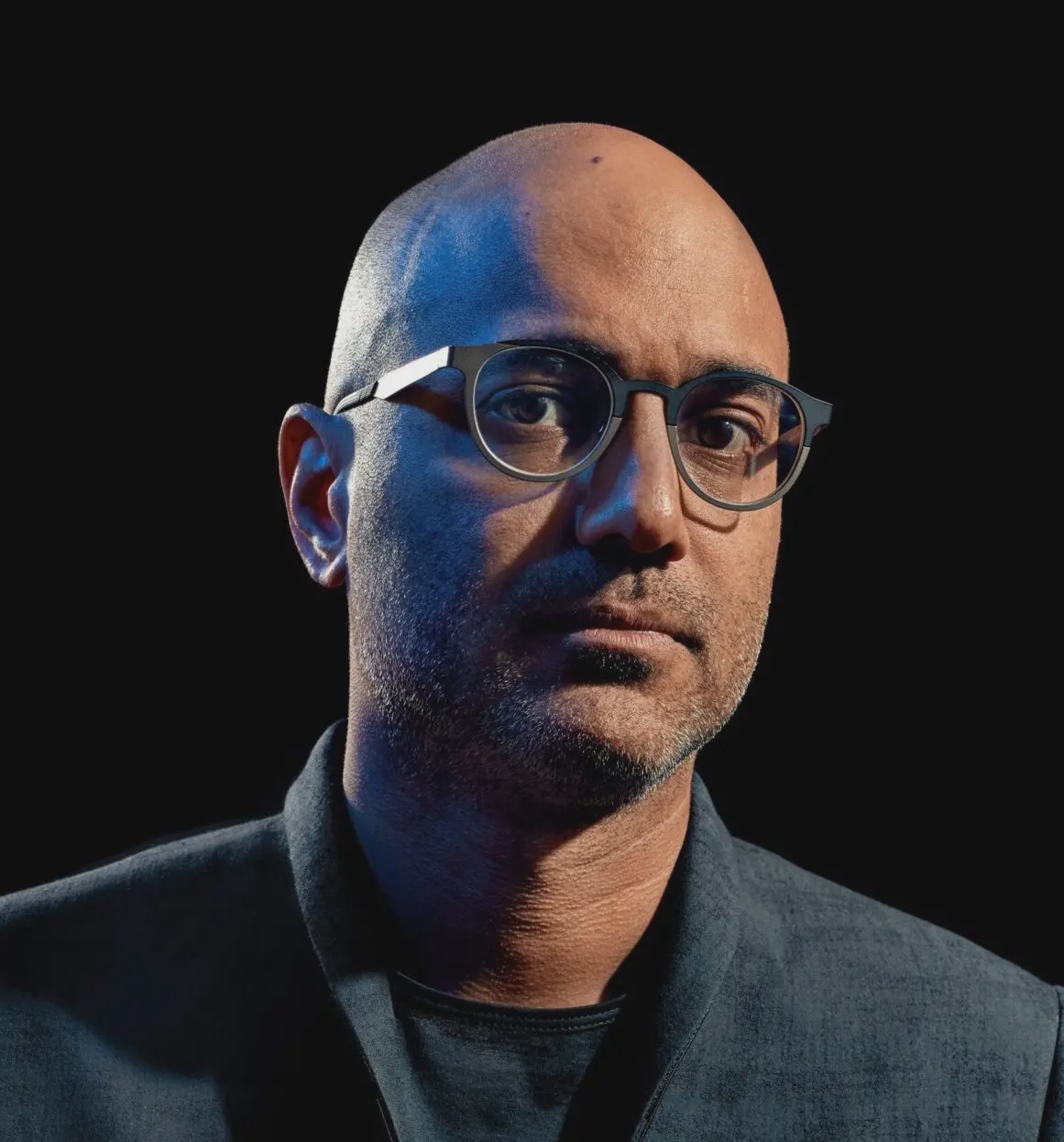
Vivek talks with Pulitzer Prize-winning writer Ayad Akhtar about his new novel, *The Radiance,* and what it means to be truly connected to the world—including the parts of it which defy easy…
Ayad AkhtarGuestyeah it raises this important point i wanted to ask you about which i think is captured in a quote very early in the book which is the narrator refers to the biking accident that turns his life upside down.
And he says at the beginning, quote, I'd call its turmoil spiritual if I weren't worried about my credibility.
I want to understand, like, how do you think about what it means to be spiritual? And where did this...

I think that the post-Enlightenment, sort of the digesting of the Enlightenment within our sort of civilization has led to a wholesale rejection of anything that could be understood as superstitious.

or that could be looking for a referent that lives in a realm of mystery, that can't be verifiable, that isn't provable, that is not dissectable by the scientific method.

Of course, so much of our experience does not have that is not able to be accessed by any of that.

So all of us are living in a kind of nether region of personal experience and subjectivity, which does not feel simply like a delusion, but some deeper frame for our lives, which is untouched by that scientific frame or that objective, so-called objective frame.

And how to grapple with subjectivity as a fact is was the big challenge of the book.

Some folks would call very positive or very meaningful experiences of subjectivity spiritual.

And sometimes those experiences are referred to with the kind of religious language that makes sense of how such experiences have been talked about for many centuries.

but I did not want to engage in a kind of denominational conversation in the book.

I wanted to stay as close to the facts of sensation, to the subjective facts that the narrator was experiencing, and for the reader to be able to experience those subjective facts without recourse to any particular kind of language.
And I think it's notable that So much of the language and imagery you use doesn't seem to be confined to one particular tradition, but it seems to draw from different traditions actually in the book.
But I love that intention of trying to focus on the feeling as opposed to the denomination.

Because the sensate really grounds it for the reader, and the sensate grounds it in the body.
yeah it raises this important point i wanted to ask you about which i think is captured in a quote very early in the book which is the narrator refers to the biking accident that turns his life upside down.
And he says at the beginning, quote, I'd call its turmoil spiritual if I weren't worried about my credibility.
I want to understand, like, how do you think about what it means to be spiritual? And where did this...

I think that the post-Enlightenment, sort of the digesting of the Enlightenment within our sort of civilization has led to a wholesale rejection of anything that could be understood as superstitious.

or that could be looking for a referent that lives in a realm of mystery, that can't be verifiable, that isn't provable, that is not dissectable by the scientific method.

Of course, so much of our experience does not have that is not able to be accessed by any of that.

So all of us are living in a kind of nether region of personal experience and subjectivity, which does not feel simply like a delusion, but some deeper frame for our lives, which is untouched by that scientific frame or that objective, so-called objective frame.

And how to grapple with subjectivity as a fact is was the big challenge of the book.

Some folks would call very positive or very meaningful experiences of subjectivity spiritual.

And sometimes those experiences are referred to with the kind of religious language that makes sense of how such experiences have been talked about for many centuries.

but I did not want to engage in a kind of denominational conversation in the book.

I wanted to stay as close to the facts of sensation, to the subjective facts that the narrator was experiencing, and for the reader to be able to experience those subjective facts without recourse to any particular kind of language.
And I think it's notable that So much of the language and imagery you use doesn't seem to be confined to one particular tradition, but it seems to draw from different traditions actually in the book.
But I love that intention of trying to focus on the feeling as opposed to the denomination.

Because the sensate really grounds it for the reader, and the sensate grounds it in the body.
The rest of this transcript — segmented and speaker-labeled, so you land on the exact moment something was said
Search every transcript — by keyword, by phrase, or by meaning, across every show Radar indexes
Trends — what is surging across podcasts, measured against its own baseline
Alerts — when a name you follow appears in a newly indexed episode
No account is needed to search Radar.