AHA MOMENT1:58
Racing Edge After Universal AI
So what happens when everyone masters AI?

Jul 16, 2026 · 41 min · 13 segments
Racing is a sport of tiny margins and mountains of data. OpenAI researcher Joyce Ruffell and RaceTek Systems co-founder Chase Holden are each using AI to help teams make better use of information from…
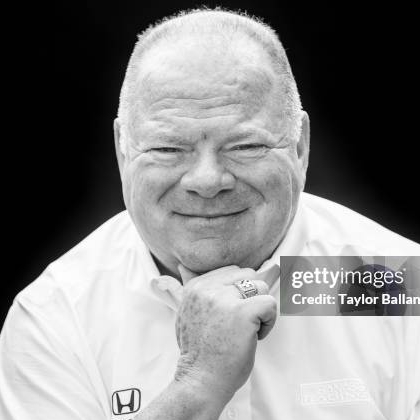
 Chase HoldenGuest
 Joyce RuffellGuest
 Andrew MayneHost
Has there been some point where you said, "Oh, wow, I can clearly see the difference"?

You know, starting out, I, there, there was a lot that, that I knew I had to learn-
Being on the inside of it n- now, I guess, like, yeah, I, I have always held on to the notion that anyone has the ability now to, to organize things in a way to where you can kind of get what you need faster, right?
And I think that that, for me, is probably still the thing that still rings true.
It's always gonna be about who is, you know, who, who is knowledgeable on a certain track or certain corners-
... or, um, you know, understanding, you know, a driver the best way or understanding the limitations that you have on your team.
Uh, a- and for me, it was always about whoever can put that together the best and the quickest is probably going to see a huge uptick in their results over a season.
I think a big thing that I wanna know from you is, you know, what are, what are some of the things that you've found where you're able to deliver exactly what you're being asked to deliver, and like, and what are...
What, what is, I guess, like, the most smallest little detailed thing that you've been able to deliver to the team that may not seem like anything to anyone else, but it makes all the difference to everything that you're doing operationally on the track?

One of the most impactful things that we've delivered to the team is, frankly, is education.
I think it helps to pull back the veil and show that these are just machines under the hood, and it's not magic.
Um, and, uh, these guys are engineers, and they understand that, and once you understand how the machine is built, it's easier to conceptualize how to work with them better.
So that's ta- taken the form of, um, you know, prompt engineering is something that, uh, has, uh, Andrew, you are the original expert prompt engineer.
[laughs] But yeah, just showing them, for example, that, uh, it's all about the input.
It's, um, if you give it the right input, you'll get the output you're looking for.
And, um, so there's some onus on you as the user to figure out what that right input is.
And, um, you know, frankly, what we do with Chip Ganassi, uh, we do a lot of prep work ahead of- Ahead of the race day.






Has there been some point where you said, "Oh, wow, I can clearly see the difference"?
You know, starting out, I, there, there was a lot that, that I knew I had to learn-
Being on the inside of it n- now, I guess, like, yeah, I, I have always held on to the notion that anyone has the ability now to, to organize things in a way to where you can kind of get what you need faster, right?
And I think that that, for me, is probably still the thing that still rings true.
It's always gonna be about who is, you know, who, who is knowledgeable on a certain track or certain corners-
... or, um, you know, understanding, you know, a driver the best way or understanding the limitations that you have on your team.
Uh, a- and for me, it was always about whoever can put that together the best and the quickest is probably going to see a huge uptick in their results over a season.
I think a big thing that I wanna know from you is, you know, what are, what are some of the things that you've found where you're able to deliver exactly what you're being asked to deliver, and like, and what are...
What, what is, I guess, like, the most smallest little detailed thing that you've been able to deliver to the team that may not seem like anything to anyone else, but it makes all the difference to everything that you're doing operationally on the track?
One of the most impactful things that we've delivered to the team is, frankly, is education.
I think it helps to pull back the veil and show that these are just machines under the hood, and it's not magic.
Um, and, uh, these guys are engineers, and they understand that, and once you understand how the machine is built, it's easier to conceptualize how to work with them better.
So that's ta- taken the form of, um, you know, prompt engineering is something that, uh, has, uh, Andrew, you are the original expert prompt engineer.
[laughs] But yeah, just showing them, for example, that, uh, it's all about the input.
It's, um, if you give it the right input, you'll get the output you're looking for.
And, um, so there's some onus on you as the user to figure out what that right input is.
And, um, you know, frankly, what we do with Chip Ganassi, uh, we do a lot of prep work ahead of- Ahead of the race day.
Every episode on Radar is fully transcribed, speaker-labeled, and rich with metadata. Here is a taste of this one. Try Radar for free to see the rest.
3 of 5
Racing Edge After Universal AI
So what happens when everyone masters AI?
Enter The Racing Data Wars
Chase warns about motorsport's escalating information battle
AI Is Just Machines
Joyce demystifies AI for skeptical race engineers
+2 more clips · 5 min 5 sec of audio in all
The rest of this transcript — segmented and speaker-labeled, so you land on the exact moment something was said
All 5 clips — the highlight moments, each cut as its own audio, with a title and a speaker
All 13 segments — the transcript broken into labeled sections, every ad read marked
All 25 topics — jump to every other episode discussing the same subject
Every related episode — other shows Radar links to this one
No account is needed to search Radar.

