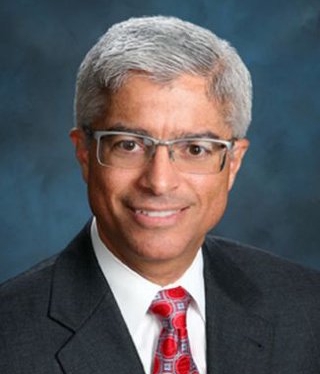
Oct 8, 2026 · 1 hr 14 min · 13 segments
In the first episode of the "Nameplate" podcast, Edison International President & CEO Pedro Pizarro unpacks California as a preview of what many other utilities and states will face next. The…
Pedro PizarroGuest
Nat BullardHost
California is this unique place, I really do think, in [clears throat] in the US energy system.

And so I'm gonna start with a sort of a broad brush question, and then we'll probably drill it further down.

Like, w- what does y- the, the audience of other, uh, of anybody listening here, it's gonna be other people in the sector, it's gonna be investors, it's gonna be people who are technologists looking to sell into the world of electricity, what do they need to know about California in general, and what do they need to know specifically about Southern California Edison and its territory?

Um, I actually chased a Californian I had met in college back east, and we got our graduate degrees together, and then we stayed.

Uh- Raise our kids here, and I love the diversity of the state in every sense, geographic, population.

Uh, on the energy side, we've alluded to this already, but it really does tend to be at the forefront of policy, and sometimes that's leading edge, sometimes might feel a little bit bleeding edge.

Uh, but it also recognizes its responsibility as one of the world's largest economies to find a way to do new things and set an example, and I appreciate that for the state.

So how that translates into Southern California Edison, you know, we, we are part of this economy.

Uh, we recognize that probably, you know, I don't know, electric utilities might be, what, a few percent, maybe 5% of the GDP, but the other 95% is relying on us.

And so there's this sense of mission and responsibility, uh, and alignment with state's policy.

Yet at the same time, we view part of our role as being candid, outspoken, analytical, and kind of down the middle of the fairway in terms of points of view.

And, you know, we might get into this later, but, you know, over the course of my, uh, decade as CEO, we've published something like seven or eight white papers that have all been center, centered around the topic of how does California meet its net zero ambitions but in a real way, right? What's the most economic way to get there? Uh, it, the, this is not about dogma.

Some of our environmentalist friends, um, who I think are very well-intentioned maybe have been less pleased with us in the past when we've affirmed the fact that even though we're not a natural gas company, we're electric only, right? But we recognize that natural gas will have a role in the state's economy for quite some time, even as we shift more and more use away from that to clean firm generation that's, that's carbon free.

But that can't happen instantaneously, and we've been outspoken about that, about making sure we're doing the math, base it on the math, do the right thing, and have Southern California Edison both support the state's policy, but help shape it and be outspoken when maybe it's hasn't been thought out fully.

California is this unique place, I really do think, in [clears throat] in the US energy system.

And so I'm gonna start with a sort of a broad brush question, and then we'll probably drill it further down.

Like, w- what does y- the, the audience of other, uh, of anybody listening here, it's gonna be other people in the sector, it's gonna be investors, it's gonna be people who are technologists looking to sell into the world of electricity, what do they need to know about California in general, and what do they need to know specifically about Southern California Edison and its territory?

Um, I actually chased a Californian I had met in college back east, and we got our graduate degrees together, and then we stayed.

Uh- Raise our kids here, and I love the diversity of the state in every sense, geographic, population.

Uh, on the energy side, we've alluded to this already, but it really does tend to be at the forefront of policy, and sometimes that's leading edge, sometimes might feel a little bit bleeding edge.

Uh, but it also recognizes its responsibility as one of the world's largest economies to find a way to do new things and set an example, and I appreciate that for the state.

So how that translates into Southern California Edison, you know, we, we are part of this economy.

Uh, we recognize that probably, you know, I don't know, electric utilities might be, what, a few percent, maybe 5% of the GDP, but the other 95% is relying on us.

And so there's this sense of mission and responsibility, uh, and alignment with state's policy.

Yet at the same time, we view part of our role as being candid, outspoken, analytical, and kind of down the middle of the fairway in terms of points of view.

And, you know, we might get into this later, but, you know, over the course of my, uh, decade as CEO, we've published something like seven or eight white papers that have all been center, centered around the topic of how does California meet its net zero ambitions but in a real way, right? What's the most economic way to get there? Uh, it, the, this is not about dogma.

Some of our environmentalist friends, um, who I think are very well-intentioned maybe have been less pleased with us in the past when we've affirmed the fact that even though we're not a natural gas company, we're electric only, right? But we recognize that natural gas will have a role in the state's economy for quite some time, even as we shift more and more use away from that to clean firm generation that's, that's carbon free.

But that can't happen instantaneously, and we've been outspoken about that, about making sure we're doing the math, base it on the math, do the right thing, and have Southern California Edison both support the state's policy, but help shape it and be outspoken when maybe it's hasn't been thought out fully.
The rest of this transcript — segmented and speaker-labeled, so you land on the exact moment something was said
Search every transcript — by keyword, by phrase, or by meaning, across every show Radar indexes
Trends — what is surging across podcasts, measured against its own baseline
Alerts — when a name you follow appears in a newly indexed episode
No account is needed to search Radar.