Mysteries of Quantum Mechanics: Simplified
Aug 17, 2026 · 20 min · 6 segments
Is the Earth’s climate actually governed by the strangest rules of physics? In this episode, we pull back the curtain on how quantum mechanics is the invisible hand driving both the warming of our…
The warming of the atmosphere differs fundamentally from the way a blanket works.
A blanket impedes heat transfer through convection, whereas the atmosphere functions like a gate.
Kind of like what you see on subway stations that allow traffic in one direction.
However, when the Earth attempts to release its infrared heat, the arms of the turnstile, or the greenhouse gas molecules, obstruct it.
They absorb this heat and redirect it back toward the planet's surface.
In the nineteenth century, scientists understood this basic concept.
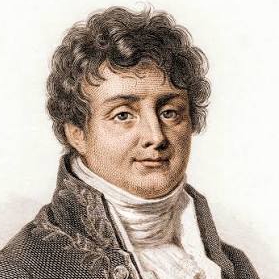
In the eighteen twenties, Joseph Fourier proposed that the atmosphere must be insulating the planet.
In the eighteen fifties, Eunice Foote's experiments showed that carbon dioxide was particularly good at absorbing heat.
A few years later, John Tyndall proved that water vapor and carbon dioxide were the specific gases responsible for this absorption.
In eighteen ninety-six, Svante Arrhenius even calculated that a doubling of carbon dioxide could raise global temperatures by several degrees.
These scientists knew what was happening.
They did not, however, know why.
The full explanation was impossible.
The reason was simple.
The physics required to understand the mechanism, quantum mechanics, had simply not yet been discovered.
This nascent theory of climate change proposed by Svante Arrhenius was soon dismissed.
Around 1900, a researcher named Knut Ångström performed an experiment that he claimed proved Arrhenius wrong.
Ångström's experiment involved passing infrared radiation through a tube of carbon dioxide.
He reported that even a small amount of carbon dioxide saturated the absorption.
That is, the gas already appeared to be blocking one hundred percent of the radiation at its specific frequencies.
This saturation argument became the dominant belief.
The logic was simple.
Adding more carbon dioxide to an already saturated atmosphere was like painting a second coat of black paint on an already black window.
It could not possibly make it any more opaque.
The warming of the atmosphere differs fundamentally from the way a blanket works.
A blanket impedes heat transfer through convection, whereas the atmosphere functions like a gate.
Kind of like what you see on subway stations that allow traffic in one direction.
However, when the Earth attempts to release its infrared heat, the arms of the turnstile, or the greenhouse gas molecules, obstruct it.
They absorb this heat and redirect it back toward the planet's surface.
In the nineteenth century, scientists understood this basic concept.
In the eighteen twenties, Joseph Fourier proposed that the atmosphere must be insulating the planet.
In the eighteen fifties, Eunice Foote's experiments showed that carbon dioxide was particularly good at absorbing heat.
A few years later, John Tyndall proved that water vapor and carbon dioxide were the specific gases responsible for this absorption.
In eighteen ninety-six, Svante Arrhenius even calculated that a doubling of carbon dioxide could raise global temperatures by several degrees.
These scientists knew what was happening.
They did not, however, know why.
The full explanation was impossible.
The reason was simple.
The physics required to understand the mechanism, quantum mechanics, had simply not yet been discovered.
This nascent theory of climate change proposed by Svante Arrhenius was soon dismissed.
Around 1900, a researcher named Knut Ångström performed an experiment that he claimed proved Arrhenius wrong.
Ångström's experiment involved passing infrared radiation through a tube of carbon dioxide.
He reported that even a small amount of carbon dioxide saturated the absorption.
That is, the gas already appeared to be blocking one hundred percent of the radiation at its specific frequencies.
This saturation argument became the dominant belief.
The logic was simple.
Adding more carbon dioxide to an already saturated atmosphere was like painting a second coat of black paint on an already black window.
It could not possibly make it any more opaque.
Every episode on Radar is fully transcribed, speaker-labeled, and rich with metadata. Here is a taste of this one. Try Radar for free to see the rest.
7 of 24
The rest of this transcript — segmented and speaker-labeled, so you land on the exact moment something was said
All 6 segments — the transcript broken into labeled sections, every ad read marked
All 24 topics — jump to every other episode discussing the same subject
Every related episode — other shows Radar links to this one
No account is needed to search Radar.