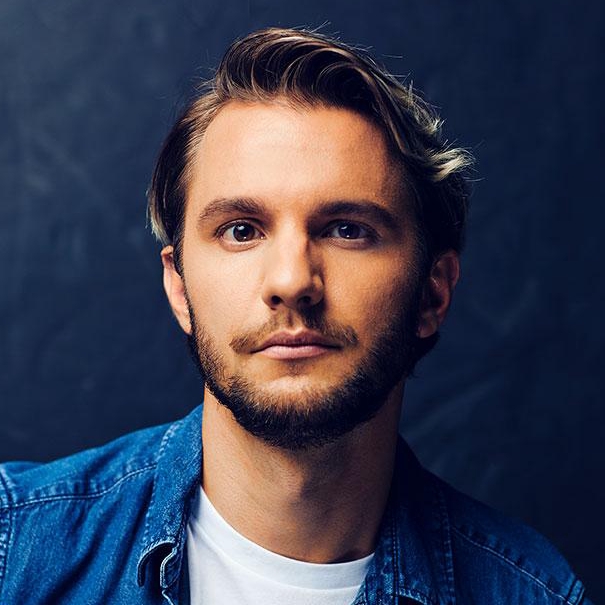
Jake ErnstGuestRobyne Hanley-DafoeHost
You know, I think about sort of this mantra about addiction that I've heard before.

And healing and living and being a person is about giving up one thing for everything.

And so in this conversation about technology addiction, I come back to that mantra often because I just think about this expectation, maybe this really big expectation that we should give it up in order to access what we need from each other.

And as far as I'm concerned, parents are already so busy and they don't need another parenting project.

But monitoring screen time sometimes becomes that project in parenting that sometimes feels necessary because the health experts have said, you know, the kids have to be offline.

Like it is really hard to get right and really hard for parents to feel like they're doing enough.

I would say that overall my work, my main approach is like, if parents can go to bed at the end of every day, when their head hits the pillow.

If they can say to themselves, I've done enough today, then I think that's enough.

I really do think that that really should be the more compassionate approach to parenting nowadays, because there's always something you could be doing better.

And there's always new research or new information that I think parents can be applying.

And so in this sort of sea of social media, information, misinformation, over information, there's just a lot to sort through, right? Almost like we're drinking out of this fire hose of information.

And so I think being able to discern and hold nuance and hold many things as true at the same time, that I think is the ultimate skill set for navigating this new emerging way to be human.

It's about how can I be my best self? How can I feel like I'm doing enough as a person? And how can I also have skills in the real world? And that's where I think we have lost the plot too, is that we can do all we want to eliminate technology, but the real work is about skills in the real world.
And that's what I really love about your perspective is the fact that you're holding space for what is, that this is part of our ecosystem, so to speak now, and also recognizing that there isn't like one definition of what success looks like.
in terms of every family system, because every family is a wee bit different.
And as long at the end of the day, the parent system is feeling like, you know what, I'm good with this.

You know, I think about sort of this mantra about addiction that I've heard before.

And healing and living and being a person is about giving up one thing for everything.

And so in this conversation about technology addiction, I come back to that mantra often because I just think about this expectation, maybe this really big expectation that we should give it up in order to access what we need from each other.

And as far as I'm concerned, parents are already so busy and they don't need another parenting project.

But monitoring screen time sometimes becomes that project in parenting that sometimes feels necessary because the health experts have said, you know, the kids have to be offline.

Like it is really hard to get right and really hard for parents to feel like they're doing enough.

I would say that overall my work, my main approach is like, if parents can go to bed at the end of every day, when their head hits the pillow.

If they can say to themselves, I've done enough today, then I think that's enough.

I really do think that that really should be the more compassionate approach to parenting nowadays, because there's always something you could be doing better.

And there's always new research or new information that I think parents can be applying.

And so in this sort of sea of social media, information, misinformation, over information, there's just a lot to sort through, right? Almost like we're drinking out of this fire hose of information.

And so I think being able to discern and hold nuance and hold many things as true at the same time, that I think is the ultimate skill set for navigating this new emerging way to be human.

It's about how can I be my best self? How can I feel like I'm doing enough as a person? And how can I also have skills in the real world? And that's where I think we have lost the plot too, is that we can do all we want to eliminate technology, but the real work is about skills in the real world.
And that's what I really love about your perspective is the fact that you're holding space for what is, that this is part of our ecosystem, so to speak now, and also recognizing that there isn't like one definition of what success looks like.
in terms of every family system, because every family is a wee bit different.
And as long at the end of the day, the parent system is feeling like, you know what, I'm good with this.
The rest of this transcript — segmented and speaker-labeled, so you land on the exact moment something was said
Search every transcript — by keyword, by phrase, or by meaning, across every show Radar indexes
Trends — what is surging across podcasts, measured against its own baseline
Alerts — when a name you follow appears in a newly indexed episode
No account is needed to search Radar.