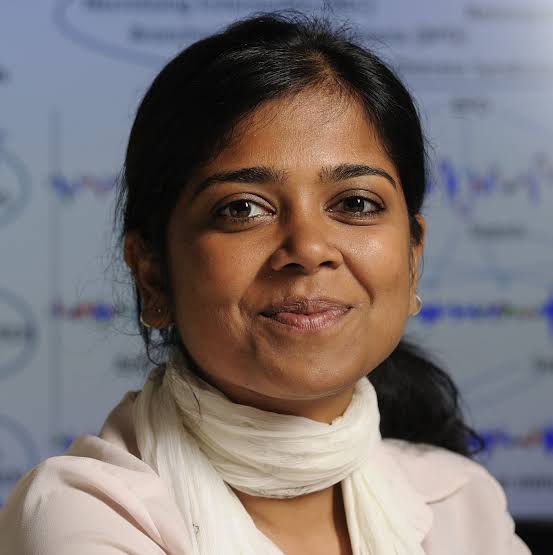
#317 - What It Takes to Build Medical AI Doctors Will Trust | Dr. Suchi Saria & Mike Haney
Oct 29, 2026 · 1 hr 2 min · 11 segments
Medical AI is full of impressive models that work on retrospective datasets. The much harder problem is turning one into a tool that can operate continuously inside a hospital, earn clinicians’ trust…
Medical AI is full of impressive models that work on retrospective datasets. The much harder problem is turning one into a tool that can operate continuously inside a hospital, earn clinicians’ trust, fit into an overloaded workflow, stay reliable across different health systems, and ultimately improve patient outcomes. Mike Haney talks with Johns Hopkins researcher and Bayesian Health founder Dr. Suchi Saria about the decade-long journey from an academic sepsis-prediction algorithm to AI that clinicians are using in hospitals today. Her experience is a reality check on what it actually takes to make medical AI useful, and an argument for aiming higher than documentation and billing: toward systems that continuously watch patients, catch deterioration earlier, and help prevent avoidable harm. **Free course: Improve your metabolic health** Get our free email course on how glucose, nutrition, exercise, sleep, and measurement can help you build habits that support better energy and long-term health: https://levels.link/wnl **What We Cover:** - Why sepsis fits continuous AI monitoring - How causal reasoning separates signal from a noisy alert - Why real-time access to the full record matters - When a working algorithm still failed to get attention - How adoption and human-machine teaming became engineering problems - What happened when the system went live - How the same infrastructure extends beyond sepsis - Why healthcare is too conservative about medical AI **🎙️ About the Guest:** Dr. Suchi Saria is the John C. Malone Associate Professor at Johns Hopkins University, where she directs the Machine Learning and Healthcare Lab, and is the founder and CEO of Bayesian Health. Her work focuses on building and deploying machine-learning systems that use real-world clinical data to improve diagnosis, treatment, and patient safety. **📍What Dr. Suchi Saria & Mike Haney discussed:** - 04:30 - Why the real AI risk is what it is allowed to do - 08:32 - Why sepsis is a race against organ failure - 11:57 - From checklists to reading the full medical record - 16:30 - How causal reasoning finds a patient’s baseline - 18:50 - Using uncertainty to avoid another noisy alert - 22:11 - Why an hour-late warning is already too late - 25:06 - Reading Epic in real time without slowing it down - 32:35 - A working algorithm still couldn’t get clinicians’ attention - 35:53 - What happened when the system went live - 45:32 - Human-machine teaming, and who still makes the call - 54:17 - The same infrastructure, beyond sepsis - 58:35 - Why billing and coding is too small a target **🔗 Helpful Links:** - Suchi Saria — Johns Hopkins Research, publications, and academic background. - Bayesian Health: Saria’s company commercializing real-time clinical AI. - TREWScore — Science Translational Medicine (2015): The original real-time early warning model for septic shock. - TREWS patient outcomes — Nature Medicine (2022): Prospective multisite evaluation after deploying the sepsis warning system in clinical care. - TREWS clinician adoption — Nature Medicine (2022): Study of provider adoption and effects on sepsis treatment timing. - Human-machine teaming — npj Digital Medicine (2022): Clinician interviews on what made the deployed AI system trustworthy and usable. - Bayesian Health Sepsis Flagging Device — FDA (2026)**:** FDA 510(k) clearance for the sepsis prediction software discussed in the episode. Watch the conversation: https://youtu.be/uVEKgSvei4s Find us on YouTube: https://youtube.com/levelshealth?sub\_confirmation=1 **👋 Who we are:** Levels helps you understand your metabolic health with personalized data, expert guidance, and tools that connect your daily choices to measurable changes in your body. Our goal is to help you make better decisions about food, exercise, sleep, and long-term health. Look for new shows every month on A Whole New Level, where we have in-depth conversations with thought leaders about metabolic health.
Medical AI is full of impressive models that work on retrospective datasets. The much harder problem is turning one into a tool that can operate continuously inside a hospital, earn clinicians’ trust…