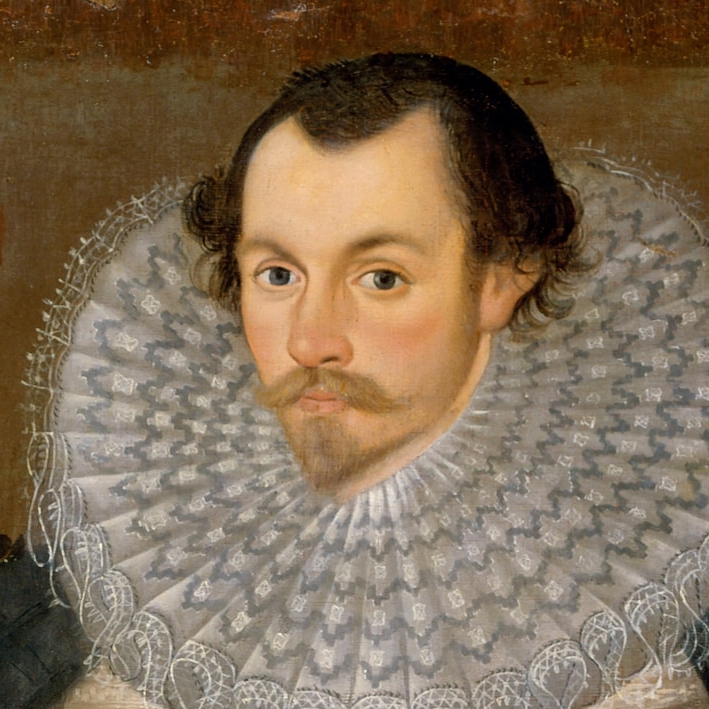
The man who invented this mysterious island was Niccolo Zeno, born in 1515 into one of the oldest noble houses in Venice.
He'd been made a special commissioner for the Venetian Arsenal at 23, sat in the Senate and on the Council of 10, and was respected as a mathematician and hydraulic engineer.
He was also the editor for the Northern Regions in the 1561 Venetian edition of Ptolemy's World Atlas.
In 1558, Zeno put out a book, anonymously at first, and most of it was a fairly accurate account of an ancestor's embassy to Persia.
Tacked on at the end was a single extra section whose title promised the discovery of the islands of Frieslanda, Eslanda, and Groenland, Estadilanda, and Ikaria.
Zeno claimed the section was built from letters he'd found in a storeroom of the family palazzo, written around 1400 by two ancestors, the brothers Niccolo and Antonio Zeno.
Then came the part that should have ended this mystery on the spot, because at the close of the book, Zeno admitted that the original letters no longer existed.
He said they'd come into his hands when he was still a child, that he hadn't understood what they were, and that he'd torn them up.
What he'd published was allegedly reconstructed from the surviving scraps of the documents, which conveniently never turned up.
And I say allegedly here because the idea that the original letters ever existed is highly controversial.
Zeno was, most likely, simply inventing a narrative of a great discovery and ascribing it to his own ancestors, in an effort to increase his own prestige.
Nevertheless, the official narrative goes like this, and strap yourself in, because it sounds like a wild alternative history fever dream where fact and fiction blend seamlessly.
Locals were about to strip the wreck when a prince arrived with an armed party and took the Venetians under his protection.
His name, as the book spells it, was Zichimini, and he held islands called Porlanda off Frieslanda's southern coast and was duke of a place called Sorand.
Sicimini, recognizing that Venice was a great naval power, made Niccolo his grand admiral, and Niccolo wrote home inviting his brother Antonio to join him.
Together they served in the prince's wars, raiding Islanda, then taking seven small islands with names like Bres, Talas, and Broas.
Niccolo later took a small fleet north to Ingronland, where he found a monastery of Dominican friars beside a church of St. Thomas.
He found that it was heated through the winter by a hot spring that warmed the church and the friars' rooms.
He fell ill on the return and died on Frieslanda about four years after Antonio's arrival.
Antonio stayed on for 14 years in total, and it was in his time that the story reached across the ocean.
A Frieslanda fisherman turned up after 26 years away and described being cast on a land called Estodaland, a thousand miles to the west.
South of it lay Drogio, where the inhabitants practiced bizarre rituals involving the sacrifice of prisoners to their gods.
The rest of this transcript — segmented and speaker-labeled, so you land on the exact moment something was said
Search every transcript — by keyword, by phrase, or by meaning, across every show Radar indexes
Trends — what is surging across podcasts, measured against its own baseline
Alerts — when a name you follow appears in a newly indexed episode
No account is needed to search Radar.