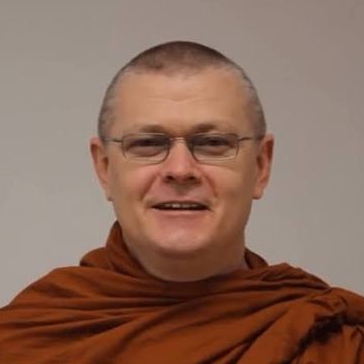
Kevin Griffin: Dharma and Recovery
Oct 13, 2026 · 56 min · 8 segments
Exploring the challenge of finding our own way on the path.
Kevin GriffinHost
[laughs] So, um, to get back on the Dharma thread here, which presumably is why people are here.

Um, I've been, uh, reading, uh, Shinzen Young's book, The Science of Enlightenment, and, uh, and the title, uh, of the book, uh, already kind of gives you a clue where he's coming from.

He's a very heady teacher, very thoughtful and analytical and, um, it, it's...

He's o- one of those people that I, I, I find him interesting and, a-a-and he's not my teacher kind of thing.

It, it, and it doesn't connect quite, um, you know, my heart quite as much as some teachers.

But in any case, um, I came upon something today and a- actually I'll, I'll go back a little bit to this past weekend to introduce this, that, um, on the, on Sunday, we had a panel, uh, that started out talking about the, um, the background of Buddhist recovery and how this kind of came about.

And we had someone from the San Francisco Zen Center, which was very early to adopt and to start, uh, a Buddhist recovery group, um, around the turn of the millennium.

Um, but someone, uh, you know, as the kind of discussion went on, uh, someone asked a question about, um, sort of wanting instructions about how to do this sort of thing.

And, and like, you know, kind of, um, "It's all great what you say here and there, but like I'm, I'm really not sure what to do." [laughs] And, and I hear this from time to time and I, I, I, you know, years ago, uh, this one friend and teacher, uh, who was in recovery, Stephanie Tate, she, she kept at saying that people want, uh, you to write a workbook, and that's when I finally put together my Buddhism in the Twelve Steps workbook.

That was not designed, and it is not designed as a kind of just do this and then, and you will attain or achieve or accomplish some specific result, then you'll stay sober, or then you'll get enlightened or whatever.

You know, what, what I say in the opening of that book is, "Here's a bunch of different things that I've worked with and tried and, and, and try them for yourselves and see what works and see what doesn't." Which is going back to my basic principle is that you have to figure it out for yourself.

And as much as, you know, in the 12-step world, there are sort of the fundamentalists who say, "Just do this, just do this, just do this.

Just work the step like this and write this and, and, you know, work with your sponsor and get this many...

Go to this many meetings and, you know, sponsor people." And, you know, when you, when you're around for a while, [laughs] maybe a decade or two, you start to see that, that that's doesn't work.

I've seen people do everything that looked right in the program who then relapsed, and other people who, you know, seemed to just be hanging out or didn't w- didn't seem to be taking things very seriously, who seemed to be fine and, and moved along in their lives and...

So I, I think it's, there's a perennial wish To get, you know, what's the, what's the key? What's the thing to do? Tell me the thing just to do that will fix me.

[laughs] So, um, to get back on the Dharma thread here, which presumably is why people are here.

Um, I've been, uh, reading, uh, Shinzen Young's book, The Science of Enlightenment, and, uh, and the title, uh, of the book, uh, already kind of gives you a clue where he's coming from.

He's a very heady teacher, very thoughtful and analytical and, um, it, it's...

He's o- one of those people that I, I, I find him interesting and, a-a-and he's not my teacher kind of thing.

It, it, and it doesn't connect quite, um, you know, my heart quite as much as some teachers.

But in any case, um, I came upon something today and a- actually I'll, I'll go back a little bit to this past weekend to introduce this, that, um, on the, on Sunday, we had a panel, uh, that started out talking about the, um, the background of Buddhist recovery and how this kind of came about.

And we had someone from the San Francisco Zen Center, which was very early to adopt and to start, uh, a Buddhist recovery group, um, around the turn of the millennium.

Um, but someone, uh, you know, as the kind of discussion went on, uh, someone asked a question about, um, sort of wanting instructions about how to do this sort of thing.

And, and like, you know, kind of, um, "It's all great what you say here and there, but like I'm, I'm really not sure what to do." [laughs] And, and I hear this from time to time and I, I, I, you know, years ago, uh, this one friend and teacher, uh, who was in recovery, Stephanie Tate, she, she kept at saying that people want, uh, you to write a workbook, and that's when I finally put together my Buddhism in the Twelve Steps workbook.

That was not designed, and it is not designed as a kind of just do this and then, and you will attain or achieve or accomplish some specific result, then you'll stay sober, or then you'll get enlightened or whatever.

You know, what, what I say in the opening of that book is, "Here's a bunch of different things that I've worked with and tried and, and, and try them for yourselves and see what works and see what doesn't." Which is going back to my basic principle is that you have to figure it out for yourself.

And as much as, you know, in the 12-step world, there are sort of the fundamentalists who say, "Just do this, just do this, just do this.

Just work the step like this and write this and, and, you know, work with your sponsor and get this many...

Go to this many meetings and, you know, sponsor people." And, you know, when you, when you're around for a while, [laughs] maybe a decade or two, you start to see that, that that's doesn't work.

I've seen people do everything that looked right in the program who then relapsed, and other people who, you know, seemed to just be hanging out or didn't w- didn't seem to be taking things very seriously, who seemed to be fine and, and moved along in their lives and...

So I, I think it's, there's a perennial wish To get, you know, what's the, what's the key? What's the thing to do? Tell me the thing just to do that will fix me.
The rest of this transcript — segmented and speaker-labeled, so you land on the exact moment something was said
Search every transcript — by keyword, by phrase, or by meaning, across every show Radar indexes
Trends — what is surging across podcasts, measured against its own baseline
Alerts — when a name you follow appears in a newly indexed episode
No account is needed to search Radar.