The AI Saturation Problem
Jun 11, 2026 · 54 min · 12 segments
Your people aren't tired of change — they're saturated. There's a difference, and it's the difference between an AI rollout that lands and one that bounces off your workforce entirely. Kelle Fontenot…
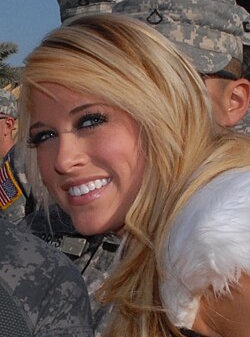
Your people aren't tired of change — they're saturated. There's a difference, and it's the difference between an AI rollout that lands and one that bounces off your workforce entirely. Kelle Fontenot is the Chief Digital Officer at KPMG US, where the CIO, the CTO, and the Chief Data Officer all report to her. She owns internal innovation, architecture, platform, engineering, and data across a 40,000-person workforce — and she's spent the last four and a half years steering that organization through cloud, data, and now an AI wave reshaping how every one of her people does their job. In this conversation, Kelle reframes 'change fatigue' as 'change saturation,' reveals that KPMG employees built 25,000 AI agents in the last six months alone, walks through the synthetic-data acquisition powering regulated AI testing at scale, and explains the brand-new Anthropic partnership turning a 140-year-old services firm into a products company. **What you'll learn** • Why 'change fatigue' is the wrong diagnosis — and what 'saturation' changes about how you roll out AI • Why KPMG refuses to use AI as a head-count lever — and why that decision is actually accelerating adoption • How 40,000 KPMG employees built 25,000 AI agents in six months — and what that means for who counts as a 'builder' • Why the CIO, CTO, and CDO all report to one person — and what would break if they didn't • How synthetic data lets a regulated firm test AI at scale without the breach risk • What KPMG's Anthropic partnership signals about the future of professional services **Connect** Kelle Fontenot on LinkedIn KPMG US IT Visionaries Podcast **Chapters** 0:00 AI Change Has Become AI Saturation 1:29 Why “Change Fatigue” Is the Wrong Diagnosis 3:27 Prompting Like It’s November 4:46 Giving People Space to Innovate 6:38 AI Is Not a Headcount Lever 10:07 Building AI in a Regulated Business 11:24 The Risk Container Around AI 14:12 The AI-Augmented Auditor 17:21 The Agent Governance Problem 20:59 Why Digital, Data, and Tech Sit Together 22:59 Building an Inside Startup 30:04 Innovation Has to Happen at the Edge 36:48 The ROI Math for AI Agents 38:50 Why KPMG Bought a Synthetic Data Company 44:09 KPMG’s Anthropic Partnership 51:03 Shipping AI at Scale 52:10 Kelle Fontenot’s Advice for Leaders -- This episode of IT Visionaries is brought to you by Meter - the company building better networks. Businesses today are frustrated with outdated providers, rigid pricing, and fragmented tools. Meter changes that with a single integrated solution that covers everything wired, wireless, and even cellular networking. They design the hardware, write the firmware, build the software, and manage it all so your team doesn't have to. That means you get fast, secure, and scalable connectivity without the complexity of juggling multiple providers. Thanks to meter for sponsoring. Go to [meter.com/itv](meter.com/itv) to book a demo. \--- *IT Visionaries is made by the team at Mission.org. Learn more about our media studio and network of podcasts at* mission.org. Hosted by Simplecast, an AdsWizz company. See pcm.adswizz.com for information about our collection and use of personal data for advertising.
Your people aren't tired of change — they're saturated. There's a difference, and it's the difference between an AI rollout that lands and one that bounces off your workforce entirely. Kelle Fontenot…