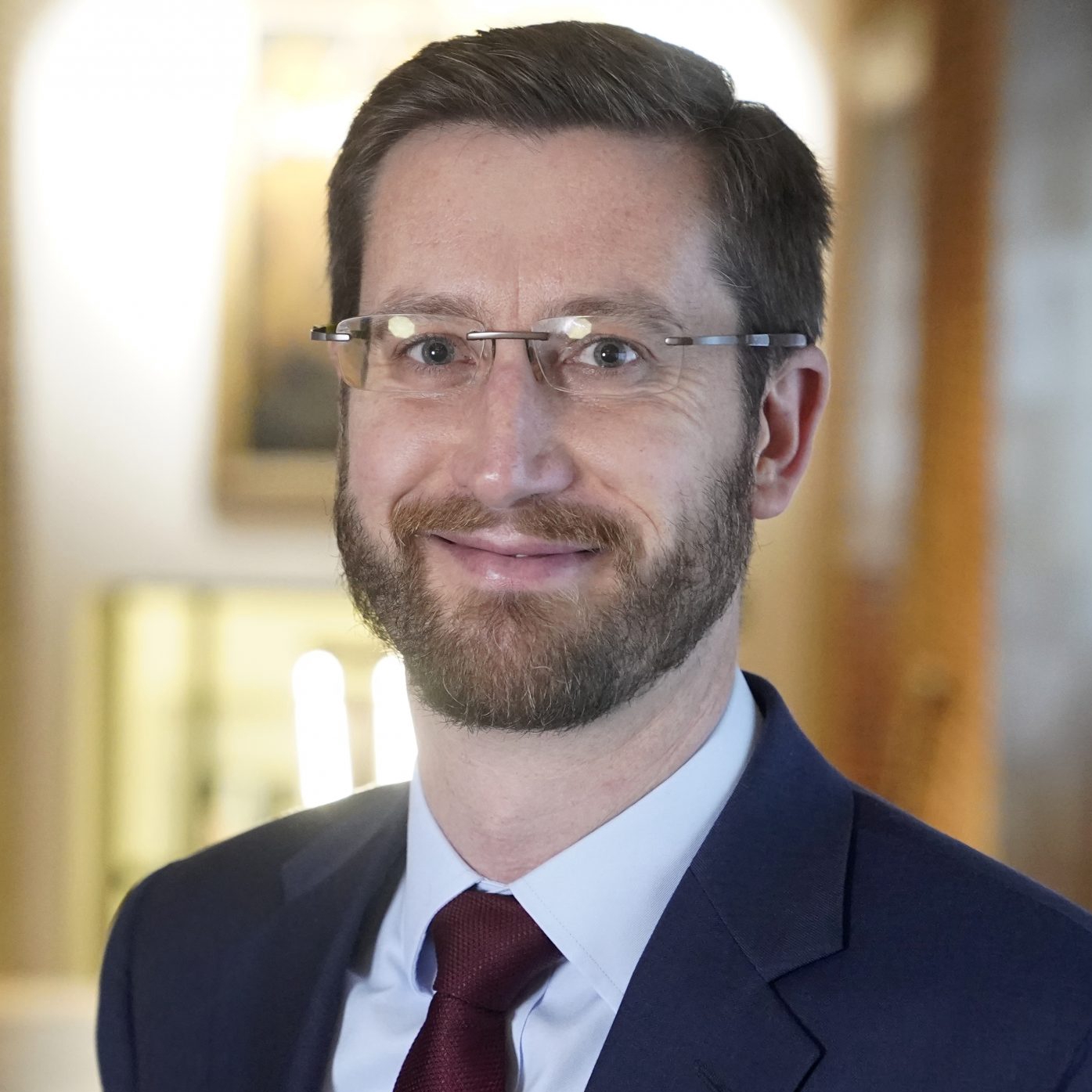
Lord Simon Case
Jul 1, 2026 · 55 min · 11 segments
For young people in the UK, ‘political stability’ is an oxymoron. Our generation has grown up alongside a series of so-called ‘once-in-a-generation’ crises, and many hear the phrase ‘British…
For young people in the UK, ‘political stability’ is an oxymoron. Our generation has grown up alongside a series of so-called ‘once-in-a-generation’ crises, and many hear the phrase ‘British Government’ and immediately think of a controversial policy choice, frontline politician or a scandal which is dominating the news. This series, however, takes the long view of British politics and aims to gain a clearer understanding of how and why it has changed in the 21st century by interviewing 4 people who have each worked in and around the heart of Government during this time. In the final episode, Tom talks to ex-Cabinet Secretary Lord Simon Case about his career in the civil service and time working for Prince William as his Private Secretary. We conducted the interview as the then-cabinet secretary had been fired by Keir Starmer, and a major theme of the interview became the transition of power, a theme that has only grown more relevant in recent weeks. It was a fascinating discussion about the nature of power and influence and hard decisions needing to me made by any Prime Minister (00:00) - (03:12): Intro (03:12) - (08:54): Simon’s time at university, culminating in a PhD at Queen Mary University. ‘If I hadn’t switched to study the history of government, I’m pretty sure I wouldn’t have worked in government.’ (08:54) - (12:12): Simon’s hesitant entry into the Civil Service and what kept him on. (12:12) - (15:25): Early projects: Trident and the London 2012 Olympics. (15:25) - (19:34): Inside No. 10 Downing Street and working for David Cameron. (19:34) - (23:12): The team around the Prime Minister: the role of PPS, and the relevance of this work for becoming Cabinet Secretary. (23:12) - (28:57): Inside Kensington Palace and working for Prince William. The difference between politicians and members of the royal family. (28:57) - (31:08): Back to No. 10: leading on the government’s Covid response. (31:08) - (35:17): Becoming Cabinet Secretary: ‘a very, very, very reluctant applicant’. (35:17) - (38:43): The role of Cabinet Secretary (38:43) - (40:54): How the role changes with a change of prime minister. (40:54) - (43:16): Attributes of a prime minister that are particularly helpful for the Civil Service. (43:16) - (47:13): Describing Boris Johnson, Liz Truss, Rishi Sunak and Keir Starmer’s styles of working. (47:13) - (48:30): Why No. 10 is not conducive to a Prime Minister being able to make decisions effectively. (48:30) - (50:10): Behind the scenes of transition talks. (50:10) - (53:33): The biggest strength and greatest weakness of the British Civil Service. (53:33) - (54:39): Book recommendation (54:39): Outro. Fion Cudmore - https://www.linkedin.com/in/fionnuala-cudmore-293089269/ Tom Turner - https://www.linkedin.com/in/tomturner04/ * * * Hosted on Acast. See acast.com/privacy for more information.
For young people in the UK, ‘political stability’ is an oxymoron. Our generation has grown up alongside a series of so-called ‘once-in-a-generation’ crises, and many hear the phrase ‘British…