Sep 17, 2026 · 53 min · 9 segments
The Appalachia + Mid-South Newsroom is commemorating the 50th anniversary of "Harlan County USA" with an hourlong radio documentary Oct. 12.(Jared Kunish / AMSN) This week on Eastern Standard: As of…
Tom MartinHost
Neema KulkarniGuestAmber ThomasGuest
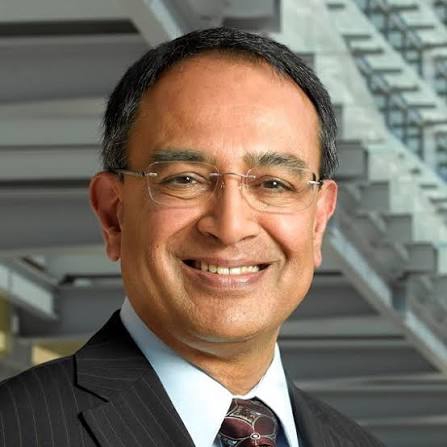
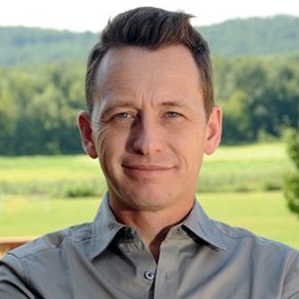
Kumble SubbaswamyGuestDerek OakleyGuestDavid T. Miller
For an international student coming to the United States to pursue, let's say, a doctorate in engineering at the University of Kentucky, what changes on September 15th?

Up until this point, the student would have annual renewals, but it was not time limited.

In other words, for engineering nationally, the average time it takes to complete a doctorate is somewhere around five and a half years, but that's the median.

They would basically be automatically, as long as they were making good progress, be assured of having that time to complete their study.

But now the new rule says that after four years, just before the end of the four years, they have to apply to the federal government for continued permission to stay and continue their study.

And instead of that being a local decision, now it's going to be done federally, centrally.


If there is no guarantee that you will be allowed, as long as you're making good progress, to complete your study, then you would really think twice or three times before you would make that commitment.

And so, yeah, it has very drastic consequences for international students who intend to study in the United States.

In fact, there's a study from the National Science Foundation that shows that particularly in the science, technology, engineering, mathematics fields, the average is more like 5.3 years.

But again, as I said, there are fields in which it's as long as six or seven years.

And so, no, the four years is simply no one actually completes it in four years.

As I understand it, this has not been unmonitored under the old system that goes away on September 15th.

As long as their school or sponsor confirmed that the student remained enrolled and was making satisfactory progress, there wasn't an arbitrary four-year deadline.
The rest of this transcript — segmented and speaker-labeled, so you land on the exact moment something was said
Search every transcript — by keyword, by phrase, or by meaning, across every show Radar indexes
Trends — what is surging across podcasts, measured against its own baseline
Alerts — when a name you follow appears in a newly indexed episode
No account is needed to search Radar.