You've no doubt heard about AI agents working autonomously in the background of businesses everywhere. Here's an uncomfortable question: who, or what, is actually checking that they're doing what they were asked to do?
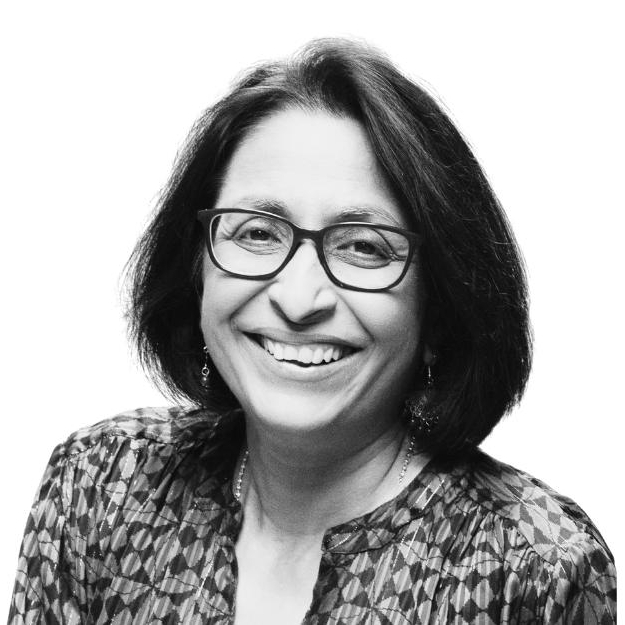
Our guest this week has spent her career preparing to solve this exact problem. Professor Svetha Venkatesh is a Deakin University Distinguished Professor and Co-Director of the Deakin Applied AI Initiative. She’s been named one of the world's top 15 women in AI research, and holder of one of the highest research honours Australia can bestow. Her pattern recognition work has moved from academic theory into real tools, patents and an ASX-listed company, tackling problems as varied as autism support and high-stakes security.
These days, Svetha's focus is on something called AI assurance, and she's refreshingly candid about how far behind it is compared to the AI we're already using every day.
In this conversation you'll learn:
- What AI assurance actually is
- How little real oversight exists for AI agents already created
- About the unsolved problem of AI agents quietly colluding with each other
- Why the film, ‘2001: A Space Odyssey’ kept coming up in our conversation, and . . .
- How Svetha's team is teaching AI to talk to children safely.
While the frontier labs and most corporates race to roll AI out, Svetha is doing the less glamorous but more important work of figuring out how we actually know an AI product does what it claims, and how we can catch it when it doesn't.
Given how quickly agentic AI is spreading through business and even Anthropic and Open AI can’t keep their research agents in check, this is a seriously important conversation.
Enjoy this thought-provoking episode with Professor Svetha Venkatesh.
**Useful Links**
Deakin's Applied Artificial Intelligence Initiative (A2I2): https://a2i2.deakin.edu.au
* * *
Hosted on Acast. See acast.com/privacy for more information.