From the Editor by Chris Danielson.
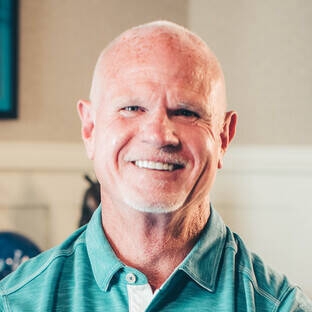
A photo appears on the page, the caption, Chris Danielson.
It is likely that most people reading this are preparing to attend the National Federation of the Blind 2026 National Convention in Austin, Texas, or have just returned from it.
The convention is the highlight of each year in the National Federation of the Blind.
It has been compared to a family reunion, and attendees have a wonderful time, but its most important function is as the supreme governing authority of our organization.
That is because the convention is where officers and directors are elected and where new policies are set for our movement via the resolution process.
Consequently, the convention will be extensively covered in the next issue of this magazine.
But if you are unable to attend the convention in person and can't or don't wish to wait to read about it in our August-September issue, you can still sign up for the virtual convention experience if you have not done so already.
The registration fee is only $10, and it is easy to sign up by visiting https://nfb.org/.
Although you will still receive many of the highlights of the convention in the Braille Monitor, there's nothing like being there, even virtually, and much as we would like to, this publication cannot award door prizes, whereas you can win them with a virtual convention experience registration.
If you are joining us in Austin, you may have the exciting opportunity to travel in an autonomous vehicle.
Austin is one of the many cities where Waymo operates an automated rideshare service, available through its own app or through the Uber app you may already have on your phone.
Waymo's service has been available in Phoenix for a while now, and Jordan Moon, who lives there and works for Savvy Services for the Blind, shares his experience and provides useful tips for trying out the service.
We made his article available on our Early Access blog, located at https://nfb.org slash braille dash monitor, where you can find other posts before they become available in our print, braille, and audio editions, as well as updates of previously published articles as warranted.
In this case, we wanted to give readers plenty of time to prepare to take a Waymo ride if they wished, but if you missed the post, the article is now in your hands.
And speaking of the Balaton Award-winning training center, Savvy Services for the Blind, where Jordan Moon works, its executive director, Amy Porterfield, tells us in this issue about her journey to fully realize the meaning of the Federation in her own life and its ability to enhance the training and lives of her students.
Many who will not attend the convention for whatever reason are still doing the work of our movement, and the convention will not be the only Federation activity that occurs this summer.
Some affiliates have already held Bell Academy sessions and more will hold them in the weeks after the convention adjourns.
If you are not familiar with the Bell Academy, Eric Duffy's contribution to this issue explains this program well and makes a strong case for its importance to blind children, their families, and our movement.
Our advocacy work also continues behind the scenes, even as we set new policy priorities at our convention.
Regular readers already know that we are fighting for the implementation of rules that will facilitate our equal online access to the activities of state and local governments and to healthcare.
This battle has entered a new phase, a lawsuit against the federal departments of justice and health and human services, which have delayed and may seek to water down or eliminate these rules.
We share details of this new litigation in these pages.
The National Federation of the Blind has many divisions through which we support and address issues faced by blind and deafblind people based on our various interests, vocations, advocations, and stages of life.
Most of these will hold their annual business meetings during the National Convention, but their activities continue throughout the year.
From the Editor by Chris Danielson.
A photo appears on the page, the caption, Chris Danielson.
It is likely that most people reading this are preparing to attend the National Federation of the Blind 2026 National Convention in Austin, Texas, or have just returned from it.
The convention is the highlight of each year in the National Federation of the Blind.
It has been compared to a family reunion, and attendees have a wonderful time, but its most important function is as the supreme governing authority of our organization.
That is because the convention is where officers and directors are elected and where new policies are set for our movement via the resolution process.
Consequently, the convention will be extensively covered in the next issue of this magazine.
But if you are unable to attend the convention in person and can't or don't wish to wait to read about it in our August-September issue, you can still sign up for the virtual convention experience if you have not done so already.
The registration fee is only $10, and it is easy to sign up by visiting https://nfb.org/.
Although you will still receive many of the highlights of the convention in the Braille Monitor, there's nothing like being there, even virtually, and much as we would like to, this publication cannot award door prizes, whereas you can win them with a virtual convention experience registration.
If you are joining us in Austin, you may have the exciting opportunity to travel in an autonomous vehicle.
Austin is one of the many cities where Waymo operates an automated rideshare service, available through its own app or through the Uber app you may already have on your phone.
Waymo's service has been available in Phoenix for a while now, and Jordan Moon, who lives there and works for Savvy Services for the Blind, shares his experience and provides useful tips for trying out the service.
We made his article available on our Early Access blog, located at https://nfb.org slash braille dash monitor, where you can find other posts before they become available in our print, braille, and audio editions, as well as updates of previously published articles as warranted.
In this case, we wanted to give readers plenty of time to prepare to take a Waymo ride if they wished, but if you missed the post, the article is now in your hands.
And speaking of the Balaton Award-winning training center, Savvy Services for the Blind, where Jordan Moon works, its executive director, Amy Porterfield, tells us in this issue about her journey to fully realize the meaning of the Federation in her own life and its ability to enhance the training and lives of her students.
Many who will not attend the convention for whatever reason are still doing the work of our movement, and the convention will not be the only Federation activity that occurs this summer.
Some affiliates have already held Bell Academy sessions and more will hold them in the weeks after the convention adjourns.
If you are not familiar with the Bell Academy, Eric Duffy's contribution to this issue explains this program well and makes a strong case for its importance to blind children, their families, and our movement.
Our advocacy work also continues behind the scenes, even as we set new policy priorities at our convention.
Regular readers already know that we are fighting for the implementation of rules that will facilitate our equal online access to the activities of state and local governments and to healthcare.
This battle has entered a new phase, a lawsuit against the federal departments of justice and health and human services, which have delayed and may seek to water down or eliminate these rules.
We share details of this new litigation in these pages.
The National Federation of the Blind has many divisions through which we support and address issues faced by blind and deafblind people based on our various interests, vocations, advocations, and stages of life.
Most of these will hold their annual business meetings during the National Convention, but their activities continue throughout the year.
The rest of this transcript — segmented and speaker-labeled, so you land on the exact moment something was said
Search every transcript — by keyword, by phrase, or by meaning, across every show Radar indexes
Trends — what is surging across podcasts, measured against its own baseline
Alerts — when a name you follow appears in a newly indexed episode
No account is needed to search Radar.