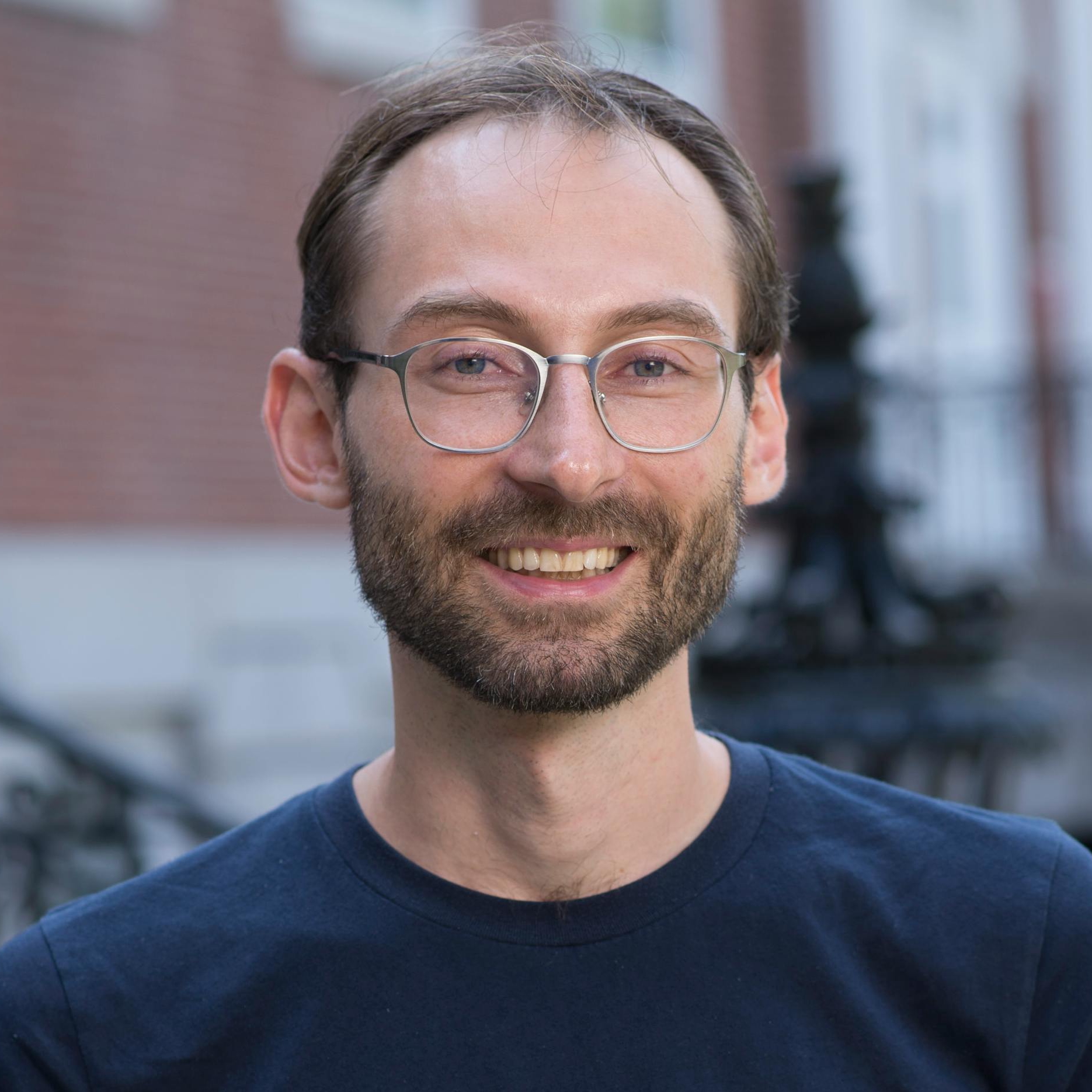
Nick Myerberg, Partner & Head of AI at Braidwell on AI's Next Era in Drug Discovery
Aug 3, 2026 · 48 min · 18 segments
Synopsis: The guest on today's podcast is a representative of Braidwell LP, a registered investment adviser. Braidwell invests on behalf of its clients and either holds, or may in the future hold…
Synopsis: The guest on today's podcast is a representative of Braidwell LP, a registered investment adviser. Braidwell invests on behalf of its clients and either holds, or may in the future hold, positions in the securities discussed. His statements are not intended to provide investment advice, discuss comprehensive investment risks, or constitute an offer to transact in any security. The information presented is for general information purposes only and will not be updated. For years, AI has promised to transform drug discovery—but why hasn't that promise translated into more approved medicines? In this episode of Biotech 2050, host Rahul Chaturvedi sits down with Nick Myerberg, Partner and Head of Artificial Intelligence and Technology at Braidwell, for an in-depth discussion on where AI in biotech has succeeded, where it has fallen short, and why the next generation of AI-native drug discovery may finally deliver breakthrough therapies. Nick traces the evolution of computational biology—from early mathematical models to AlphaFold and today's emerging agentic AI systems—and explains why proprietary data, scientific judgment, and tightly integrated laboratory feedback loops are becoming the real competitive advantage. He shares how Braidwell evaluates AI-first biotech companies, what separates lasting platforms from hype, and why the future belongs to organizations that redesign discovery around AI rather than simply adding AI to existing workflows. The conversation also explores autonomous laboratories, AI-designed medicines, the changing economics of biotech, and the evolving role of scientists in an era where human expertise and machine intelligence increasingly work side by side. Whether you're an investor, biotech founder, researcher, or AI enthusiast, this episode offers a thoughtful roadmap for understanding how artificial intelligence is reshaping the future of drug discovery. Biography: Nick Myerberg, Partner and Head of Artificial Intelligence and Technology, Braidwell Nick Myerberg is a Partner and Head of Artificial Intelligence and Technology at Braidwell, a life sciences investment firm dedicated to building and backing companies that transform human health. Working at the intersection of computation, biology, and capital allocation, Nick engineers systems that shape investment decisions and scientific discovery, and he invests in the scientists and founders forging AI-native approaches to biology. Before joining Braidwell, Nick built machine learning systems at Bridgewater Associates and at S&P Global’s Kensho Technologies. He was also a founding volunteer at NeighborShare, a nonprofit that connects families in need with local donors. Nick was selected as a member of the inaugural 2026 cohort of the Aspen Institute's Technology Leaders Initiative, a fellowship within the Aspen Global Leadership Network bringing together senior leaders shaping the future of artificial intelligence and frontier technologies. Nick is broadly interested in how advances in computation reshape the pace and structure of scientific discovery, and in building the discovery infrastructure required to increase the world’s scientific bandwidth. Nick earned a B.A. from Wesleyan University and later studied history and philosophy of science at the University of Cambridge.
Synopsis: The guest on today's podcast is a representative of Braidwell LP, a registered investment adviser. Braidwell invests on behalf of its clients and either holds, or may in the future hold…
- Show signals
- SuitabilitySafeBiasNot politicalAudience≈1k followers