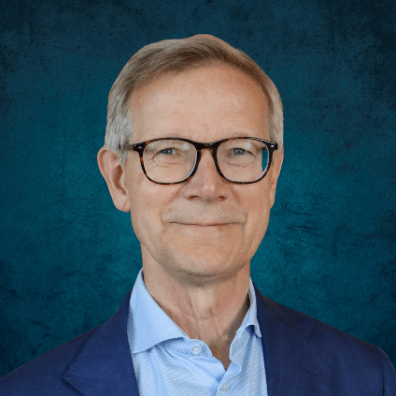
AVANTO - Conversations on Finland's Global Ambition
Jun 29, 2026 · 37 min · 10 segments
Episode 8 of AVANTO with Philip Aminoff, Chairman of Helvar Merca and Helectron. Finland is often described as cautious, inward-looking and modest in its relationship with growth. Yet in the decades…
Philip AminoffGuestGeoffroyHostSo your family has been part of this country for generations, and you carry a long memory of it.
But when you look back, is the Finland of today the same country it has always been?

Finland has changed a lot over the last two hundred years, and I think the biggest change probably came about in two different ways.

The first one was when Finland became an autonomous grand duchy within the Russian Empire in 1809, which was a huge change for what had been basically a province within the Kingdom of Sweden.

And the other huge change came about in 1917 when Finland got its independence and started to build its own destiny.

Both of these events had very big impact on the economy and on the nature of Finnish society.

I think I'd like to focus on what Finland looked like right before independence, in the decades before then, because that's a period that many people seem to have forgotten about, and it was a very, very important period for a specific reason.

This was a period of very rapid growth led by international investment and international professionals who came into the country in great numbers and really enabled Finland to become a massively dynamic economy.

What happened really at the time was that Finland, as an autonomous grand duchy within the Russian Empire, had access to Russia without customs duties.

But being autonomous, it had all the Swedish laws that it had inherited from its time as a province of Sweden.


Electricity came very early into Finland, and so new industries were able to be built on this basis, too.

So if I think of the Helsinki that existed a hundred and forty years ago, long before my time, but my family was around already here then, this was a very international city.


A Swiss guy, too, Karl Fazer, came to Finland from St. Petersburg, set up shop here.

So there was this continuous influx of young international professionals and international investment money.
So your family has been part of this country for generations, and you carry a long memory of it.
But when you look back, is the Finland of today the same country it has always been?

Finland has changed a lot over the last two hundred years, and I think the biggest change probably came about in two different ways.

The first one was when Finland became an autonomous grand duchy within the Russian Empire in 1809, which was a huge change for what had been basically a province within the Kingdom of Sweden.

And the other huge change came about in 1917 when Finland got its independence and started to build its own destiny.

Both of these events had very big impact on the economy and on the nature of Finnish society.

I think I'd like to focus on what Finland looked like right before independence, in the decades before then, because that's a period that many people seem to have forgotten about, and it was a very, very important period for a specific reason.

This was a period of very rapid growth led by international investment and international professionals who came into the country in great numbers and really enabled Finland to become a massively dynamic economy.

What happened really at the time was that Finland, as an autonomous grand duchy within the Russian Empire, had access to Russia without customs duties.

But being autonomous, it had all the Swedish laws that it had inherited from its time as a province of Sweden.


Electricity came very early into Finland, and so new industries were able to be built on this basis, too.

So if I think of the Helsinki that existed a hundred and forty years ago, long before my time, but my family was around already here then, this was a very international city.


A Swiss guy, too, Karl Fazer, came to Finland from St. Petersburg, set up shop here.

So there was this continuous influx of young international professionals and international investment money.
The rest of this transcript — segmented and speaker-labeled, so you land on the exact moment something was said
Search every transcript — by keyword, by phrase, or by meaning, across every show Radar indexes
Trends — what is surging across podcasts, measured against its own baseline
Alerts — when a name you follow appears in a newly indexed episode
No account is needed to search Radar.