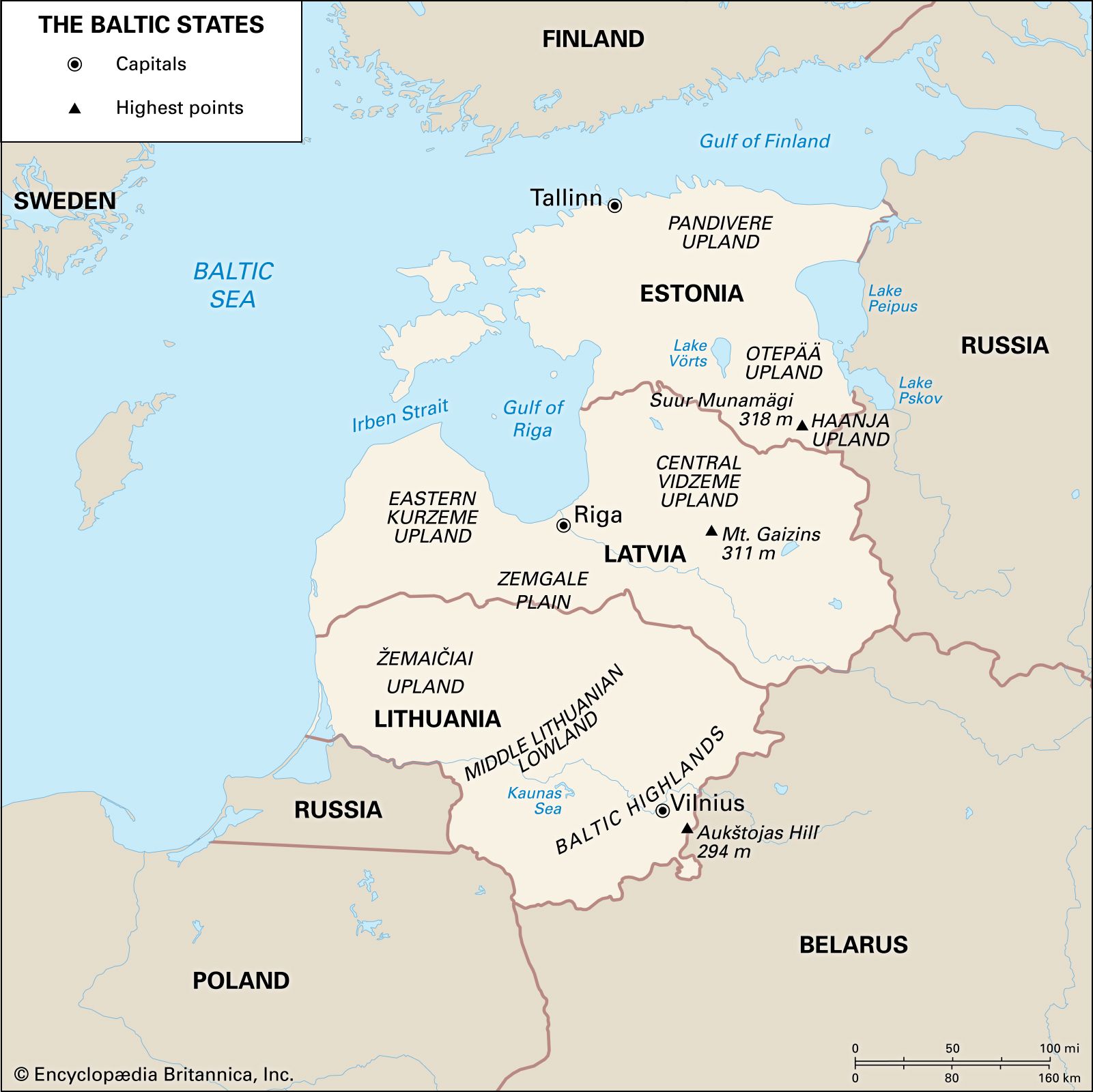
Baltic states
RegionWikipedia
932
MENTIONS
477
EPISODES
346
PODCASTS
Search complete. 932 mentions across 477 episodes found for "Baltic states".
Oct 26, 2026

Pete QuiñonesHOST
By the end of 1943, the process of remobilization of those who were previously transferred into the labor army began, and there were Jews among them.
Pete QuiñonesHOST
The author mentions that 6,000 to 7,000 Western Jewish refugees fought in the National Balt- Baltic Divisions.
Pete QuiñonesHOST
By adding the Jewish partisans incorporated into the army in 1944, the author concludes, "We can establish that at least 50,000 Jews from the territories annexed to the USSR, including those mobilized before the war, served in the Red Army." Thus, I.
Pete QuiñonesHOST
Arad comes to the overall number of 420 to 430,000 Jews in military service between 1941 and 1944.
1 HR 7 MINS LATER
Pete QuiñonesHOST
Generally speaking, early in the war, the Germans' plan was to create an impression that it was not Germans but the local population that began extermination of the Jews.
Pete QuiñonesHOST
S. Schwartz believes that, unlike the reports of the German propaganda press, the German reports not intended for publication are reliable.
Pete QuiñonesHOST
He profusely quotes a report by SS Standenführer F. Schl-Schlo- Schlöcker to Berlin on the activities of the SS units under his command operating in the Baltic States, Byelorussia, and in some parts of the RSFSR for the period between the beginning of the war in the East and October 15th, 1941.
Pete QuiñonesHOST
Quote, "Despite facing considerable difficulties, we were able to direct local anti-Semitic forces toward organization of anti-Jewish pogroms within several hours after arrival of German troops.
Matthew Raphael JohnsonGUEST
When the Directory took over, it was, it was gone.
Matthew Raphael JohnsonGUEST
And, um, the Directory went back and forth in terms of its loyalty, just like the P- just like the Poles and, uh, just like in, in, in the Baltics.
Matthew Raphael JohnsonGUEST
And, you know, um, so Vinnychenko was a, a national, um, I, I don't wanna say a national socialist, he was a national communist, and, uh, Lenin was uninterested in him, um, for many reasons.
Matthew Raphael JohnsonGUEST
But, you know, um, and the Cossacks, of course, were something that were totally anathema to, to the Soviets.
1 HR 37 MINS LATER
Matthew Raphael JohnsonGUEST
And, of course, there were certain disagreements, but they still actively supported the Red Army.
Matthew Raphael JohnsonGUEST
And any intervention, and I'll say this again and again and again, during the war, of course, was for the sake of getting, you know, the Russians back into the war.
Matthew Raphael JohnsonGUEST
But afterwards, it was to protect their own assets, to try to encourage the secession of the Baltics, especially down south, the French, the attempt to make sure the oil wells didn't fall into the hands of the whites or anybody else but themselves, to protect their own ammunition stores, which could have been given to the whites, but were never.
Matthew Raphael JohnsonGUEST
They were destroyed rather than given to the whites.

Kristaps PētersonsHOST
An Estonian cyber startup raises 100 million euros and becomes the Baltics' newest unicorn.
Kristaps PētersonsHOST
America's largest bank eyes a Baltic hub, most likely in Lithuania.
Kristaps PētersonsHOST
A Rheinmetall ammunition plant gets the green light.
Kristaps PētersonsHOST
And across the region, heating bills climb as winter approaches.
Kristaps PētersonsHOST
Money is flowing into the Baltics this week, but not always into the pockets of the people who live here.
Kristaps PētersonsHOST
Latvia now has the second highest income inequality in the EU.
Kristaps PētersonsHOST
Who wins? Who pays? And why do our most valuable companies keep looking abroad? My name is Chris Peterson and this is Median Report.
Kristaps PētersonsHOST
The Lithuanian president was scheduled to meet city executive Grant Karlsson on Wednesday as the largest U.S. bank prepares to open an office in the Baltic states.

Matthew Raphael JohnsonGUEST
Um, but these slogans here, um, and part of it is projection.
Matthew Raphael JohnsonGUEST
Remember, the Soviets had just invaded the, the Baltics.
Matthew Raphael JohnsonGUEST
They invaded Poland a few days after Germany did.
Matthew Raphael JohnsonGUEST
And of course, the Gulag, uh, camps were moved right where- wherever the Soviet Union was, and all their enemies were sent there Um, so, you know, Germany's biggest problem...
2 HRS 7 MINS LATER
Matthew Raphael JohnsonGUEST
And, um, um, you know, yeah, they wanted to make it look that way, but they really didn't have to work very hard.
Pete QuiñonesHOST
The willingness of the local population for such initiatives varied greatly in different occupied regions.
Pete QuiñonesHOST
Quote, "In the tense atmosphere of the Baltics, the hatred of Jews reached a boiling point at the very moment of Hitler's onslaught against Soviet Russia on June 22nd, 1941." End quote.
Pete QuiñonesHOST
The Jews were accused of collaboration with the NKVD in the deportation of Baltic citizens.
Matthew Raphael JohnsonGUEST
When the Directory took over, it was, it was gone.
Matthew Raphael JohnsonGUEST
And, um, the Directory went back and forth in terms of its loyalty, just like the P- just like the Poles and, uh, just like in, in, in the Baltics.
Matthew Raphael JohnsonGUEST
And, you know, um, so Vynnychenko was a, a national, um, I, I won't say a national socialist, he was a national communist, and, uh, Lenin was uninterested in him, um, for many reasons.
Matthew Raphael JohnsonGUEST
But, you know, um, the Cossacks, of course, were something that were totally anathema to, to the Soviets.
1 HR 34 MINS LATER
Matthew Raphael JohnsonGUEST
And of course, there were certain disagreements, but they, they still, uh, actively supported, uh, the Red Army.
Matthew Raphael JohnsonGUEST
And, um, and any intervention, and I'll say this again and again and again, uh, during the war, of course, was for the sake of getting, you know, the Russians back into the war.
Matthew Raphael JohnsonGUEST
But afterwards, it was to protect their own assets, to try to, um, encourage the secession of the Baltics, especially down south, the French, the, uh, attempt to make sure the, the oil wells didn't fall into the hands of the Whites or anybody else but themselves, to protect their own ammunition stores, which could have been given to the Whites but were never.
Matthew Raphael JohnsonGUEST
They were destroyed rather than given to the Whites.

Yaroslav TrofimovGUEST
There is a tactical and there is the political.
Yaroslav TrofimovGUEST
politically there's growing doubts that the US in fact still has a nuclear umbrella over Europe and that especially over some parts of Europe, like the Baltic States.
Yaroslav TrofimovGUEST
And there's a fear that President Putin may construe what's going on in Washington as a license to try to bite off one or another part of NATO and the European Union.
Yaroslav TrofimovGUEST
And the French are the only ones who have a fully independent nuclear deterrent that could create some additional doubts in the Kremlin that the French are now, let's say, they're not offering a nuclear umbrella to the rest of Europe, but they are saying that the French nuclear weapon has a European dimension and that It's unthinkable that the French vital interests will not be touched if some of the closest allies of France and Europe are attacked.
Yaroslav TrofimovGUEST
It does extend to Poland.
Yaroslav TrofimovGUEST
It does extend to Finland.
Yaroslav TrofimovGUEST
It does not extend to the Baltic states, for example.
Yaroslav TrofimovGUEST
So what will happen if Marine Le Pen wins the presidency? So the national, sort of the national rally, I guess in English.

Yaroslav TrofimovGUEST
There is a tactical and there is the political.
Yaroslav TrofimovGUEST
politically there's growing doubts that the US in fact still has a nuclear umbrella over Europe and that especially over some parts of Europe, like the Baltic States.
Yaroslav TrofimovGUEST
And there's a fear that President Putin may construe what's going on in Washington as a license to try to bite off one or another part of NATO and the European Union.
Yaroslav TrofimovGUEST
And the French are the only ones who have a fully independent nuclear deterrent that could create some additional doubts in the Kremlin that the French are now, let's say, they're not offering a nuclear umbrella to the rest of Europe, but they are saying that the French nuclear weapon has a European dimension and that It's unthinkable that the French vital interests will not be touched if some of the closest allies of France and Europe are attacked.
Yaroslav TrofimovGUEST
It does extend to Poland.
Yaroslav TrofimovGUEST
It does extend to Finland.
Yaroslav TrofimovGUEST
It does not extend to the Baltic states, for example.
Yaroslav TrofimovGUEST
So what will happen if Marine Le Pen wins the presidency? So the national, sort of the national rally, I guess in English.

Kristaps AndrejsonsHOST
Moscow wants Europeans at the table so it can demand concessions of NATO, and the paper speculates that the ask is a return to the 1987 lines.
Kristaps AndrejsonsHOST
Meaning, troops out of Poland, the Baltics, and Finland.
Kristaps AndrejsonsHOST
That's the telegraph guessing, but, you know, I live inside that guess, along with a bunch of other people.
Kristaps AndrejsonsHOST
The Baltics here doesn't feel really nice, and I don't think we want to really go anywhere.
Kristaps AndrejsonsHOST
Meanwhile, something strange happened in the Z-sphere, which I'd call a moment of clarity if it hadn't arrived five years late.
Kristaps AndrejsonsHOST
The channel Неопознанное Тело, or Unknown Body, wrote, quote, Among Russian opinion leaders there is one bad habit.

Byron CallanPANELIST
I haven't fed in who...
Byron CallanPANELIST
Who would anthropic think could win a conflict in the Baltics in 2030? And give me your rationale.
Byron CallanPANELIST
I mean, it would probably pull on, you know, the eight studies that are already out there that have assessed that.
Byron CallanPANELIST
But could it come up with its own reason, its own logic based on it's what it can pull from all this historic data? And the answer to that question would be it wouldn't come up with a credible answer.

KateHOST
That's fair game.
KellyHOST
Right? As long as I stay that up in the Baltics, I'm probably good.
KellyHOST
Yeah.
KellyHOST
Right? Yeah.
467 more episodes mention Baltic states.
Create an account to see the whole feed, search across every transcript, and follow the entities you care about.