Jun 9, 2026 · 1 hr 1 min · 13 segments
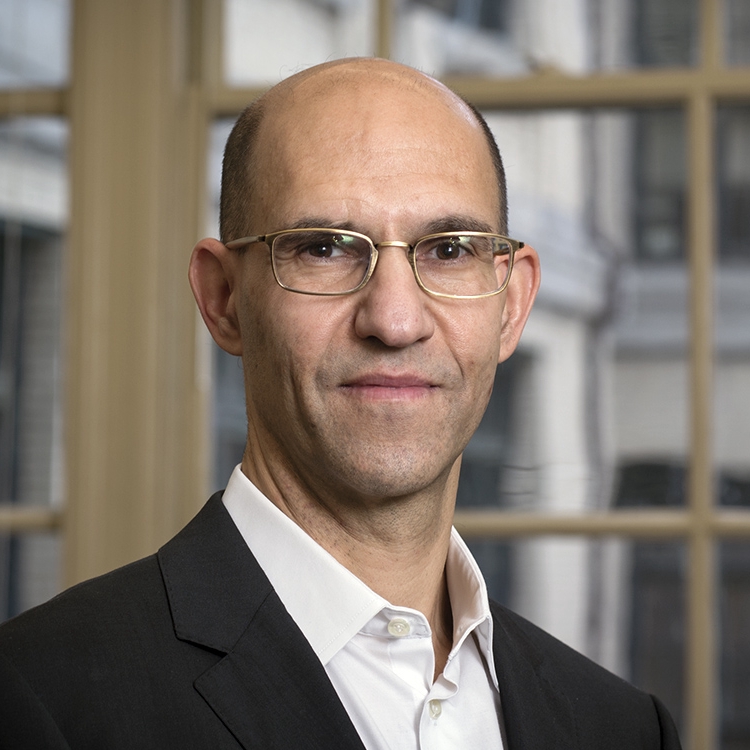
Jeremy Avigad is a professor in the Department of Philosophy and the Department of Mathematical Sciences at Carnegie Mellon University. Jeremy is a pioneer in using AI for Mathematics and the…
Jeremy AvigadGuest
Shannon ShenHost
Today, we're very excited to have Professor Jeremy Avigad joining us to talk about AI and maths.

I should start by saying that, you know, AI for mathematics has been around for almost as long as, as there have been computers.

In fact, even people were thinking about algorithms for mathematical reasoning-


Sort of try to get the precision, but get computers somewhere to make it easier and-

Um, so the question of what kind of understanding will we get from AI, um, I think-

And so trying to set things up so that they're really kind of fruitful and synergetic interactions with AI.

Today, we're very excited to have Professor Jeremy Avigad joining us to talk about AI and maths.

Jeremy is a professor of philosophy and mathematical sciences at Carnegie Mellon University.

He has been a leading figure at the intersection of AI and maths well before it became the hot topic it is today.

He's one of the early forces behind Lean, the proof assistant now central to many efforts connecting mathematicians, AI systems, and formal proofs.

He has also been a deep thinker on what it means for AI to be genuinely useful for mathematics.


And Fields medalist Tim Gowers wrote about ChatGPT models finding a useful idea in under two hours.

As models and agents get better at solving maths problems and writing proofs, they also raise deeper questions.

Can mathematics be automated? What does it mean to learn and understand maths? And how should mathematicians use these tools? With all these questions in mind, we sat down with Jeremy, and we had a very insightful and inspiring discussion.
Read the full transcript.
Create an account to read the whole episode, search across every transcript, and follow the shows you care about.

Today, we're very excited to have Professor Jeremy Avigad joining us to talk about AI and maths.

I should start by saying that, you know, AI for mathematics has been around for almost as long as, as there have been computers.

In fact, even people were thinking about algorithms for mathematical reasoning-


Sort of try to get the precision, but get computers somewhere to make it easier and-

Um, so the question of what kind of understanding will we get from AI, um, I think-

And so trying to set things up so that they're really kind of fruitful and synergetic interactions with AI.

Today, we're very excited to have Professor Jeremy Avigad joining us to talk about AI and maths.

Jeremy is a professor of philosophy and mathematical sciences at Carnegie Mellon University.

He has been a leading figure at the intersection of AI and maths well before it became the hot topic it is today.

He's one of the early forces behind Lean, the proof assistant now central to many efforts connecting mathematicians, AI systems, and formal proofs.

He has also been a deep thinker on what it means for AI to be genuinely useful for mathematics.


And Fields medalist Tim Gowers wrote about ChatGPT models finding a useful idea in under two hours.

As models and agents get better at solving maths problems and writing proofs, they also raise deeper questions.

Can mathematics be automated? What does it mean to learn and understand maths? And how should mathematicians use these tools? With all these questions in mind, we sat down with Jeremy, and we had a very insightful and inspiring discussion.