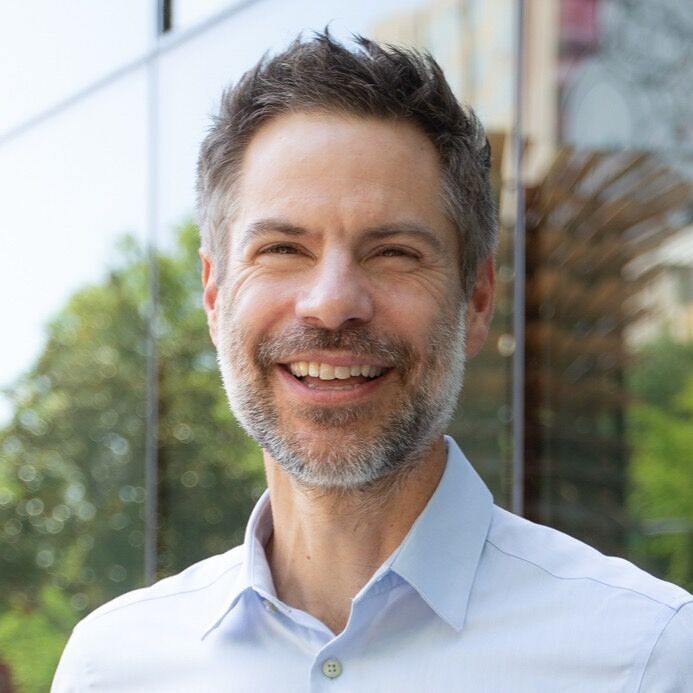
Michael Shellenberger
Activist and writer
39
APPEARANCES
23
PODCASTS
Oct 15, 2026


19:44
They want to give the state all these powers and then reduce the freedoms of the people.
19:48
So in that sense, it's just the people that say that Western civilization is awful because it created genocide or climate change or whatever it may be, listen to what they're saying.
27 MINS LATER

39:49
The replies on the Prime Minister's X account a- and Instagram are negative.
39:57
And that, you know, that plus the, just the broad remit that they give themselves to censor basically anything they want.
40:04
Under this legislation they could censor the news around the Bondi massacre, you know? And, like, that is insane, and that's what they're basically saying, is anything that could cause harm or they said copycat killings.

Sharri MarksonHOST
But now you've got the tech giants leaning towards free speech, so the governments are stepping in.


Alex AnticHOST
So I just, I thought it'd just be interesting to, just to give us a bit of a background on Public and how it came to be, and how you're now filling the void on some of these issues that are just not being picked up.
1:29
Yeah, I mean, the big event was the creation of this platform called Substack, which finally allowed for, uh, journalists to receive subscription revenue directly rather than having to work for an outlet.
1:41
So I just started to build a paying audience of subscribers that allow us to do investigations.
1:46
And then late 2022, uh, a friend of mine who's now the editor-in-chief of CBS News invited me into Twitter, where Elon Musk had just taken over and had opened up the files to everything, and it was there that we discovered very partisan elements of the intelligence community had essentially been running a censorship and disinformation operation for really several years.
2:10
So, and I'm also, I should say, uh, CBR chair of s- of politics, censorship and free speech at a new university in Austin called University of Austin.

Ben FordhamHOST
government was losing the fight online that was becoming really obvious to us because when we were advocating the no response anything that we shared online was just popping it would just go berserk as far as engagement was concerned and they worked out when it was too late that they couldn't wrestle this thing back they don't want that to happen again that's what this is really about

58:47
I mean, I think a lot of us are paying attention to the part of the bill that says that they can censor anything that may cause significant harm, or serious harm, I should say.
58:56
But there's another part of the bill that none of us even noticed for the first three weeks after it was released.
59:02
That allows the government to run an unlimited number of fake accounts to spread, to disseminate what they say educational promotional purposes.
59:11
When we ask them about that, they say, oh, that's just to enforce the law, just to enforce, make sure that the companies are enforcing it.
59:17
But no, the legislation allows them to have unlimited fake accounts that are known as sock puppets.

5:02
... you rem- It used to be called bots, and there was a whole panic, "Oh, the Russians are running bots, and the bots are..." You know, X has banned all these anonymous accounts.
5:10
The legislation says that the government should be able to override what the social media platforms are banning.
5:16
Remember, two years ago, the government had a misinformation, disinformation legislation.
5:26
Here, the government is saying, "We wanna run our own anonymous accounts," and it goes to exactly the reason you're saying, that when you go to the comments section of the news articles, or you go to the, the comments on social media posts, people can just go look at my...

45:22
We've been fighting censorship bills around the world for the last three years.
45:27
I think one of the most incredible parts of it is that it allows the government to create fake online accounts.

Peta CredlinHOST
And what's deemed harmful is a political decision by the minister in this case.


Rowan DeanHOST
I never linked, uh, the new bill with misinformation and disinformation." What did you make of that exchange, Michael?
86:50
I mean, obviously the mask slipped a little bit when he spoke at the United Nations.
86:58
The people that are censoring are spreading disinformation themselves.
87:01
They want to be able to censor so they can get away with lying about fundamental issues.

Lucy ZelicHOST
Uh, if we were to kind of paw through the insidious reasons behind these attempts to censor everyone online, is it designed to shape public policy and the perception of their governments, do you feel?
Sharri MarksonHOST
So I think there's a bit of that woke ideology that she's brought here, that obsession with censorship.
30:31
Yeah, I mean, look, I think there's networks of people, particularly on the left, who have had, you know, one foot in various sort of government operations.
30:45
The World Economic Forum kind of runs these extra governmental networks that include many people that were in government or are in government.
30:53
And so, you know, and she's a very interesting character because she came out and sort of out of the blue volunteered to a journalist that the CIA had recruited her, but that she did not work for the CIA.
31:05
We all thought that was a very strange thing to just kind of come out and say.
31:08
And so, I mean, I think, you know, President Trump has done a lot of work to try to clean up what we call the deep state, these FBI, CIA, other intelligence agencies, so they don't have these activists, political and partisan people trying to wage information warfare against the law, against their political enemies.
Sharri MarksonHOST
But the sort of ideological issues that left governments would want to censor are quite broad, aren't they? Can you run us through some of the sort of issues that you'd expect this legislation to try and influence?
22:41
The specific language in one part is they can censor anything that, quote, may cause serious harm, unquote.
22:50
You know, that could be, you know, calling, you know, biological male a male rather than a trans woman.
22:58
That could include saying that we don't want mass migration or we're worried about terrorism from migration, all very legitimate concerns.
Unknown podcast
Ep.636 ~ Post-Recording DiscussionMichael Shellenberger - Jordan B Peterson ~ Jordan B Peterson
Aug 24 · 7m

1:48
I think, I just think, you know, Jordan, your work has been so influential on me because you know, that thing you said about, um, um, if you don't know what someone's motivations are, it's good to look at the consequences of their behavior.


46:21
... saying, "We have to get over the Pentagon Papers principle." Pentagon Papers principle is that The New York Times is gonna publish these leaked documents from the Pentagon about how we're losing the war in Vietnam.
46:34
Um, major foundation for free s- it's why we can publish leaked government documents and not risk going to prison.
46:40
Uh, it's still illegal often for the, the leaker, but for reporters we're protected.
46:45
Here they come out with this whole report being like, "We reporters should get over that idea and not report on the [laughs] leaked information," um, which is, like, basically saying, yeah, we should just be, you know, puppets of the military intelligence community.
47:02
Then you get this other thing that I only connected later, which was that the FBI goes to Senators Grassley and Johnson and gives what's called a defensive briefing saying, "We have intelligence that your investigation into Hunter Biden's corruption is being used by the Russians to spread disinformation." They then, FBI then turns around and goes and tells the, the news media, in this case it was Politico, they go do these stories on it.
25 MINS LATER
Unknown podcast
Ep.510 ~ This Cannot Be Ignored ~ Jordan B Peterson
Aug 13 · 20m
speaker_1SOUNDBITE_SPEAKER
But, um, you know, I think, I think now that I follow a lot of kids into their, into their mid-twenties, I'm always like, "Oh, the dog isn't doing it for you, right?" Yeah, they're like, "No, I just found this, you know, wonderful partner and now we're having kids and da, da, da." So I think, you know, it doesn't surprise me, but I don't know still what to do for the fourteen-year-olds.
3:40
The picture that this organization, WPATH, had presented to the world and to the American Medical Association, the American Academy of Pediatrics, the Endocrine Society, every major medical organization, was a picture of real professionalism grounded in the best available science and evidence.
3:57
They have something called standards of care, which are ostensibly guidelines for proper medical care for people suffering from so-called gender dysphoria or gender distress.
4:08
And they're in their se- eighth version of that, so they call it Standards of Care Eight or SOC 8.
4:13
Based on their public presentation, you would think that this is a serious scientific and professional body.
4:20
When you read these documents, what you see is a lot of spitballing, a lot of people making things up.
12 MINS LATER
Unknown podcast
Ep.354 ~ The Stages of Masculinity - You MUST Achieve Stage 3 ~ Jordan B Peterson
Jul 31 · 12m
2:31
Yeah, I mean, I think that that picture that you're describing is the same one that Harvey Mansfield lays out in his wonderful book, Manliness, where he has three levels of masculinity.
2:43
The first is weak men who are incapable of defending themselves and others.
2:50
Manly men who are strong men who look down on the weak men, but will also abuse their power.
2:57
And then the gentleman who has the power of the manly man, but keeps it in reserve to protect his family, his bride, his children, his family, his nation.
3:09
civilization but he's not going to abuse his power so we've seen a regression where civilization was created by gentlemen as you said they gentlemen they became gentlemen they came in the process of creating civilization they become gentlemen or in the process of becoming gentlemen they create civilization which is to say a society based on universal rules on the view of humans as all equal under first god and then equal under the law and that everybody has these fundamental inalienable human rights.


Andy StumpfHOST
Though AARO has said that many of the reported sightings they investigated could be attributed to common objects like balloons or consumer drones, hundreds still remain unexplained.
35:30
I think that what the American people need to know is that the US military and intelligence community are sitting on a huge amount of visual and other information, still photos, video photos, other sensor, uh, information, and they have for a very long time.
36:25
The report describes various incidents found in the human intelligence databases.
36:29
One involved orbs surrounding and forcing an F-22 out of its patrol area.
36:34
In another incident, the crew of a Navy aircraft carrier watched a small orange-red sphere rapidly descend from a high altitude of 100 to 200 yards directly above the flight deck of a c- of the CVN or aircraft carrier.


Christopher RufoHOST
But tell us about how you got into thinking about UFOs and your general theory of how to look at it.
1:39
And it's a fun topic to get on, especially today, which you may know is the second big release of videos and documents from the Department of War.
1:53
The history of the U.S. government's relationship to UFOs is kind of long and complicated.
48 MINS LATER


53:26
And, um, now we know that Sergey Brin has been red-pilled by his MAGA girlfriend and has been financing both, uh, I think he gave some money to Steve Hilton, the Republican candidate.
53:39
I can't be sure about that, but I think he stepped up with a lot of money to fight the, fight that billionaires tax.
53:47
I think it's the role of the cap- the new capitalist money, whether it's the Carnegies and Rockefellers and Fords, or it's the David Sax, Elon Musks, you know, Sergey Brins, to kinda bring in a new political elite and finance them to r- to t- to transform government.
6 MINS LATER


Brian KilmeadeHOST
What is your-- What's your thought about the Democratic Party and some of the sounds you just heard and some of the beliefs that are out there?
5:56
I think that the radicalization of the left and the Democrats is the big political story, and this was really confirmed earlier this year.
6:03
There was a major study that was done comparing the radicalization on specific issues between Republicans and Democrats, and they found that, uh, the left had radicalized 10 times more than the right.
6:14
This was an independent study done by, I think, four British, uh, social scientists.
6:18
You know, at the heart of socialism, I think it's important for people to remember, is the desire for revenge against a system that people feel like has treated them unfairly.


12:54
Yeah, it's, uh, obviously, it's a big issue, and I think many Americans felt that they didn't need to pay attention to the issue at all.
13:00
And but now we've seen, uh, trans-identified people, uh, engaged in, uh, shootings, uh, obviously, or maybe not obviously, uh, probably obviously to your audience.
13:09
It was the last thing that Charlie Kirk was talking about, uh, before he was assassinated.
13:15
It appears as though the evidence that Tyler Robinson, uh, committed that assassination is pretty overwhelming and, and to be fair to, to Joe Kent, he didn't dispute that.
13:25
What's really-- what he's raising here is that there may be some broader conspiracy, and there's not a lot of evidence for that.
9 MINS LATER


82:49
Yeah, obviously it's a big issue, and I think many Americans felt that they didn't need to pay attention to the issue at all, but now we've seen trans-identified people engaged in shootings, obviously, or maybe not obviously, probably obviously to your audience, it was the last thing that Charlie Kirk was talking about before he was assassinated.
83:10
It appears as though the evidence that Tyler Robinson committed that assassination is pretty overwhelming, and to be fair to Joe Kent, he didn't dispute that what's really what he's raising here is that there may be some broader conspiracy and there's not a lot of evidence for that.
83:30
And but nonetheless, because Kent is such an important voice, he could easily be used by the defense attorneys.
83:39
I did directly ask him repeatedly that, you know, given that his agency is an intelligence gathering, a really an intelligence synthesizing and coordinating agency as part of the broader coordinating intelligence mission of the Office of the Director of National Intelligence.
83:55
You know, he didn't have the authorities to do a law enforcement investigation.
10 MINS LATER

13:51
He challenged the entire foreign policy establishment on the basic view of just, um, you know, of just, of just kind of keeping it, you know, keeping the, keeping the communists where they were.
6 MINS LATER

Joe RoganHOST
So initially Anthropic was hesitant to allow them to use autonomous weapons, right?


Megyn KellyHOST
Like, but what is that? 'Cause I was saying in the intro, you know, if you were just to read the, the articles about what's in these files, they wouldn't say that he was an asset to anybody, but Bibi Netanyahu came out and wrote that himself a couple of months ago.
33:47
Yeah, I mean, it looks, it looks like he was somebody that was involved in, um, you know, is- was involved his whole career in being an expert at moving money around, hiding money, creating tax havens.
34:00
I, we can't prove it, but, I mean, I think he looks like he was involved somehow in arranging finances, uh, during Iran-Contra, um, you know, potentially other, uh, in, you know, intelligence or clandestine operations.
34:12
Uh, that's why it's so frustrating, is you really don't feel like we have the full picture at all yet.
28 MINS LATER
Megyn KellyHOST
And didn't then Epstein and Gates invest in that guy's company, the guy, the employee in whose voice Epstein was allegedly writing this email?


Freddy GrayHOST
So Michael, that rather cutesy advertisement for helping s- find lost dogs, um, freaked quite a lot of people out, and I think rightly, didn't it?
2:46
We've sort of learned gradually about all the ways that our privacy is being violated in the United States.
2:52
You know, I will say that I think that the United States is different than Europe in the sense that I think that we're much more concerned around free speech and much less concerned about privacy than folks in Europe, and I get the sense that I think Europeans are much more concerned about privacy than about free speech.
Freddy GrayHOST
We just- we have- we're not no- we're so distracted with everything else, that we're not noticing the fact that, um, uh, the surveillance of our lives through tech is growing and growing and growing, and it's a major, um, privacy concern.


1:28
So, you know, what we were talking about earlier is basically kind of these Superfund laws, and, you know, as I mentioned, you know, the Superfund laws are a retroactive tax on a handful of companies which are providing products that the consumers are demanding, right? So why should a hand- a handful of companies be paying all of the tax? That's the big issue, uh, on these Superfund laws.
1:49
So the interesting thing is, you know, if we look at places like California, where they tried to get a Superfund law through, and it stalled in the state of California, right? Why did it stall? And the reason it stalled is, uh, people do not like paying high energy costs.
2:06
And so actually, you know, the, the political leadership of California, even Gavin Newsom, was kinda lukewarm on this idea of a climate Superfund.

70:53
And other things can be true, which is that Alex Pretty put himself right in front of that officer, stepped into the street, uh, you know, got himself involved in this altercation that he didn't need to be involved in, certainly not to film it.
71:07
So they are clearly intervening, and, and of course, Renee Good, uh, you know, drives perpendicular to blocking the street.
71:19
I think it's just obvious that these are behaviors aimed at interfering with law enforcement operations, and again, that's not justification for the behaviors of the ICE agents or anything else.
9 MINS LATER

Tucker CarlsonHOST
So clearly, you know, acquiring power is the short-term goal, but, like, what's the vision for the country that activists like this have? Like, what are they working toward?
Megyn KellyHOST
You had your finger on the pulse long ago, and it's amazing to me as we watch the Portland authorities, as we saw, you know, in Chicago, um, and elsewhere, these local officials say, "We don't want your help." We- they would literally rather have the rioters out there in gas masks threatening and assaulting ICE officers.
13:08
Yeah, I mean, look, I think that what the president is trying to do is to send a strong message that he wants to see s- uh, state and local governments enforce the law.
13:18
That's not something that they've been doing on a whole range of issues.
13:21
Obviously really different problem in terms of like homicide in somewhere like Washington, DC.
13:26
You know, this is a problem, I mean just demographically, this is a problem of overwhelmingly young Black men.
13:30
You know, in Washington, DC, I think I looked at the homicide, uh, rate and it was over 95%, um, African-Americans.
13:37
You look at somewhere like Oregon and Portland, you have a problem of massive disorder as a result of allowing large open air drug dealing, drug scenes, what they euphemistically call homeless encampments, but there's nothing particularly campy about it.
15 MINS LATER
Scroll for more appearances