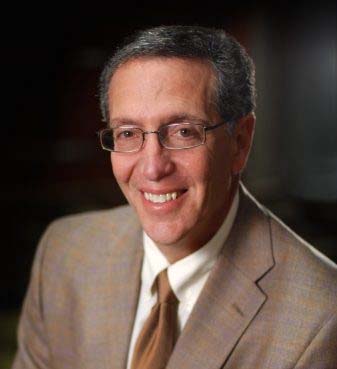
Howard Schubiner
27
APPEARANCES
22
PODCASTS
Oct 26, 2026
Raelan AgleHOST
So what does it actually look like when you're working with someone? What are the components of it? How do you do emotional awareness and expression therapy? So


David HanscomHOST
So what we want to focus on this podcast is, I think, didn't EAET start before PRT? That's something you've been doing for a while?

Howard SchubinerGUEST
And both of those have begun to merge a little bit, especially in the research.
17 MINS LATER
Howard SchubinerGUEST
So then the question is what can we learn about them in their life? What is the context of their life? Once you understand that the brain is a dangerous, you know, works out of a danger or safety.
Howard SchubinerGUEST
And when danger occurs, the brain is going to be like a smoke alarm and send an alarm.
Howard SchubinerGUEST
So what caused, what causes danger in them? What causes danger in you? You know, so if someone had, father who was critical and later in life has a boss who's critical that could trigger the danger signal someone in life had a mom who just said you know you know I don't you know just just keep going doesn't matter what you what you feel and then has a spouse who says just I don't care what you feel just just do the job it's not being seen it's not being heard it's not being validated and so The, and then, so we're looking for things that trigger the brain to move into danger mode.
Howard SchubinerGUEST
And then we're looking for the symptoms themselves as to assessing them from a medical point of view to see if they seem to be more structurally related or not.
Howard SchubinerGUEST
The vast majority of people with chronic symptoms that haven't been diagnosed through routine medical testing have what I would call neuroplastic a condition, meaning a brain generated symptom.

DaveHOST
That was the exact freaking things that were coming into my brain, right? Yeah,
DaveHOST
What has that shift been for you?


Howard SchubinerGUEST
seeing that the brain can turn on different neural circuits like that really helped me expand this understanding to a whole variety of other other conditions The other thing was, as I was saying before, the whole view of predictive processing and really understanding the neuroscience behind that and delving deeply into that and determining that our brain literally creates all of our experiences.
Howard SchubinerGUEST
And then the third thing was really beginning to see the importance of emotions and emotional work and trauma work.
Howard SchubinerGUEST
And working with Mark Lumley to develop a type of therapy we call EAET, emotional awareness and expression therapy, which has been now shown in several randomized controlled trials to be highly effective and more effective than standard psychotherapies like cognitive behavioral therapy.
Howard SchubinerGUEST
So that whole arena, and I'm an internist, but we developed this therapy And then the question is, what do you do with the therapy? Who should be trained in that? We're doing a lot of training in this.
16 MINS LATER

Howard SchubinerGUEST
She couldn't get in a good position and she just simply put her hand on her back and she put her hand on her back with a compassionate, and compassion feeling for herself, for her back, for her pain.
Aimie ApigianHOST
Where do you start with those people who are so far into this feedback cycle that their capacity is now so low?
Howard SchubinerGUEST
And the other thing that we didn't really talk about is not only minorities, poor people, distant transgender people, but it's higher in young people and in women.
Howard SchubinerGUEST
Young people, this increases of all these things are not happening in old people getting older.
Howard SchubinerGUEST
But I will say, if you look at the data, women have higher rates of these things.
Aimie ApigianHOST
And how would you connect that finding for your neuroplastic model alongside a biomedical reason that they have for their pain?

2:07

Dr. Howard Schubiner says that having this understanding and believing that your pain can be fixed is crucial to successful treatment.
Howard SchubinerGUEST
If you think you have a chronic condition that's never going to get better and you're just pushing through it or you're just trying to distract yourself, the chance of that working extremely well is going to be low because in the back of your mind, you're like, oh yeah, this is damaged.
Howard SchubinerGUEST
The coping model for chronic pain and other conditions is necessary if there's actual structural damage, but if there's not, the coping model can actually be counterproductive.
Howard SchubinerGUEST
It's hard to fully dive in or lean into this and say, it's hard to fully be liberated and say, I'm going to walk, I'm going to exercise, I'm going to love my life and do it with the hope and the knowledge and the expectation that you're actually going to get better.
5 MINS LATER
1:20
Dr. Howard Schubiner says that having this understanding and believing that your pain can be fixed is crucial to successful treatment.
Howard SchubinerGUEST
If you think you have a chronic condition that's never going to get better and you're just pushing through it or you're just trying to distract yourself, the chance of that working extremely well is going to be low because in the back of your mind, you're like, oh yeah, this is damaged.
Howard SchubinerGUEST
The coping model for chronic pain and other conditions is necessary if there's actual structural damage, but if there's not, the coping model can actually be counterproductive.
Howard SchubinerGUEST
It's hard to fully dive in or lean into this and say, it's hard to fully be liberated and say, I'm going to walk, I'm going to exercise, I'm going to love my life and do it with the hope and the knowledge and the expectation that you're actually going to get better.
5 MINS LATER


Gabby SandersonHOST
Well, I was actually going to backtrack a little bit just for any of our listeners that are new to this and ask you in your words, what is neuroplasticity?
Howard SchubinerGUEST
You only have to look at children to see how much they're learning every day.
7 MINS LATER


Gigi CockellGUEST
And so that is what can lead to a cycle of of chronic pain where the brain doesn't have the opportunity to stop its own warning signal and how you can explain it in your
Howard SchubinerGUEST
That's brilliant because it really captures in a real way what people experience.
Howard SchubinerGUEST
and how they can understand it from a point of view of, oh, that's like a computer or an overload system.
Howard SchubinerGUEST
The brain, on a neuroscience level, what we think about is predictive processing.
37 MINS LATER
4:30
Schubiner details this journey in his new book, Unlearn Your Pain, The Science of Recovering from Chronic Pain, Fatigue, Anxiety, and Depression.
Howard SchubinerGUEST
And I read a book by Dr. John Sarno, who a lot of people have revered or the opposite.
Howard SchubinerGUEST
But he had this idea that especially back pain could often be neuroplastic or generated by the brain in the absence of of tissue damage.
6:56
The doctors assume to be the problem, which leads patients down a treatment path that ultimately won't fix their pain.


Howard SchubinerGUEST
Why would anyone listen to me if they don't know that I love them, that I care about them, that I'll do anything, that I'm going to leave no stone unturned? Why would they ever listen to me? And the second thing is not listening to me.
Howard SchubinerGUEST
So one of the things, you know, one of the stories in my book is about a guy who had 25 years of back and leg pain, 25 years getting worse and worse and worse, plus roughly 10 years, I think, of foot pain getting worse and worse, having surgery, having injections, having medication, having physical therapy, having acupuncture, having everything at two top medical centers, not, you know, the top, I'm talking about top medical centers.


Sean HersheyHOST
i didn't have the personality for it which i'm like i kind of i i kind of think you might
Howard SchubinerGUEST
i god i just didn't think so this was in the during the middle of college and that's when i decided to go to medical school because i thought if i was a doctor i could work in a community and maybe have some you know respect or gravitas and be able to work with with leaders or with people who are influencing things in the right way and i was You know, it was funny, you know, I was part of a group of young people who wanted to move to some community and set up shop and have an influence there.
Howard SchubinerGUEST
And we looked in Virginia and North Carolina and Vermont and all these beautiful places.
Howard SchubinerGUEST
I ended up, you know, doing residencies in both internal medicine and pediatrics and After that, I was at Wayne State University in Detroit in the medical school, and some of the people there asked me if I would stay on as faculty.
Howard SchubinerGUEST
And I thought, okay, I could do that for a year or two, but I had no skill.
10 MINS LATER


Neha PathakHOST
And is that pain something that's located in a specific area, or is it sort of global generalized pain when we're thinking about that large population of chronic pain sufferers? What are we kind of thinking about there?
Howard SchubinerGUEST
After that, it's headaches, facial pain, abdominal pain, pelvic pain, and other musculoskeletal pains and joint pains.
Howard SchubinerGUEST
And so what we're saying is that in order to get good treatment, you need to have the right diagnosis.
Neha PathakHOST
But I'd love for you to dig into this sort of concern that patients often have is being told by their doctor or someone that this just means it's all in their head.


Brooke SiemHOST
So that's my long-winded way of saying how do we apply this to psychology and mental health? [laughs]
Howard SchubinerGUEST
It's so moving and this work is so moving because people are suffering and they're being told that there's something physically and structurally wrong with them.
Howard SchubinerGUEST
They're being told physically and structurally wrong with their back when they just have mild changes that are normally seen.
Howard SchubinerGUEST
They're being told that they have something physically wrong with their brain when they're depressed because they're told they have low serotonin levels and there's no evidence for that.
Brooke SiemHOST
And again, in the context of your specific work, I think it really helps us s- expand and understand why these types of treatments can be quite effective.

Brooke SiemHOST
So that's my long-winded way of saying how do we apply this to psychology and mental health [laughs]?
Howard SchubinerGUEST
It's so moving and this work is so moving because people are suffering and they're being told that there's something physically and structurally wrong with them.
Howard SchubinerGUEST
They're being told physically and structurally wrong with their back when they just have mild changes that are normally seen.
Howard SchubinerGUEST
They're being told that they have something physically wrong with their brain when they're depressed because they're told they have low serotonin levels and there's no evidence for that.
Brooke SiemHOST
And again, in the context of your specific work, I think it really helps us s- expand and understand why these types of treatments can be quite effective.

27:42

How is it different from, from your previous, yeah, your previous work.
Howard SchubinerGUEST
It's the same because it has the same name, and this is very confusing, but it's called Unlearn Your Pain.
Howard SchubinerGUEST
So that's why it's, you know, so it's really more for more general, more for the public.
6 MINS LATER
speaker_5UNKNOWN
Number

AlanHOST
But one thing you brought up that I thought was really interesting was the condition of long COVID, and how that can be structural or neuroplastic.
Howard SchubinerGUEST
And when I started this book, I was writing for Penguin Random House, big publisher.
Howard SchubinerGUEST
I said, "Are you guys gonna back me up? 'Cause I'm gonna be controversial.
Howard SchubinerGUEST
[laughs] Anyway, so I'm just gonna put it out there, and you have to ask the question.
10 MINS LATER
AlanHOST
Yeah.


Howard SchubinerGUEST
Whereas when you step back, and this is one of our treatments we call pain reprocessing therapy, which we've shown in randomized controlled trials to be effective and more effective than standard psychological treatments for pain.
6 MINS LATER

Howard SchubinerGUEST
I have feelings about this, and maybe those feelings are connected to my back pain.
12 MINS LATER

Howard SchubinerGUEST
You, it needs feedback from us to say, "I'm actually okay." So this pain-fear, pain cycle is really, really important to understand.
Howard SchubinerGUEST
And so when, when people recognize that there's fear underneath their symptoms, that's where they wanna go because the fear itself is the key to understanding what's happening with them.
Howard SchubinerGUEST
One is to recognize it, to feel it, to be with it, to understand that it is itself a danger signal that the brain is creating, and it's there for a reason.
Howard SchubinerGUEST
So we can thank it for being there and protecting us and worrying about us.
11 MINS LATER


Howard SchubinerGUEST
Yeah, because I think one of the things that I really try to do when people, because a lot of people get this information and they get unstuck kind of quickly.
Howard SchubinerGUEST
And People who aren't getting it quickly get mad and angry at the people who got it quickly because it's annoying and frustrating because they read these stories and week, two weeks, a couple months, everything's fine.
Howard SchubinerGUEST
And they're like, why is this not happening for me? So what I try to do when that happens is I try to go back to the basics.
Howard SchubinerGUEST
Like, what are the steps? to take starting from the beginning to make sure we've covered all the bases.
Howard SchubinerGUEST
And the first step is making the assessment and the diagnosis and making sure that people really have ruled out some structural problems, are clear that those structural problems are ruled out, and are really understanding the notion that the brain can generate Sensations, all sorts of sensations in the absence of physical danger.
30 MINS LATER


Howard SchubinerGUEST
It means there must be something wrong in the body when there's a sensation, and it's not necessarily true.
Howard SchubinerGUEST
And when you catch a virus, the virus can directly cause nose running, throat tickling.
Howard SchubinerGUEST
Cough can directly cause that, and it ... and the, and the body will send out...
30 MINS LATER


Howard SchubinerGUEST
[laughs] It is so big, it is so widespread to know that MRIs can show the inside of the body, which is true, they can.
Howard SchubinerGUEST
I was a doctor before there were MRIs, and we're like, "Oh my God, you can do the scan.
Howard SchubinerGUEST
You can see tumors, cysts, bleeds, everything," and you could see degenerative discs.
Howard SchubinerGUEST
But it turns out that discs degenerate over time, just as hair gets gray over time, and graying of hair does not actually cause pain.
14 MINS LATER
31:19
All you have to do is go to dohealth.co forward slash live more and use the code live more to gain access to the wait list right now.
Scroll for more appearances