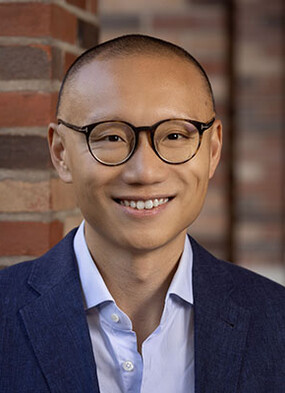
Dan Wang
Canadian writer
48
APPEARANCES
45
PODCASTS
Oct 6, 2026

speaker_1ADVERTISER
Learn more at linkedin.com/smallbusiness.
Dan WangGUEST
It takes on average five or six years for an American automaker to think of a new model and then release that model onto the streets.
Dan WangGUEST
In China, the speed of iteration is much closer to eighteen months, moving three times faster than the Americans.
speaker_0ADVERTISER
Anthropic says they've built the smartest AI ever made.


Dan WangGUEST
So as I was walking around London yesterday, I passed by the Inns of Court, Lincoln's Inn.
Dan WangGUEST
And these are some beautiful law fields where Barristers and solicitors have their, I guess, their finishing touches of training.
Dan WangGUEST
Is it the Inns of Court, Inn of the Middle Temple, Inn of the Higher Temple, all these kind of crazy names out there.
32 MINS LATER

Jimmy McLoughlinHOST
I just love you to kind of like expand and get your reflections on that of how it's changed because I also you would think in some ways with a lawyerly society that wouldn't be lost but actually your point is and you talk about Andy Grove a lot in the book as well.

Celia HattonHOST
When we think about China, how does having this engineering mindset help Beijing deal with climate change?
Dan WangGUEST
The first thing that we have to acknowledge is that this is going to require a lot of construction.
Dan WangGUEST
I think that there is no way to decarbonize our electrical usage without building enormous amounts of solar, as well as wind farms, as well as transmission lines to bring a lot of different energy sources into our homes, our factories, into our offices and everything else.
18 MINS LATER
Celia HattonHOST
We have ghost cities where they have been built and no one has really wanted to live there or stay there.


Dan WangGUEST
[percussive music] So, uh, the year 2008 was a, a pretty important year for, uh, high-speed rail, both in California as well as in China.
Dan WangGUEST
So, uh, in the year 2008, uh, the California voters approved a referendum to build a high-speed rail from San Francisco in, uh, northern/central California, uh, down to LA and Southern California.
Dan WangGUEST
Uh, in the year 2008, uh, China actually started construction of its, uh, high-speed rail line connecting its two biggest cities, uh, Beijing at the north and, uh, Shanghai, uh, in the east.
Dan WangGUEST
And coincidentally, um, Beijing to Shanghai is about the same length as San Francisco to Los Angeles.
9 MINS LATER
18:31
... you know, with this level of coordination, what do you think that means for the rest of us?

Fareed ZakariaMODERATOR
[laughs]
Dan WangGUEST
You know, why don't we learn from the, the Japanese here? And I think the, the, the main thing is to also think a little bit about what is going on, uh, in China.
Dan WangGUEST
So I was living in Beijing in 2020 when Xi Jinping came out with this new slogan called dual circulation.
Dan WangGUEST
And I think the m- main way to understand dual circulation now is to look at two legs of a strategy.
Dan WangGUEST
The first leg is to make the rest of the world more dependent on China, for example, by making the rest of the world buy the solar and the pharmaceuticals.
Dan WangGUEST
And the second step was to make, uh, China more independent, uh, from the rest of the world.
23 MINS LATER
Fareed ZakariaMODERATOR
When you go to Europe, there's come tremendous fear of Chinese EVs completely destroying the auto industry, and the Chinese are not compensating by opening up their market to allow goods in.


Jeremy SiegelCORRESPONDENT
What Apple didn't realize was that outsourcing its production to Shenzhen would spark a new era of innovation.
Dan WangGUEST
What Apple was doing was training, uh, hundreds of thousands of Chinese workers every single year to make the most sophisticated electronic product, uh, in the world.
Jeremy SiegelCORRESPONDENT
Apple gave them a new skill and inspired a new generation of entrepreneurs with technical know-how.
Dan WangGUEST
A lot of these workers would move from, uh, making a, uh, an Apple iPhone in their first year maybe to making a Huawei phone the next year.
Dan WangGUEST
And then they may be putting together a DJI drone, uh, and then, uh, maybe an even more complex product, the electric vehicle batteries.


Dan WangGUEST
It is really difficult being a Chinese entrepreneur, so difficult that, uh, plenty of people have departed China because it is, uh, uh, very challenging to do business in China.
Dan WangGUEST
For a period of time, uh, Jack Ma, uh, left China and, uh, stationed himself in Japan, and, uh, was basically, uh, essentially, uh, pretty hands-off from, uh, running Alibaba because other people, uh, was doing it in his stead.
Dan WangGUEST
The, uh, founder of ByteDance, uh, Zhang Yiming, uh, has substantially relocated himself to, uh, Singapore.
Dan WangGUEST
It has a really robust business culture of people that are, you know, really aggressive in, um, creating software businesses, and I, I think it is pretty clear that China is the only, uh, space in which Silicon Valley entrepreneurs could, uh, regard as their peers.
9 MINS LATER

Dan WangGUEST
There are all of these accounts of foreign leaders meeting him and marveling at how expertly he would spit into a nearby spittoon because he was just able to hock up so much mucus, uh, just direct spit right in there.
11 MINS LATER

Kerry BrownGUEST
The lessons were very profound, the need for industrialization and a decent technology infrastructure, the importance of education.
Dan WangGUEST
There was a very intentional effort by Deng Xiaoping, the then leader, to say, "Well, you know, who is the most successful country in the world? It's not really the Soviet Union.
Dan WangGUEST
It's much more the Americans, and so why don't we adopt practices closer to America?" And my view is that China adopted absolutely everything from the United States, aside from the political system.


Dan WangGUEST
If you're a socialist country, uh, probably what that means is that the state commands, uh, quite a lot of the means of production, uh, owning a lot of things like telecommunications or oil and gas or, or airlines.
Dan WangGUEST
If you're a market economy, it means that the state does not get involved in these sort of things.
Dan WangGUEST
So ultimately, how is this tension resolved? Well, by adding in this magical phrase, with Chinese characteristics.
Dan WangGUEST
And ultimately, what that means is that the Communist Party will, at all points, determine whether it needs to be more state-driven or market-driven, and it is the party's pleasure to decide.
Dan WangGUEST
And so this is where China has this very strange economy by any standard, that it is substantially state-controlled.
17 MINS LATER

Dan WangGUEST
If you're a socialist country, uh, probably what that means is that the state commands, uh, quite a lot of the means of production, uh, owning a lot of things like telecommunications or oil and gas, uh, or airlines.
Dan WangGUEST
If you're a market economy, it means that the state does not get involved in these sort of things.
Dan WangGUEST
So ultimately, how is this tension resolved? Well, by adding in this magical phrase, with Chinese characteristics.
Dan WangGUEST
And ultimately, what that means is that the Communist Party will at all points determine whether it needs to be more state-driven or market-driven, and it is the party's pleasure to decide.
Dan WangGUEST
And so this is where China has this very strange economy by any standard, that it is substantially state-controlled.
17 MINS LATER


Dan WangGUEST
And when I take a look at, um, you know, a lot of the parts of the economy that are not tech, that are not, let's say, finance, there's still quite a lot of dysfunctions in a lot of these different places.
Dan WangGUEST
Uh, Michigan has been kind of a net loser in manufacturing over basically the last five decades as the Detroit Big Three automakers have gone, uh, steadily a-away.
Dan WangGUEST
Uh, a lot of the, um, um, automotive jobs have moved to different parts of the United States.
10 MINS LATER


Tracy AllowayHOST
But okay, so is influencer culture that's standing in the way of Xi Jinping's drive to increase consumption? Is that what we're saying?
Dan WangGUEST
I think that's must be a part of it because at some point, um, you wonder the extent to which, uh, phone culture becomes a substitute for real spending on holiday.
Dan WangGUEST
So, um, as I just mentioned, you know, you have, uh, cafes, you may have cocktail bars in which a gaggle of people come over and then have, buy two drinks, and then they spend the rest of their time photographing themselves.
Dan WangGUEST
Um, maybe you can say that the constant photography is a boon for live streaming, and so that promotes some aspect of consumption.
Dan WangGUEST
But I think overwhelmingly, people are substituting away real experiences to, you know, let's say, have, like, a super nice, you know, travel experience when they could just photograph themselves.
Dan WangGUEST
'Cause the other part of being in Yunnan, which is in the southwest, this is the region where my family is from, you know, this is h- highly mountainous.
9 MINS LATER


speaker_0HOST
Dan, economically, what do you see the impact of the hukou system as it has been operating being, and how will the trends that you've described change those economic impacts?
Dan WangGUEST
The hukou system in the past have served its purpose because China did need to, uh, it...
Dan WangGUEST
China need to provide enough cheap labor for it to go through this industrial transformation.
Dan WangGUEST
So in the '70s and '80s, a lot of the agricultural worker went to the cities and work at extremely low wages, and they were actually the foundation for China's so-called economic miracle in the following 30 years.
Dan WangGUEST
But now when we look at the system, uh, you can clearly see this information gap and knowledge gap and how that has contributed to this mismatch of skills in the job market.
Dan WangGUEST
And there are about 30 million, uh, labor shortage in China's manufacturing sector, and that is actually concentrated in those high-end blue collar jobs.
speaker_0HOST
Now, obviously, speaking out against the prevailing policies of the government is a, a very risky thing to do in China, but does the situation of internal migrants create political or other pressures from those migrant communities in China?

Jack NeradHOST
Tell us a little bit about the place we're at before we talk about where the market's going.
Dan WangGUEST
Um, and these include technologies like hybrid, plug-in hybrid, and BEVs, or full electric vehicles.
Dan WangGUEST
And the plant that we visited today is the company's commitment towards that effort in electrifying our fleet.
Dan WangGUEST
Um, so we've got a variety of powertrain options today, with plans to offer more in the future.
10 MINS LATER
Jack NeradHOST
But, you know, what, uh, what's your prediction as the guy who looks at this for-
Dan WangGUEST
You know, what, what I think, and this is i- independent of, of Hyundai, what I see as far as an adoption would be something more modest.

Dan WangGUEST
I wanna present, um, three caricatures, three straw men, um, about how most of us see China.
Dan WangGUEST
So, you know, how did China get to, um, its technological sophistication? I think there's a variant of the argument that, um, China, uh, got there essentially through IP theft.
Dan WangGUEST
There's another variant of the argument that, um, it's all through industrial subsidies, so either it's stealing, um, or it's cheating.
Dan WangGUEST
There's another variant in which I think this is more the European, um, variant, that essentially the Communist Party is just one big MIT, the Japanese MITI, uh, central planning agency that picked all these sorts of winners and defeated America, um, uh, in some industries, um, over some time periods.
14 MINS LATER

Jake SullivanHOST
I'm curious, let's say you got called into the Oval Office to talk to President Trump and his team, and they asked you, uh, "Dan, what are three things we could do right now to actually become an e-engineering state with American characteristics to actually solve our challenges in this regard?" What would you, what would you say to President Trump?


Dan WangGUEST
The state subsidy were quite substantial in the first 30 years of Chinese reform era.
Dan WangGUEST
But since then, um, the subsidies directly coming from the state has been receding.
Dan WangGUEST
But overall, for the exports going to Europe, they're actually selling at the highest premium globally.
5 MINS LATER
James BaysHOST
When it looks at what's going on with Trump, does it see countries like Germany and the whole EU as rather timid in the way they do things?


Dan WangGUEST
I think the situation there does not look really good, that, you know, the, concurrent with, um, China's, uh, rise in EVs and solar, all of which is real, um, you know, there's also crazy politics.
Dan WangGUEST
The Xi constantly purges his generals, um, purges his defense minister, um, purges his foreign minister, a, a lot of strange party politics that, um, none of us really, I think, can understand outside of a few f- folks, uh, in Beijing.
Dan WangGUEST
Um, property implosion is real, the youth unemployment is real, and there's a lot of folks, uh, who, uh, have decided to leave China.
45 MINS LATER

3:45

Early in the book, you identify your, quote, "most vivid encounter with the engineering state as having happened in twenty twenty-one via bicycle." Can you tell us that story?
Dan WangGUEST
In the summer of twenty twenty-one, when China was still being ravaged by the policy of Zero-COVID and the air in Shanghai, when I was living, felt pretty stifling, I decided to try to go a little bit into the countryside and see the great mountains in the southwest.
19 MINS LATER
23:16
But when you are so deeply entrenched in these sort of engineering metrics of success, as you said, it leads to applying those same metrics to social issues, and I would love to hear from you what it was actually like to live in China during the attempts to get COVID down to zero.

Sam VadasHOST
Where is China at with respect to actually managing to fill the void from what you're seeing?
Dan WangGUEST
Well, it's safe to say that none of those companies are even close to Nvidia or any of the big seven in the US.
Dan WangGUEST
But the fact is China is producing some of the world's best technology companies and that momentum is very clear.
Dan WangGUEST
And more companies are getting listed in Hong Kong rather than in mainland because for global investors, it's still safer, much safer to put their money in the Hong Kong stock market since it's an open market.
Dan WangGUEST
And in mainland, it's still mostly the institutional investors onshore and also the retail investors.
Dan WangGUEST
But I don't think the kind of momentum we saw last year, like this kind of a jump up, could sustain very much longer if China doesn't find a good outlet for actually the application of those technology outside of China.
Sam VadasHOST
But where is the consumer at and how much do we need to see that addressed in order for China to feel that it is able to compete with the U.S.?


Dan WangGUEST
Um, but also further, uh, throughout the American countryside, the US Department of Agriculture was spraying DDT as well as other pesticides throughout the entire, um, farmland.
Dan WangGUEST
You had the Army Corps of Engineers dam essentially every river in the American West.
Dan WangGUEST
And the United States, I think one could accurately say, overbuilt.And that was a, there was a correction, um, especially among law students at the time, where the, uh, students at elite law schools, like Harvard Law or Yale Law, where I used to be a fellow, decided that, you know, what they were most interested in doing was less the sort of creative deal-making of the sorts that, uh, many lawyers who were in the New Deal Cabinet working with Franklin D. Roosevelt to implement a lot of ambitious projects.
Dan WangGUEST
A lot of lawyers', uh, highest callings became stopping projects, stopping projects from both the government as well as corporations.
Dan WangGUEST
And I think that this was absolutely a necessary corrective in the '60s and '70s to really stop a lot of overbuilding in the US, and I am s- thinking that what we have are, in the, in 2025, are not exactly the same problems as we had in the 1960s.
11 MINS LATER


Akshat RathiHOST
So what has changed in America's mindset to build now? Because maybe the number of lawyers has increased, but it's not like lawyers were a rare commodity at that time.
Dan WangGUEST
It built a lot when it was a mostly empty country where there were a lot of especially European immigrants drifting into mostly the East Coast.
Akshat RathiHOST
But if you flip that side of the narrative and look at it from the Chinese perspective, is the driving force behind the Chinese engineering mindset, the building mindset, the same as it is in America to try and beat America?


Dan WangGUEST
Well, I think the first thing I wanna say is that we can definitely understand China right now as being partially 1950s America.
Dan WangGUEST
What do I associate with 1950s America? Well, a bunch of things, including a giant highway building spree under Eisenhower, and that is what the Chinese have done.
Dan WangGUEST
There is, there are kind of these traditionalist attitudes towards work and gender which the Communist Party is enforcing, minimal immigration attitude of favorability between both of these time zones, between both of these places, and so I think that one can definitely understand China as an earlier America.
Dan WangGUEST
And I also understand China as perhaps an even earlier America at the start of the 20th century in which the U.S. wasn't doing terrific amounts of groundbreaking science.
Dan WangGUEST
There was just a lot of hucksterism going on and there was, uh, just a sense of vibrancy and a can-do attitude which has partially dissipated now in China, but has been, uh, defining China, I think, for the last few decades.
57 MINS LATER


David McWilliamsHOST
Your view of the U- European Union is, is that it's a so- almost like a legacy state, something that did something very well at one stage.
Dan WangGUEST
Um, over the summer, I spent a few months in Europe, uh, between Austria, France, the UK.
9 MINS LATER
David McWilliamsHOST
Uh, where does this go, the relationship between China and the United States?


Yascha MounkHOST
So- so is this actually about China versus the US or is this about, you know, societies at a very rapid pace of development as America was in the 1920s and '30s, um, uh, uh, and China is today versus societies, um, that- that, you know, have been affluent for a much longer time and therefore start to atrophy in all kinds of ways?
Dan WangGUEST
I think there is certainly a lot to this, uh, Mads Olsen case of, um, interest groups, uh, really slowing everything down.
Dan WangGUEST
Now, first thing I'll acknowledge is that the United States, uh, was a proto-, uh, engineering state itself.
Dan WangGUEST
And I trace this, uh, history of basically between the middle of the, uh, 19th century to the middle of the 20th century in which the political elites who were indeed all lawyers, uh, realized that they have this vast territory with, uh, immigrants, uh, flowing through.
Dan WangGUEST
And the political elites absolutely decided to try to build a lot of infrastructure, uh, everywhere throughout the country.
Dan WangGUEST
Um, Chicago and Manhattan built these skyscrapers that the world hadn't seen before.And then in the 20th century, there were these giant projects, like the Hoover Dam, as well as, uh, Manhattan Project, Apollo missions, uh, tr- the, uh, Interstate, uh, highway systems.
27 MINS LATER
speaker_6ADVERTISER
Visit prizepicks.com for restrictions and details.
Scroll for more appearances