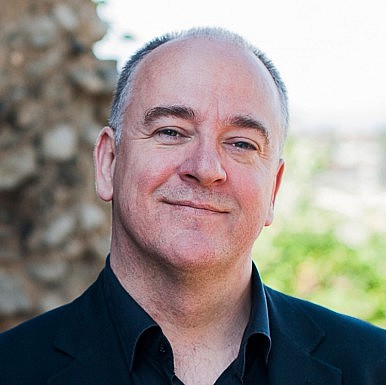
Kerry Brown
Historian and author
8
APPEARANCES
8
PODCASTS
Oct 24, 2026


Kerry BrownGUEST
So it is strange that the Chinese government has these entities in universities.
Kerry BrownGUEST
If you think of the Goethe-Institut for Germany or the Alliance Française for France or even the British Council, usually they are fairly separate from embassies or official government organizations, even though they get money from the government.
Kerry BrownGUEST
Hanban, their involvement is that they fund teachers to come to Confucius Institutes.

Kerry BrownGUEST
I think that America has done plenty of its own bullying and pushing around in the last 30, 40 years.
Kerry BrownGUEST
I, I don't think there's a sort of moral high ground anyone is really sitting on anymore.
Kerry BrownGUEST
Uh, to be honest with you, one of the most powerful arguments is even China knows that it could tomorrow launch an attack, and it may be the world won't turn up, and maybe it will get Taiwan back, but it will have 23 million people who don't recognize its rule, and that will be not a problem for a day, a month.
Kerry BrownGUEST
You, you could win, maybe you could win the, the war, but you definitely won't win that peace, and China's record of dealing with non-compliant, you know, kind of citizens in Hong Kong, uh, Xinjiang, is not a particularly reassuring one.
10 MINS LATER

Kim HillHOST
So did you, given the power of China and given your natural diplomatic caution, did you pull any punches? Do you ever pull any punches in your writing so that you can still have access to China and don't aggrieve them too much?

Dan SnowNARRATOR
They're both internationally renowned microbiologists, and Glenn is hoping they'll be able to extract DNA from the charred bones in the urns.
Kerry BrownGUEST
DNA may survive in cremated bones as long as the cremation temperatures were not too high.
Kerry BrownGUEST
If you can get DNA out of these infant remains, if you find sequences from the Y chromosome, you have a male infant.
Kerry BrownGUEST
So I think this could be the way forward to finding out whether you've got boys or girls being sacrificed, or not as the case may be.
7 MINS LATER
Dan SnowNARRATOR
If there is ancient DNA the sex will be revealed.


Kerry BrownGUEST
The main thing was to improve our trading balance with China because we bought more from China than we sold it.
Kerry BrownGUEST
What China was looking for in Britain was the city of London as a finance centre, better investment as a platform for its technology, and intellectual exchange, because our universities then were pretty high-ranked.
12 MINS LATER
Kerry BrownGUEST
Union and the British government and others did support technology transfer to China for many things.
Kerry BrownGUEST
It was regarded as creating economic opportunities for us, building the market there.

speaker_5SOUNDBITE_SPEAKER
For the European Union and the United States, the challenge will be a change in the balance of power within the WTO.
Kerry BrownGUEST
I was serving in Beijing at the time as a sort of middle-ranking official at the British Embassy, spending time thinking about what were the implications of China's entry to the WTO, and we were very gloomy.
Kerry BrownGUEST
I thought that China's agricultural sector, its manufacturing sector, its state enterprises, and, you know, a whole raft of things were really gonna be roughed up by foreign competition, and we were wrong.
Kerry BrownGUEST
And within 10 years of entering WTO, the Chinese economy had quadrupled in size.
Kerry BrownGUEST
So he's one of the great architects contributing to China's economic rise, on which, of course, its geopolitics and its military and its political influence all rest.

Kerry BrownGUEST
But I think in that five years, he made such systemic and important changes that you could say he was the most successful, and the influence from his period is the most long-lasting.


Kerry BrownGUEST
He was retired, but of course, he was the most consequential leader of his generation.
Kerry BrownGUEST
And the fact that he had waded in and gone to Zhuhai, Shenzhen, and made these comments, which were broadcast on Chinese media, was really basically the thing that decided China's recommitment to the global system and to socialism with market characteristics, right? It symbolically, it was a huge moment, and the southern tour of 1992 was his last significant political kind of act.
Kerry BrownGUEST
From the southern tour, within a few months, not immediately, there was a massive influx of foreign investment, foreign interest.
Kerry BrownGUEST
Suddenly, the doors opened, and there were way more, you know, kind of foreign businesses going there, and it was a high risk but high return environment.

Kerry BrownGUEST
So the Soviet Union was not as integrated into global capitalist sort of systems as China is.
Kerry BrownGUEST
Look, it's about what is China after? Is China really after destabilizing and overturning the British economy in the way that these statements suggest? I don't think it is.

Tim OwenHOST
But they have, obviously, as I've said, this triple-pronged approach, which includes an acknowledgement that there are areas of conflict which engages concerns about national security is that a fair way of putting it


Cindy YuHOST
Kerry, is it fair to say that what were, you know, this generation of party leaders, do you think they would have been Red Guards themselves?
Kerry BrownGUEST
I mean, I actually looked at the 25 members of the current full Politburo, and a number of them were born in 1950 to, I think the youngest is 1963.
Kerry BrownGUEST
The older ones would certainly be sent-down youths, and some of them would have been later kind of, you know, campaigns.
Kerry BrownGUEST
The send-down youth campaign was really launched in '68, and I think Xi Jinping was actually sent to Shanxi Province in sixty- early, very early 1969.
Cindy YuHOST
How could I not carry on now when I could work under those extremely difficult conditions?" So, it built in him this determination, or at least he wants us to think that.